Credit: Donald Danforth Plant Science Center
ST. LOUIS, MO, Nov. 1, 2017 – Scientists at the Donald Danforth Plant Science Center, in St. Louis, MO and their collaborators at the International Crops Research Institute for the Semi-Arid Tropics (ICRISAT) in Hyderabad, India, United States Department of Agriculture (USDA) and Louisiana State University have made a significant research breakthrough by suppressing the aflatoxin-producing fungus in groundnut. The discovery has the potential to drastically improve food safety and reduce losses caused by the contamination from the poisonous carcinogen, aflatoxin. The discovery was recently published in the Plant Biotechnology Journal.
Aflatoxins pose a major risk to human and animal health worldwide and result in an enormous amount of food waste. The molds, Aspergillus flavus and Aspergillus parasiticus, which infect groundnut, maize, cottonseed and chilly, produce these toxins which suppress the immune system, hinder growth in children and even cause liver cancer. The fungus which produces these toxins can stay dormant in soil for years. It infects maize and groundnut during drought and heat stress. Contamination also happens when grain is stored in hot, humid and poorly-ventilated conditions. Since aflatoxins are potent carcinogens, the United States does not allow the sale and export of food with aflatoxin levels exceeding 20 parts per billion (ppb). European Union standards are more stringent; the bar is 2 ppb.
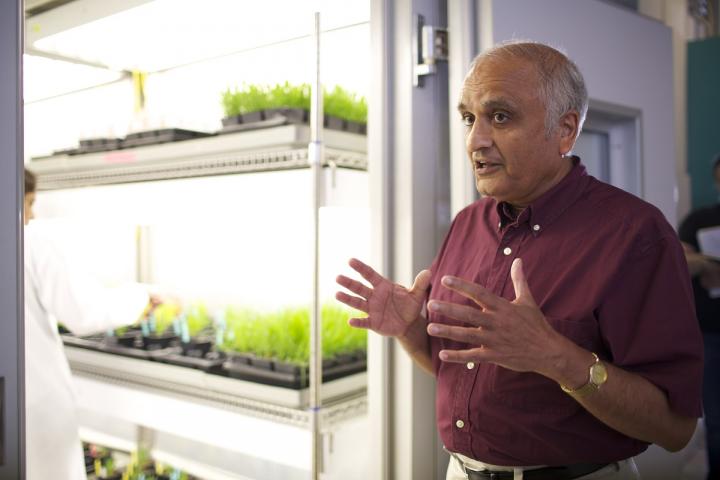
"Plant defensins exhibit potent antifungal activity against several economically important fungal pathogens and it is exciting to see successful application of this technology for reducing the pre-harvest infection by Aspergillus and alleviating the burden of mycotxins in genetically modified groundnut. If deployed commercially, this technology has significant potential to contribute to food safety in the under-developed and developing countries where mycotoxin contamination of groundnut, maize, chili and cottonseed pose a major threat to human and animal health," said Dilip Shah, Ph.D., principal investigator at the Danforth Plant Science Center.
World peanut production totals about 29 million metric tons per year. The U.S. is the world's third largest producer, after China and India. Peanuts are the 12th most valuable cash crop grown in the U.S. with a farm value of over one billion U.S. dollars. American consumers eat more than 6 pounds or 2.7 kilograms (kernel basis) of peanut products each year, worth more than $2 billion at the retail level. Worldwide peanut exports are about 1.25 million metric tons annually.
Two complementary approaches are being deployed to address the issue. Shah and his team transferred small proteins called defensins from alfalfa and the Mediterranean clover to the DNA of an Aspergillus-susceptible peanut variety widely grown in Africa and India which allowed the groundnut to stop the fungus from infecting the plant. ICRISAT scientists worked with collaborators at the USDA and Louisiana State University to transfer small RNA molecules from the Aspergillus fungus that are involved in the aflatoxin synthetic pathway. The nuts produced these RNA molecules during fungal attacks and inactivated target genes responsible for aflatoxin synthesis. The technology is also translatable to maize and de-oiled cakes used for animal feed, pistachios and almonds.
###
Collaborators plan to conduct field trials in India in coming years for further development of aflatoxin resistant groundnut.
About the Donald Danforth Plant Science Center
Founded in 1998, the Donald Danforth Plant Science Center is a not-for-profit research institute with a mission to improve the human condition through plant science. Research, education and outreach aim to have impact at the nexus of food security and the environment, and position the St. Louis region as a world center for plant science. The Center's work is funded through competitive grants from many sources, including the National Institutes of Health, U.S. Department of Energy, National Science Foundation, and the Bill & Melinda Gates Foundation.
Follow us on Twitter at @DanforthCenter.
Media Contact
Melanie Bernds
[email protected]
314-587-1647
Original Source
https://www.danforthcenter.org/news-media/news-releases http://dx.doi.org/10.1111/pbi.12846