


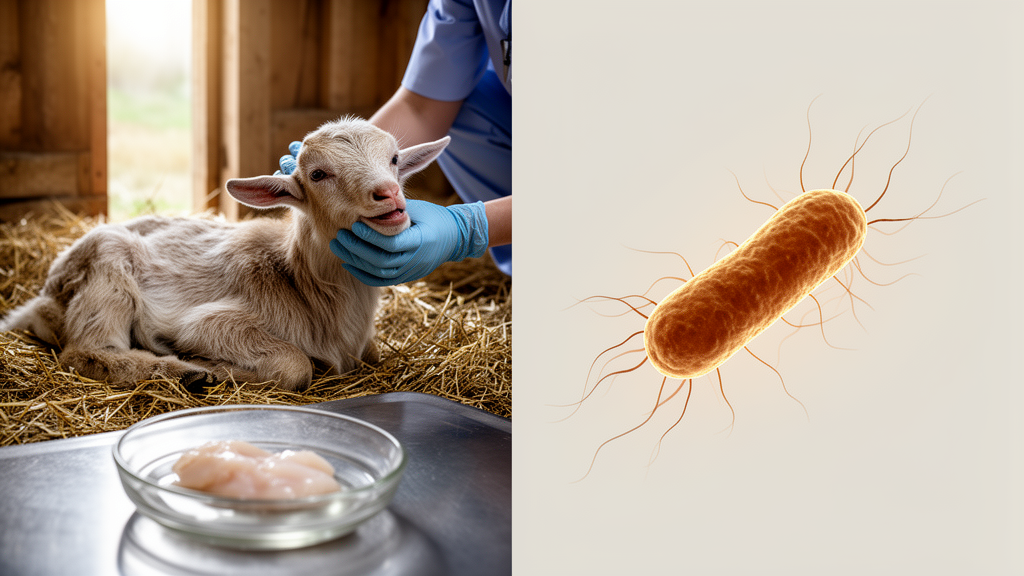
A bacteriological and phylogenetic study of neonatal goat kids with hemorrhagic abomasitis, a rapidly progressive and poorly characterized condition previously described as salivary abomasum disease, has found that Escherichia coli phylogroup G predominates among isolates recovered from affected animals. The research, published in BMC Veterinary Research, examined forty kids that showed characteristic clinical and postmortem findings of the disease.
The affected kids were overwhelmingly young. Twenty-nine of the forty animals, or 72.5 percent, were within the first two weeks of life, and the highest occurrence fell in the eight-to-fourteen-day window, which accounted for twenty of the forty cases, or 50.0 percent. The estimated median age at disease onset was 11.35 days, with an interquartile range of 7.85 to 15.38 days.
Breed appeared to play no role in susceptibility. Occurrence was similar among Saanen, Mahabadi-Alpine, and Alpine kids, at 22.2 percent, 22.0 percent, and 22.0 percent respectively, and the study found no evidence of an association between breed and disease occurrence, with a P value of 0.999.
Abomasal hemorrhage was observed in every case examined. The severity of bleeding was classified as mild in 42.5 percent of kids, moderate in 30.0 percent, and severe in 27.5 percent. Notably, the researchers detected no significant linear trend in E. coli positivity across the hemorrhage severity categories, with a P value of 0.824, suggesting that the burden of the bacterium did not track with how severe the bleeding appeared.
E. coli was recovered from thirty of the forty affected kids, a rate of 75.0 percent with a 95 percent confidence interval of 59.8 to 85.8 percent. The thirty isolates came from 160 tissue specimens sampled from the abomasum, heart, liver, and lung of each animal.
The anatomical distribution of recovery was strikingly uneven. The abomasum yielded the highest recovery at 37.5 percent, followed by the heart at 25.0 percent, the liver at 10.0 percent, and the lung at just 2.5 percent. A generalized estimating equation analysis that accounted for within-animal clustering showed a significant overall effect of tissue source, with a P value of 0.008. Recovery from the liver and lung was significantly lower than from the abomasum, whereas the difference between the heart and the abomasum was not statistically significant.
The phylogenetic analysis used Clermont phylogrouping, a molecular method that assigns E. coli isolates to phylogenetic groups. Phylogroup G predominated, accounting for twenty-one of the thirty isolates, or 70.0 percent. It was followed by group B2 at 20.0 percent and group B1 at 10.0 percent. Among the group G isolates, 85.7 percent originated from kids within the first two weeks of life, reinforcing the strong association between this phylogroup and the very young age of the affected animals.
The authors conclude that the predominance of phylogroup G represents an important phylogenetic finding among E. coli isolates associated with hemorrhagic abomasitis, and they emphasize that further genomic and phenotypic characterization is needed. By integrating clinical observations with bacteriological and phylogenetic data, the study offers a broader framework for recognizing and characterizing the condition and provides insights into its clinical presentation, epidemiology, and possible pathogenesis in neonatal goat populations.
Subject of Research: Phylogenetic typing of Escherichia coli isolated from neonatal goat kids with hemorrhagic abomasitis
Article Title: Phylogenetic typing of Escherichia coli isolated from goat kids with Hemorrhagic Abomasitis and associated clinical findings
Article References: Joghataei, S. M., Esmaeili, H., Fasaei, B. N., & Chegeni, S. A. (2026). Phylogenetic typing of Escherichia coli isolated from goat kids with Hemorrhagic Abomasitis and associated clinical findings. BMC Veterinary Research. https://doi.org/10.1186/s12917-026-06045-y
Image Credits: AI Generated
DOI: 10.1186/s12917-026-06045-y
Keywords: goat kids, hemorrhagic abomasitis, Escherichia coli, phylogroup G, Clermont phylogrouping, neonatal ruminants, bacteriology, veterinary research, abomasal hemorrhage, disease epidemiology, Phylogenetic, typing
News Source: William Thompson. (October 29, 2026). Phylogroup G E. coli dominates in goat kids with hemorrhagic abomasitis. Scienmag.



