Credit: Sampsa Vanhatalo
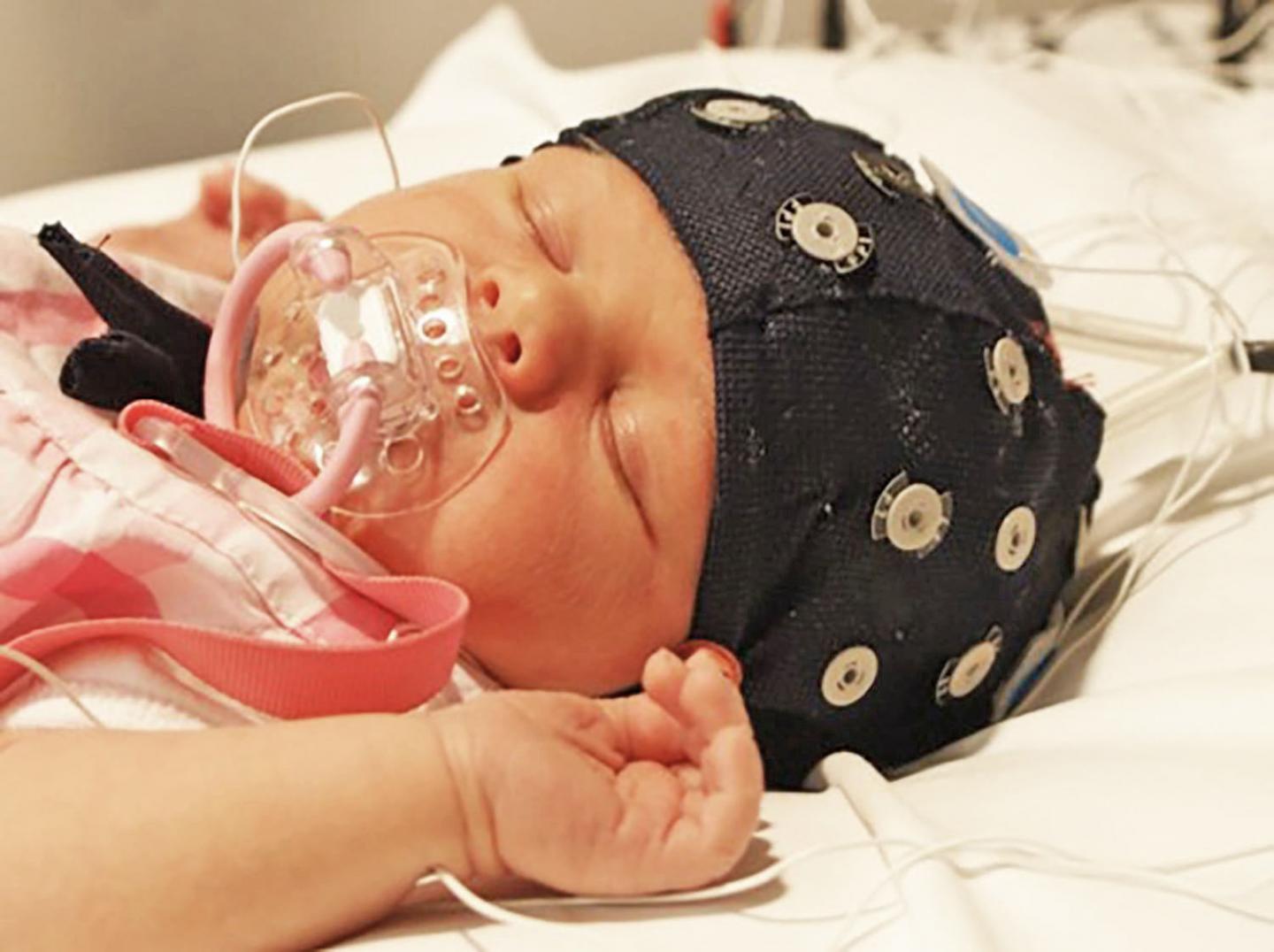
Researchers at the University of Helsinki and the Helsinki University Hospital (HUH), Finland, have developed software based on machine learning, which can independently interpret EEG signals from a premature infant and generate an estimate of the brain's functional maturity.
Published in the journal Scientific Reports, the method is the first EEG-based brain maturity evaluation system in the world. It is more precise than other currently understood methods of evaluating the development of an infant's brain, and enables the automatic and objective monitoring of a premature infant's brain development.
"We currently track the development of an infant's weight, height and head circumference with growth charts. EEG monitoring combined with automatic analysis provides a practical tool for the monitoring of the neurological development of preterm infants and generates information which will help plan the best possible care for the individual child," says Professor Sampsa Vanhatalo from the University of Helsinki, who led the research.
"This method gives us a first-time opportunity to track the most crucial development of a preterm infant, the functional maturation of the brain, both during and after intensive care."
LATE PREGNANCY IS CRITICAL FOR FETAL BRAIN DEVELOPMENT
One in ten live births is a premature one, and approximately half of all patients in neonatal intensive care are there because of preterm birth. Late pregnancy is a time of very rapid brain development for the fetus – the brain's electrical activity changes almost every week. The brain must function in order to develop correctly.
The many health impediments associated with preterm birth can hinder brain development. Researchers found already in the 1980s that early health problems in preterm infants often resulted in slower brain development during the first months. In order to provide the best possible care and develop new forms of treatment, we should know how the brain functions of infants develop, but no objective and sufficiently precise methods for evaluating the early-stage maturity of the brain have been available.
The most tempting option for evaluating the maturation of the brain is to use EEG sensors placed on the scalp. This is a completely non-invasive, low-cost and risk-free method, which has been very popular during the past few years in monitoring brain activity at neonatal intensive care units.
"The practical problem with EEG monitoring is that analysing the EEG data has been slow and required special expertise from the doctor performing it. This problem may be solved reliably and globally by using automatic analysis as part of the EEG device," says Vanhatalo.
MACHINE LEARNING AND ARTIFICIAL INTELLIGENCE TO HELP PRETERM INFANTS
The new EEG analysis software was primarily developed by Nathan Stevenson, an Australian engineer, who worked in Professor Vanhatalo's research group as an EU-funded Marie Curie Fellow. The research used an exceptionally extensive and well-controlled set of EEG measurement data from preterm infants, gathered in Professor Katrin Klebermass' research group at the Medical University of Vienna.
The analysis software is based on machine learning. A large amount of EEG data on preterm infants was fed into a computer, and the software calculated hundreds of computational features from each measurement without intervention from a doctor. With the help of a support vector machine algorithm, these features were combined to generate a reliable estimate of the EEG maturational age of the infant.
At the end of the study, the software was tested by comparing the EEG maturational age estimated by the software with the clinically known true age of the infant. In more than 80% of the cases, the true age of the infant and the computer-generated estimate were within two weeks of one another. The maturation estimate was so reliable and precise that in each of the 39 preterm infants in the study, the functional development of the brain could be tracked when the measurements were repeated every few weeks.
###
Media Contact
Professor Sampsa Vanhatalo
[email protected]
358-505-286-119
@helsinkiuni
http://www.helsinki.fi/university/
Related Journal Article
http://dx.doi.org/10.1038/s41598-017-13537-3