


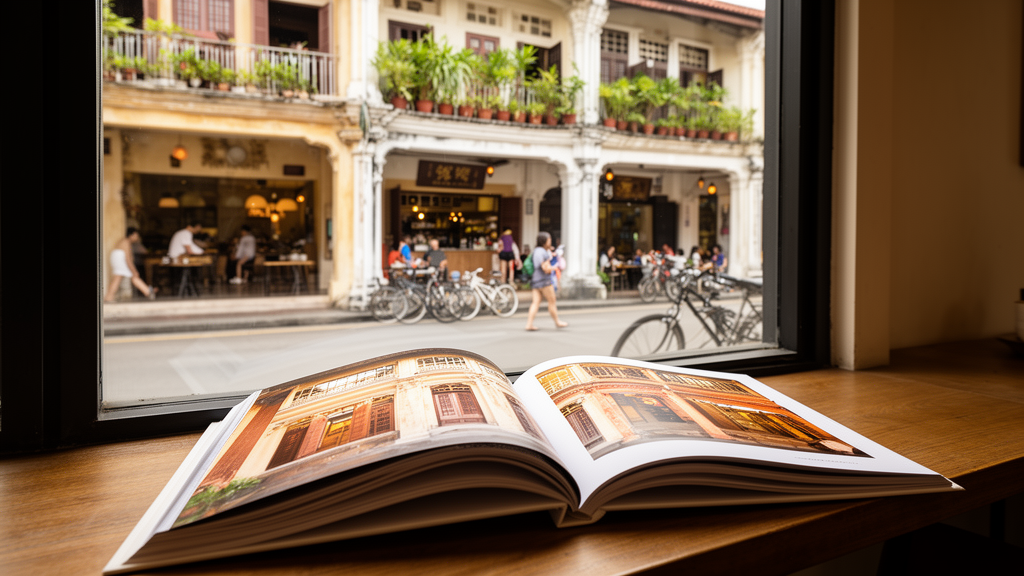
A newly published review in the journal Built Heritage examines Revitalisation in Asia: Adaptive Reuse in Macao, Mumbai, and Penang, a volume co-edited by Lavina Ahuja and Lynne D. DiStefano and released by Hong Kong University Press. The review, authored by Ruyu Tao and published on 14 September 2026 as an open-access article in Volume 10 of the journal, positions the book as a significant response to a question confronting many historical Asian cities: how to strike a balance between economic growth, population pressure, and cultural heritage conservation. As a sequel to Asian Revitalisation (2021), the new volume turns its attention to three World Heritage cities, each possessing both colonial histories and contemporary vitality.
According to the review, the book is organised into two major parts, both revolving around how heritage can contribute to sustainability and help readers understand UNESCO’s 2030 Agenda for Sustainable Development as well as sustainable heritage tourism. The first part collects six thematic papers that construct a theoretical dialogue between cultural heritage and sustainable development. The opening chapter by Ken Nicolson revisits Patrick Geddes’ concept of ‘conservative surgery’, laying a historical foundation for the entire volume. Geddes, an urban planning pioneer from a century ago, advocated achieving maximum community well-being with minimal intervention, an idea the reviewer notes resonates strongly with today’s sustainable development goals.
A second thematic paper, by Montira Unakul, draws on international policy contexts and traces the evolution from the Recommendation on the Historic Urban Landscape to the UN Sustainable Development Goals, with particular emphasis on the role of heritage in social sustainability. The reviewer writes that this applies both to cultural sustainability and to the sustainability of heritage resources themselves, providing a theoretical coordinate system for the case studies that follow. Elizabeth Vines then discusses the environmental value of adaptive reuse from an urban planning perspective, addressing energy conservation, carbon reduction, and community culture across architectural, planning, and cultural dimensions. The idea that ‘the greenest building is the one already built’ resonates throughout the volume.
Two further thematic chapters extend the discussion into lived practice. Katie H. L. Chick’s analysis of the Lai Chi Wo rural revitalisation project in Hong Kong demonstrates how nature-culture interactions at multiple levels can be reconnected through community-led practices. Sharif Shams Imon’s study of the Nizamuddin urban renewal project in Delhi presents what the reviewer describes as a virtuous cycle between heritage conservation and socio-economic improvement, increasing overall development across economic, environmental, and social perspectives. Fergus T. Maclaren’s paper on sustainable tourism warns of the erosion of heritage sites caused by ‘overtourism’, adding, in the reviewer’s words, a critical edge to the volume.
The second part constitutes the core and main body of the book. Separate chapters are dedicated to Macao, Mumbai, and Penang, each opening with an urban overview supplemented by a timeline outlining the evolution of conservation regulations and movements in that city, followed by five representative case studies. The fifteen cases cover a variety of models, including government-led projects, public-private partnerships, private initiatives, and community-driven efforts, ranging from the buildings at Senado Square to the Cheong Fatt Tze Mansion, also known as the Blue Mansion, and from the Royal Opera House to the Hin Bus Depot art space. The reviewer argues that this richness of types and diversity of scales allows readers from different professional backgrounds to appreciate the possibilities of adaptive reuse.
The review identifies the book’s most outstanding contribution as successfully expanding ‘adaptive reuse’ from an architectural concept into a comprehensive urban revitalisation strategy. As the editors state in their conclusion, ‘revitalisation’ is a broader umbrella concept than ‘adaptive reuse’. The success of a project, on this reading, depends not only on finding new functions for old buildings but also on whether it can achieve a sustainable positive cycle across the economic, environmental, and social dimensions. This framework, the reviewer argues, elevates the book beyond a traditional conservation technical manual into the interdisciplinary field of urban governance and sustainable development.
Individual cases illustrate this breadth. In Macao, changes in heritage laws and management under different socio-political backgrounds have had a significant impact on heritage practices. In Mumbai, a ‘Rehabilitation and Resettlement’ project involving a seemingly modest renovation of a community shed of only 46 square meters, through an ‘auto-construction’ model, a building process with little or no professional intervention, grants spatial autonomy to a marginalised community, with social significance the reviewer judges to far surpass the building itself. In Penang, the Hin Bus Depot was transformed by its owner, without architects or government funding and driven by an intuitive understanding of the spirit of place, from an abandoned bus depot into a vibrant art centre, serving as a contemporary example of ‘architecture without architects’.
Community participation emerges as another sustained theme. Whether in the collaboration between local associations and the government in the Patane Watchhouse renovation in Macao, the public donation of furniture and claiming of memories at the Cheong Fatt Tze Mansion in Penang, or the re-appropriation of public squares by residents surrounding Flora Fountain in Mumbai, the cases collectively reveal, in the reviewer’s phrasing, that buildings can be restored but the vitality of a place can only be bestowed by the people who live there. The reviewer frames this as a major contribution: integrating a humanistic perspective with an architecture-led approach through a new materialist lens, resonating with ‘heritage ecology’ discussions that view built heritage as a sustainable, regenerative resource encompassing human and non-human actors.
The review is not uncritical, and it sets out three main limitations. First, while the fifteen case studies are rich in content, the comparative analysis could be deepened. The concluding section offers a preliminary summary of similarities and differences among the three cities, noting that Macao leans toward government-led initiatives while Mumbai and Penang rely more on grassroots forces, but the reviewer suggests readers might expect a more systematic comparative matrix evaluating policy environment, funding sources, degree of community participation, and long-term sustainability. Second, the book pays little attention to cautionary cases: gentrification pressures brought by Penang’s World Heritage listing, the impact of Airbnb on historic neighbourhoods, and the effects of overtourism on residents’ lives in Macao are mentioned in the thematic papers, but the case studies tend to present success stories. Third, the application of the SDGs framework appears somewhat intermittent, with some chapters precisely identifying corresponding goals and indicators while others only vaguely refer to sustainability.
Overall, the reviewer concludes that Revitalisation in Asia is a work of both theoretical depth and practical richness, serving as an ideal textbook for graduate students in urban planning, architectural conservation, heritage management, and human geography, while also providing actionable references for government decision-makers, NGO practitioners, and community leaders. In an era of global climate crisis, post-pandemic recovery, and frequent regional conflicts, the volume argues that built heritage is no longer a mere cultural amenity but an essential urban asset, and that adaptive reuse has shifted from an architect’s preference to a strategic necessity for safeguarding the material fabric, embodied energy, and place-based identity of historic cities. The Asian experiences presented, especially how Macao, Mumbai, and Penang have forged their own conservation languages between colonial built heritage and living local culture, are offered as critical references for countries of the Global South, revealing built heritage as a dynamic resource whose survival depends on its ongoing relationship with environmental pressures, social needs, and economic realities.
Subject of Research: Adaptive reuse of built heritage as an urban revitalisation strategy in Macao, Mumbai, and Penang
Article Title: Revitalisation in Asia: adaptive reuse in Macao, Mumbai, and Penang, by Lavina Ahuja, and Lynne D. DiStefano. Hong Kong, China: Hong Kong University Press. ISBN9789888842971
Article References: Tao, R. (2026). Revitalisation in Asia: adaptive reuse in Macao, Mumbai, and Penang, by Lavina Ahuja, and Lynne D. DiStefano. Hong Kong, China: Hong Kong University Press. ISBN9789888842971. Built Heritage, 10(1), Article 60. https://doi.org/10.1186/s43238-026-00308-1
Image Credits: AI Generated
DOI: 10.1186/s43238-026-00308-1
Keywords: adaptive reuse, built heritage, Macao, Mumbai, Penang, urban revitalisation, sustainable development, UNESCO World Heritage, community participation, heritage conservation, Hong Kong University Press, overtourism
News Source: Courtney Benton. (October 29, 2026). New Book Maps How Adaptive Reuse Revitalises Three Asian Heritage Cities. Scienmag.



