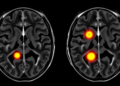
Cannabis is often cast as the main culprit behind psychiatric problems in young adults, but a new study of more than a thousand people suggests the story is more complicated. Using data from the Human Connectome Project, researchers found that psychosocial distress was by far the strongest correlate of psychiatric symptom burden, while cannabis dependence showed only a modest and inconsistent association. The work, published in Frontiers in Neuroscience, also searched for cannabis-related signatures in the brain’s resting-state functional connectome and came up empty.
The team, David Mattie and Jacob Levman of St. Francis Xavier University in Canada, analyzed a young-adult sample of roughly 1,010 to 1,016 participants. Rather than comparing cannabis users and non-users in isolation, they used structural equation modeling to estimate the relative contributions of cannabis exposure, a latent measure of psychosocial distress, socioeconomic status, and familial psychiatric risk to three different indices of psychiatric symptom burden. The models adjusted for polysubstance, alcohol, and nicotine exposure and accounted for the fact that many participants were related to one another, a feature of the Human Connectome Project’s family-based sampling.
Cannabis exposure was operationalized in two parallel ways: as a DSM-IV dependence diagnosis and as heavy use. Across all three symptom outcomes, psychosocial distress dominated, with standardized effect estimates ranging from 0.41 to 0.70. Cannabis, by contrast, showed total effects of only 0.05 to 0.19, and reached statistical significance for just one outcome under the dependence definition. Notably, larger unadjusted group differences between cannabis groups, with Cohen’s d values of 0.28 to 0.75, shrank sharply once distress and demographic factors were entered into the models.
The study also traced how distress itself arises. Lower socioeconomic status and greater familial psychiatric risk were each associated with elevated psychosocial distress. Cannabis exposure, however, showed no such indirect pathway: all indirect effects were 0.01 or less, with confidence intervals spanning zero. In other words, in this sample, cannabis did not appear to be a conduit through which disadvantage or family history translated into distress.
The neuroimaging half of the study was equally cautious in its conclusions. Neither method revealed an association between cannabis dependence and the functional connectome, even though the analysis had approximately 80 percent power to detect group differences of around d = 0.30. Finite mixture models, which were used to test whether a discrete subgroup of particularly cannabis-vulnerable individuals might be hiding in the data, likewise failed to identify a robust and interpretable cannabis-vulnerable subgroup.
The authors are careful about what these relative magnitudes do and do not mean. The design is cross-sectional, so it cannot establish causal ordering between distress, cannabis use, and symptoms. Moreover, the distress and symptom measures both rely on self-report and therefore share method variance, while the binary cannabis exposure measures do not. Because of this asymmetry, the authors explicitly caution that the larger effects for distress should not be read as a head-to-head comparison of aetiological importance.
Even with those caveats, the findings carry a practical message. Risk models and neuroimaging analyses that omit psychosocial context may attribute to cannabis variance that is actually shared with distress, socioeconomic disadvantage, and familial psychiatric risk. In a sample like this one, where cannabis use clusters with broader adversity, failing to model that context jointly can make cannabis look like a stronger driver of symptoms than the adjusted evidence supports.
The study’s scope is specific: young adults from the Human Connectome Project, cross-sectional data, coarse binary cannabis measures, and self-reported symptom and distress instruments. Within that scope, the picture that emerges is one in which the social and economic circumstances surrounding young adults, rather than their cannabis use, account for most of the explained variance in psychiatric symptom burden, and in which no cannabis-related signature is detectable in the functional connectome. For researchers building predictive models of mental health in this age group, the results argue that psychosocial context belongs in the model, not on the sidelines.
Subject of Research: Psychosocial distress and cannabis dependence as correlates of psychiatric symptom burden and brain connectivity in young adults
Article Title: Psychosocial distress is a stronger correlate of psychiatric symptom burden than cannabis dependence in young adults: a functional connectome and structural equation modeling study
Article References: Mattie, D., & Levman, J. (2026). Psychosocial distress is a stronger correlate of psychiatric symptom burden than cannabis dependence in young adults: a functional connectome and structural equation modeling study. Frontiers in Neuroscience, 20, Article 1922823. https://doi.org/10.3389/fnins.2026.1922823
Image Credits: AI Generated
DOI: 10.3389/fnins.2026.1922823
Keywords: cannabis, psychosocial distress, psychiatric symptoms, functional connectome, Human Connectome Project, structural equation modeling, young adults, socioeconomic status, network-based statistic, neuroimaging, Psychosocial, distress
News Source: Glenn Wilkins. (October 29, 2026). Psychosocial Distress, Not Cannabis, Tracks Psychiatric Symptoms in Young Adults. Scienmag.