

• HOME
  • NEWS
  • EXPLORE
    • CAREER
      • Companies
      • Jobs
    • EVENTS
    • iGEM
      • News
      • Team
    • PHOTOS
    • VIDEO
    • WIKI
  • BLOG
  • COMMUNITY
    • FACEBOOK
    • INSTAGRAM
    • TWITTER
Friday, April 3, 2026
BIOENGINEER.ORG
No Result
View All Result
  • Login
  • HOME
  • NEWS
  • EXPLORE
    • CAREER
      • Companies
      • Jobs
        • Lecturer
        • PhD Studentship
        • Postdoc
        • Research Assistant
    • EVENTS
    • iGEM
      • News
      • Team
    • PHOTOS
    • VIDEO
    • WIKI
  • BLOG
  • COMMUNITY
    • FACEBOOK
    • INSTAGRAM
    • TWITTER
  • HOME
  • NEWS
  • EXPLORE
    • CAREER
      • Companies
      • Jobs
        • Lecturer
        • PhD Studentship
        • Postdoc
        • Research Assistant
    • EVENTS
    • iGEM
      • News
      • Team
    • PHOTOS
    • VIDEO
    • WIKI
  • BLOG
  • COMMUNITY
    • FACEBOOK
    • INSTAGRAM
    • TWITTER
No Result
View All Result
Bioengineer.org
No Result
View All Result
Home NEWS Science News Biology

Wayne State receives $1.85 million NIH grant to identify novel antibiotic targets

Bioengineer by Bioengineer
October 26, 2017
in Biology
Reading Time: 2 mins read
0
Share on FacebookShare on TwitterShare on LinkedinShare on RedditShare on Telegram
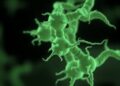
IMAGE

Credit: Julie O'Connor, Wayne State University

DETROIT – A research team from Wayne State University has received a $1.85 million grant from the National Institute of General Medical Sciences of the National Institutes of Health for the project "Mechanisms of Non-Shine-Dalgarno Translation Initiation." The project will be led by Jared Schrader, Ph.D., assistant professor of biological sciences in Wayne State's College of Liberal Arts and Sciences.

Antibiotics work in different ways, but some can attack the very basic process of making new proteins in bacterial cells. These antibiotics block translation, in which the cell reads information from a messenger RNA (mRNA) molecule, which it uses to build a protein. When antibiotics are taken, the antibiotic molecule will latch onto key translation molecules inside of bacterial cells and stall them so that proteins cannot be made, ultimately stopping the bacteria from functioning and causing it to eventually die.

In the model bacterium E. coli, it was discovered that a special sequence of RNA called a Shine-Dalgarno sequence is needed to dictate the ribosome on where to start decoding an mRNA into a protein.

The Shine-Dalgarno sequence is a ribosomal binding site in bacterial and archaeal messenger RNA. The RNA sequence helps recruit the ribosome to the mRNA to initiate protein synthesis by aligning the ribosome with the start codon.

"While the Shine-Dalgarno model is widely accepted as textbook knowledge for bacterial translation, genome sequencing of tens of thousands of bacterial species has revealed that many organisms, including many pathogens, lack Shine-Dalgarno sites in most of their mRNAs," said Schrader. "Without a Shine-Dalgarno, it's unclear how these bacteria are able to make the proteins encoded in their genomes."

Schrader and his collaborators aim to determine the molecular mechanisms of non-Shine-Dalgarno initiation in hopes to identify novel antibiotic targets effective against these groups of pathogens.

"Through our work, we have an exciting downstream possibility that what we uncover will allow us to design antibiotics that specifically target non-Shine-Dalgarno translation machinery," said Schrader. "This will open the door to new antibiotic treatments where bacteria have become difficult to treat or even resistant to antibiotics currently available."

The grant number for this National Institutes of Health project is GM124733.

###

About Wayne State University

Wayne State University is one of the nation's pre-eminent public research universities in an urban setting. Through its multidisciplinary approach to research and education, and its ongoing collaboration with government, industry and other institutions, the university seeks to enhance economic growth and improve the quality of life in the city of Detroit, state of Michigan and throughout the world. For more information about research at Wayne State University, visit research.wayne.edu.

Media Contact

Julie O'Connor
[email protected]
313-577-8845

http://www.research.wayne.edu/about/index.php

Original Source

http://research.wayne.edu/news/wayne-state-receives-185-million-nih-grant-to-identify-novel-antibiotic-targets-28315

Share12Tweet7Share2ShareShareShare1

Related Posts

Brain Power May Hold the Key to Predicting Cognitive Decline

Brain Power May Hold the Key to Predicting Cognitive Decline

April 2, 2026
Insights into CD4+ T-Cell Depletion and Pulmonary Infections in Critically Ill Immunocompromised Patients

Insights into CD4+ T-Cell Depletion and Pulmonary Infections in Critically Ill Immunocompromised Patients

April 2, 2026

Advanced Sensors Reduce Costs in Genetic Disorder Research

April 2, 2026

Advancing Blood Purification: Innovations Beyond Traditional Dialysis

April 2, 2026
Please login to join discussion

POPULAR NEWS

  • blank

    Revolutionary AI Model Enhances Precision in Detecting Food Contamination

    96 shares
    Share 38 Tweet 24
  • Imagine a Social Media Feed That Challenges Your Views Instead of Reinforcing Them

    1007 shares
    Share 398 Tweet 249
  • Promising Outcomes from First Clinical Trials of Gene Regulation in Epilepsy

    51 shares
    Share 20 Tweet 13
  • Popular Anti-Aging Compound Linked to Damage in Corpus Callosum, Study Finds

    44 shares
    Share 18 Tweet 11

About

We bring you the latest biotechnology news from best research centers and universities around the world. Check our website.

Follow us

Recent News

Revolutionary Magnetic Biochar Gel Tackles Arsenic and Antimony Pollution in Rice Cultivation

Engineered Biochar Harnesses Soil Chemistry to Degrade Antibiotic Pollution

Leading Cancer Scientist Thales “PapaG” Papagiannakopoulos Joins Salk Institute

Subscribe to Blog via Email

Success! An email was just sent to confirm your subscription. Please find the email now and click 'Confirm' to start subscribing.

Join 78 other subscribers
  • Contact Us

Bioengineer.org © Copyright 2023 All Rights Reserved.

Welcome Back!

Login to your account below

Forgotten Password?

Retrieve your password

Please enter your username or email address to reset your password.

Log In
No Result
View All Result
  • Homepages
    • Home Page 1
    • Home Page 2
  • News
  • National
  • Business
  • Health
  • Lifestyle
  • Science

Bioengineer.org © Copyright 2023 All Rights Reserved.