


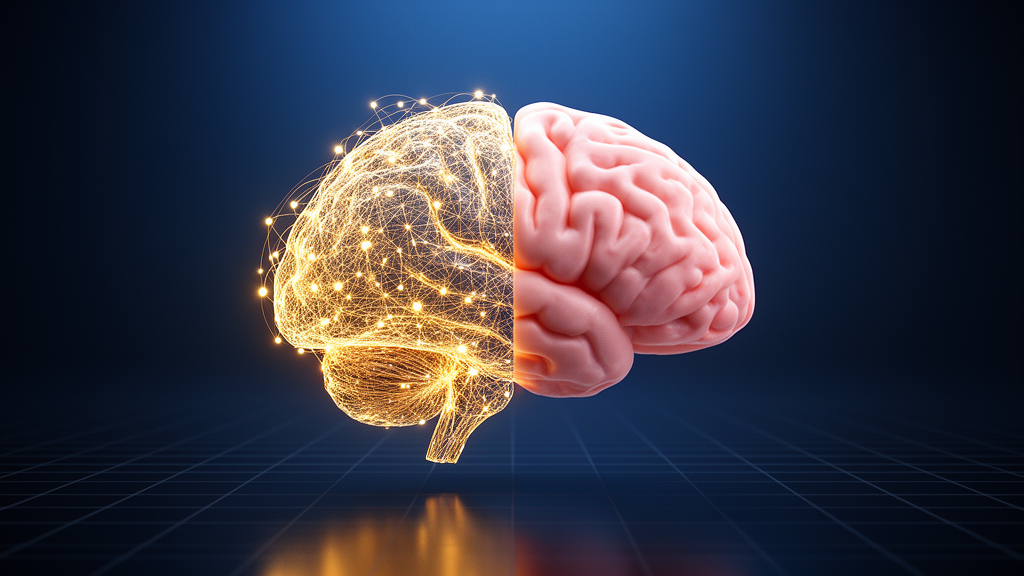
Virtual brain models, computational replicas that can be tuned to a single person’s brain, are moving from an ambitious idea toward a practical tool for personalised medicine, according to a perspective article published on 29 October 2026 in Frontiers in Computational Neuroscience. The authors, a group spanning the University of Pavia, the IRCCS Mondino Foundation, UCL, Paris-Saclay University and Aix Marseille University, argue that these models already capture essential features of brain dysfunction in patients with dementia, Parkinson’s disease, cerebellar ataxias, multiple sclerosis and epilepsy, but that a series of simplifying assumptions must now be relaxed before they can serve as true brain digital twins supporting clinical decisions.
The concept rests on multiscale brain modelling, the ability to bridge the microscale, mesoscale and macroscale dynamic properties of the brain, linking the activity of membrane molecules such as ionic channels and receptors to that of neurons and networks up to the whole brain. A brain digital twin is defined as a digital copy of the brain’s structural organisation and function that reproduces brain dynamics in a single subject. The authors stress that the full implementation of this approach is still incomplete, and their article sets out a roadmap addressing what virtual brain models already do well, why that is not enough, what must change, and what becomes possible if it does.
Technically, a virtual brain model is built through three operations: connectome reconstruction, node functional description, and parameter tuning through optimisation. The reconstruction starts from magnetic resonance imaging, including advanced diffusion-weighted and functional blood oxygenation level dependent sequences. Nodes are identified through anatomical or functional parcellation of grey matter regions and contain models generating local neural dynamics, such as neural mass models, mean field models or spiking neural networks. Local node dynamics propagate through the connectome to generate large-scale oscillations that mimic EEG and fMRI recordings. Because the connectome can be extracted from MRI tractography in individual subjects, the model can be personalised, setting the basis for a digital twin.
The models use a global coupling parameter, G, representing connectivity strength between nodes, while the relative weight of inter-node connections is given by tract density values in the structural connectivity matrix. Nodes contain parameters describing local network properties. In the widely used Wong-Wang model, these include excitatory coupling, inhibitory coupling and recurrent excitation, parameters related to neurotransmission mechanisms involving NMDA and GABA receptors, from which an excitation/inhibition balance can be computed. To fit a model to an individual brain, a second level of personalisation instantiates model inversion, recovering generative-model parameters from macroscale measurements against data features such as static and dynamic functional connectivity and regional power spectra. Because the same macroscopic activity can be produced by many distinct microscopic configurations, the inverse problem is fundamentally degenerate, and solutions must remain at the mesoscopic scale. The most widely used optimisation today minimises a cost function combining the Pearson correlation of the functional connectivity matrix with the Kolmogorov-Smirnov distance over the functional connectivity dynamics histogram, yielding a single best-fitting parameter vector; a probabilistic alternative computes the posterior distribution of plausible configurations instead.
The evidence that this constructive design works comes from patient simulations. In pathologies of the dementia spectrum, including Alzheimer’s disease and frontotemporal dementia, the models revealed patterns of change matching what is known from physiopathology: global coupling and excitation/inhibition balance increased in the default-mode network of both conditions, but decreased in the fronto-parietal network of frontotemporal dementia. A reduction of the NMDA-related excitatory parameter in the default-mode network of Alzheimer’s disease was compatible with memory loss, while a reduction of the GABA-related inhibitory parameter in the fronto-parietal network of frontotemporal dementia was compatible with prefrontal disinhibition. In mild cognitive impairment, the prodromic phase of dementia, model parameters showed significant correlations with neuropsychological scores across multiple cognitive domains, and excitation/inhibition balance alterations were quantitatively correlated with learning and memory abilities on a single-subject basis. The parameters also augmented machine-learning-based classification of dementia.
Other diseases show the breadth of the approach. In Parkinson’s disease, models integrating MRI with EEG, deep-brain electrode recordings and structural-functional connectivity simulate how dopamine levels shape whole-brain dynamics, allowing inference of a patient’s dopaminergic state before and after L-DOPA administration and prediction of the impact of deep brain stimulation. In cerebellar ataxias, model parameters reliably distinguished congenital from slowly progressive forms, revealing different combinations of alteration and compensation in motor and cognitive networks that correlated with performance and explained individual clinical profiles. In multiple sclerosis, models integrating structural connectivity and electrophysiological data have been used to estimate conduction delays, which emerged as stronger predictors of disability than traditional markers of structural damage, and the NMDA-related parameter showed a strong correlation with reaction time in a sensorimotor task. In epilepsy, models integrating functional EEG and stereo-EEG data simulated whole-brain seizure dynamics, improving localisation of the epileptogenic zone; using the Epileptor neural mass model to reproduce how seizures start and spread, clinicians can test different stimulation strategies in silico before applying them to the patient.
Yet the authors argue that this success rests on assumptions about nodes and their connections that resemble symmetry, homogeneity and isotropy in physics. The MRI connectome is taken as a proxy of brain connectivity, but MRI tractography and segmentation generate fibre tracts and nodes that represent bundles and masses of excitable elements rather than neurons and axons; tracts carry no information about the direction or sign of signal transmission; they may contain false negatives and false positives; and short-range connections within closely spaced regions, such as basal ganglia, cortical or cerebellar circuits, are under-resolved. The resulting structural connectivity matrix is intrinsically symmetric and positive, while real brain connectivity is not, and should instead be seen as a product of matrices encoding direction and sign. Similarly, all nodes are currently represented with the same type of computational model, typically a neural mass of just one excitatory and one inhibitory element, which captures essential dynamical properties including excitation/inhibition balance, recurrent excitation and oscillations, but misses the diversity and distributed parallelised processing of real local microcircuits.
Parameters are also often treated as global rather than local variables, which restricts the parameter space and improves computational efficiency but prevents the independent tuning needed for physiologically meaningful circuits. The authors propose that inter-node communication should depend on synaptic efficacy rather than tract density alone, that conduction delays should be recalculated from independent estimates of velocity and actual tract length rather than Euclidean distances, and that node parameters should become node-specific rather than shared across a network. Breaking the symmetry of the network, the homogeneity of nodes and the globality of parameters expands the parameter space considerably, creating a need for priors and new optimisation techniques. Proposed sources of constraints include graph theory and EEG metrics, dynamic causal modelling, MRI spectroscopy for excitation/inhibition balance, near-infrared spectroscopy for blood flow, FDG-PET for local metabolism, MRI axonal diameter estimates for conduction delays, transcriptomic gradients from the Allen Human Brain Atlas, PET receptor maps and HD-EEG power spectra. Region-specific mean-field models, already available for the cerebellum, neocortex, thalamocortical circuit, basal ganglia and hippocampal CA1, can transfer biological knowledge about neurons, synapses and molecules into the nodes, with the cerebellum’s repetitive structure cited as an excellent example of effective compression. Improving the connectome itself may involve transferring tracer-derived projection patterns from macaque to humans using cross-species blueprints, which reveals small-world organisation and directionality-based hierarchy, though corrections are needed for connections that may not be properly represented. The authors also call for replacing traditional correlation-based optimisation with Bayesian frameworks such as Virtual Bayesian Inference, while guarding against overparameterisation.
Deeper questions remain about what the models still lack. Although large-scale brain dynamics can be captured by models based on structural connectivity and intrinsic oscillators, the authors note that brain operations and computation are not reflected in these dynamics. Possible missing ingredients include dendritic processing, spike timing and synaptic plasticity; oriented and specific connectivity subtending sensorimotor and cognitive functions; and any connection to sensory systems or a body, leaving current models locked-in without feed-back or feed-forward links to the world. The models are also deprived of learning capabilities and cannot change their functional state as real brains do. Looking five to ten years ahead, the authors describe second-generation models incorporating mean-field models and a curated, signed connectome, followed by a third wave already under development that explores spike-coded neuronal discharges in mouse and human models, incorporates neuromodulator systems to dynamically regulate brain states, and couples spiking neural networks with synaptic learning rules to robotic controllers toward embodied models capable of autonomous learning and adaptation. High-performance computing is neither efficient nor fast enough for real-time extended simulations, and the authors suggest that a neuromorphic computer based on the architecture and rules of the brain might ultimately be needed to emulate the brain. Future progress, they conclude, will require advances across physiology, physics, informatics, artificial intelligence and ethics as these models move toward supporting personalised clinical decision making.
Subject of Research: Virtual brain models as computational brain digital twins for personalised medicine
Article Title: Virtual brain models: a roadmap towards effective brain digital twins
Article References: D’Angelo, E., Gandini Wheeler-Kingshott, C. A. M., Destexhe, A., & Jirsa, V. (2026). Virtual brain models: a roadmap towards effective brain digital twins. Frontiers in Computational Neuroscience, 20, Article 1973956. https://doi.org/10.3389/fncom.2026.1973956
Image Credits: AI Generated
DOI: 10.3389/fncom.2026.1973956
Keywords: virtual brain models, brain digital twins, whole-brain modelling, connectome, neural mass models, personalised medicine, epilepsy, dementia, multiple sclerosis, mean-field models, Bayesian inference, neuromorphic computing
News Source: Cassandra Pierce. (October 29, 2026). Scientists Map a Roadmap to Build True Digital Twins of the Human Brain. Scienmag.



