

• HOME
  • NEWS
  • EXPLORE
    • CAREER
      • Companies
      • Jobs
    • EVENTS
    • iGEM
      • News
      • Team
    • PHOTOS
    • VIDEO
    • WIKI
  • BLOG
  • COMMUNITY
    • FACEBOOK
    • INSTAGRAM
    • TWITTER
Friday, October 30, 2026
BIOENGINEER.ORG
No Result
View All Result
  • Login
  • HOME
  • NEWS
  • EXPLORE
    • CAREER
      • Companies
      • Jobs
        • Lecturer
        • PhD Studentship
        • Postdoc
        • Research Assistant
    • EVENTS
    • iGEM
      • News
      • Team
    • PHOTOS
    • VIDEO
    • WIKI
  • BLOG
  • COMMUNITY
    • FACEBOOK
    • INSTAGRAM
    • TWITTER
No Result
View All Result
Bioengineer.org
No Result
View All Result
Home NEWS Science News Biology

Pneumatic Microplate Mixing Speeds CHO Clone Expansion Toward Suspension Culture

by
October 29, 2026
in Biology
Reading Time: 2 mins read
0
Pneumatic Microplate Mixing Speeds CHO Clone Expansion Toward Suspension Culture

Pneumatic Microplate Mixing Speeds CHO Clone Expansion Toward Suspension Culture

Share on FacebookShare on TwitterShare on LinkedinShare on RedditShare on Telegram

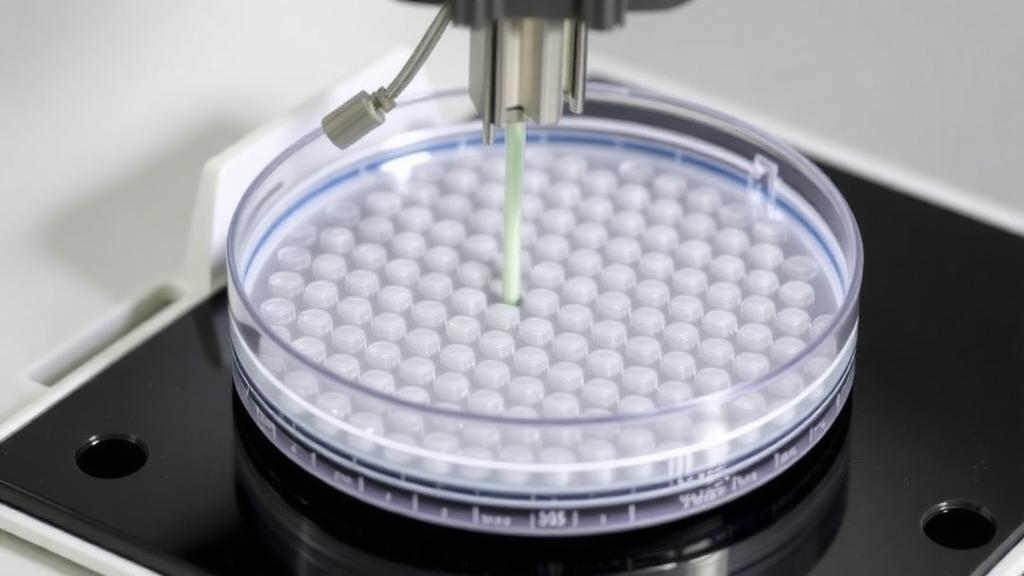
Stable Chinese hamster ovary (CHO) cell line development depends on how efficiently monoclonal populations recover and expand after single-cell cloning (SCC). In most workflows, early-stage clones are grown under static microplate conditions before transfer to suspension culture, a physiological discontinuity that can delay adaptation and obscure differences in clone performance. A study published in BMC Biotechnology evaluated C.NEST, a pneumatic microplate mixing system, as a way to improve early CHO-K1 clone expansion and ease the transition to suspension culture.

Benchmark experiments showed that pneumatic microplate mixing improved culture performance compared with static culture and supported growth resembling that achieved in shake flasks. Operating-window studies in 24-well plates found higher viable cell densities under pneumatic mixing while generally maintaining high viability, with the response depending on inoculation density and mixing intensity. These results establish the operating conditions under which the mixing system can be applied without compromising cell health.

The most consequential findings came from clone-level validation and an integrated SCC workflow demonstration. Pneumatic-mixing pre-culture was associated with faster subsequent suspension adaptation. In the integrated workflow, pneumatic mixing shortened microplate expansion by 3 days and reached the fed-batch production stage 7 days earlier than the corresponding static workflow, indicating that gains made at the microplate stage can propagate through the entire cell line development timeline.

The study also examined whether early culture conditions preserve clone ranking. Among the eight clones advanced to production, 96-well relative titer was positively correlated with final fed-batch titer under pneumatic mixing (Spearman’s ρ = 0.7857, P = 0.0279), while the static workflow showed a weak negative, non-significant correlation. The authors note that this correlation pattern is consistent with greater preservation of clone ranking under the tested pneumatic-mixing conditions, though it is an observational association within a small set of selected clones rather than proof of predictive superiority.

The authors conclude that early pneumatic mixing in microplates improves clone expansion and facilitates the transition from static SCC culture to suspension culture, thereby accelerating progression through CHO cell line development. Because the reported workflow gains come from a single demonstration with eight production clones and a shared-access early version of the article subject to further edits, the timing and correlation results should be viewed as promising initial evidence awaiting broader replication across cell lines, media formulations, and production scales.

Subject of Research: Pneumatic microplate mixing for early CHO clone expansion and suspension adaptation after single-cell cloning

Article Title: Pneumatic microplate mixing accelerates CHO single-cell cloning workflows and improves early clone expansion

Article References: Yen, F.-C., Chiu, Y.-M., Lin, S.-P., Lin, C.-N., Wang, W.-R., & Tsai, C.-H. (2026). Pneumatic microplate mixing accelerates CHO single-cell cloning workflows and improves early clone expansion. BMC Biotechnology. https://doi.org/10.1186/s12896-026-01234-x

Image Credits: AI Generated

DOI: 10.1186/s12896-026-01234-x

Keywords: CHO cells, single-cell cloning, cell line development, microplate mixing, suspension culture, clone expansion, fed-batch, bioprocessing, CHO-K1, titer correlation, pneumatic mixing, BMC Biotechnology

News Source: Gregory Coleman. (October 29, 2026). Pneumatic Microplate Mixing Speeds CHO Clone Expansion Toward Suspension Culture. Scienmag.


Tags: bioprocessingBMC Biotechnologycell line developmentCHO cellsCHO-K1clone expansionfed-batchmicroplate mixingpneumatic mixingsingle-cell cloningsuspension culturetiter correlation
Share12Tweet7Share2ShareShareShare1

Related Posts

Sheep manure can partially replace urea in Pakchong forage, coastal trial shows

Sheep manure can partially replace urea in Pakchong forage, coastal trial shows

October 30, 2026
Quadruplex PCR Test Rapidly Identifies Four Pathogenic Clostridium Species in Cattle

Quadruplex PCR Test Rapidly Identifies Four Pathogenic Clostridium Species in Cattle

October 30, 2026

New bacterium found in infants’ noses hints at hidden airway microbiome diversity

October 30, 2026

Automated VHF tracker alerts researchers to returning penguins within minutes

October 30, 2026

POPULAR NEWS

  • Global Financing Facility falls short on adolescent health funding in three country case studies

    Global Financing Facility falls short on adolescent health funding in three country case studies

    29 shares
    Share 12 Tweet 7
  • Prostate Cancer Detection Rose After MRI Arrived, But a Single-Centre Study Says the Reason Stays Unclear

    29 shares
    Share 12 Tweet 7
  • Midday Sunlight Yields Smaller Copper Nanoparticles With Stronger Antibacterial Activity

    29 shares
    Share 12 Tweet 7
  • Never-Smoker COPD Shows Stronger Lung Function Gains from Salbutamol and Glycopyrronium

    29 shares
    Share 12 Tweet 7

About

We bring you the latest biotechnology news from best research centers and universities around the world. Check our website.

Follow us

Recent News

Ensemble AI Reads Brain MRI With Adaptive Attention and Statistical Rigor

Scientists Validate Quality-by-Design HPLC Method for Brivaracetam and Identify Its Key Degradant

Japanese Real-World Data Reproduce Trial Survival Signals in Lung Cancer

Subscribe to Blog via Email

Enter your email address to subscribe to this blog and receive notifications of new posts by email.

Join 86 other subscribers
  • Contact Us

Bioengineer.org © Copyright 2023 All Rights Reserved.

Welcome Back!

Login to your account below

Forgotten Password?

Retrieve your password

Please enter your username or email address to reset your password.

Log In
No Result
View All Result
  • Homepages
    • Home Page 1
    • Home Page 2
  • News
  • National
  • Business
  • Health
  • Lifestyle
  • Science

Bioengineer.org © Copyright 2023 All Rights Reserved.
