


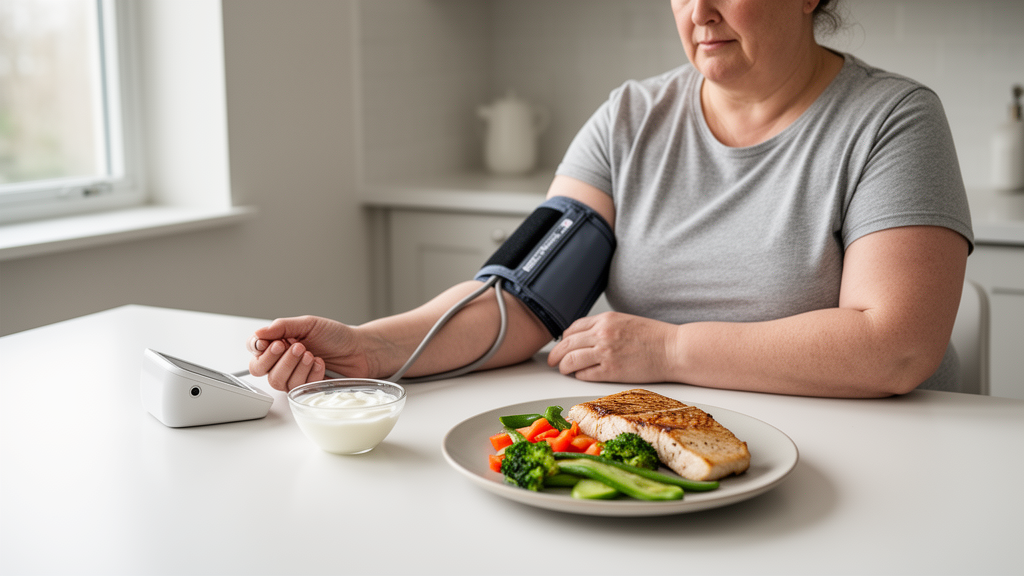
A carefully controlled clinical trial has found that a daily capsule containing eight probiotic strains did nothing to improve the central vascular health of adults with hypertension and excess weight who were already cutting calories. Over twelve weeks, the supplemented participants showed no measurable advantage in arterial stiffness or central blood pressure compared with those taking placebo, according to the randomized, double-blind, placebo-controlled study conducted at the State University of Rio de Janeiro and published in Artery Research.
The trial enrolled men and women aged 40 to 65 years with a body mass index between 25.0 and 39.9 kg/m2 and a previous diagnosis of hypertension, all of whom had been taking the same antihypertensive drugs for at least four weeks. Participants were recruited from two hypertension outpatient clinics in Rio de Janeiro, and the study ran from December 2021 to March 2023. Sixty-six subjects were randomized to receive either the multi-strain probiotic or a placebo capsule, and both groups were prescribed the same energy-restricted diet, calculated by reducing each participant’s estimated daily energy expenditure by 800 kilocalories per day.
Because of technical and logistical problems, central hemodynamic parameters could not be measured in every participant. The analysis of arterial stiffness and central blood pressure ultimately rested on 30 people who completed the full assessment at both baseline and week 12: 13 in the probiotics group and 17 in the control group. The researchers acknowledge that this small sample is the study’s main limitation, a consequence of the COVID-19 pandemic, strict eligibility criteria and the technical issues that prevented complete vascular testing.
The probiotic capsules contained eight freeze-dried strains, including Lactobacillus acidophilus, Bifidobacterium lactis, Bifidobacterium longum, Lactobacillus casei, Lactobacillus rhamnosus, Lactobacillus plantarum, Lactobacillus salivarius and Bifidobacterium brevis, at a total daily dose of 3 × 10^10 colony-forming units. The placebo capsules were identical in color, shape and size but contained only microcrystalline cellulose. Participants took one capsule each morning, 30 minutes before breakfast, and compliance was monitored by counting returned capsules. Throughout the study, they were instructed to avoid products containing probiotics, prebiotics or synbiotics, as well as fermented dairy products and foods high in polyphenols.
Assessments were carried out at baseline, at week 6 and at week 12. At each full evaluation, the researchers measured dietary intake through 24-hour recalls, anthropometric measurements, body composition by dual-energy X-ray absorptiometry, blood pressure with a validated oscillometric device, and central hemodynamic parameters using tonometry-based techniques. Central hemodynamics were assessed with the SphygmoCor device, which derives aortic systolic pressure, aortic pulse pressure, augmentation pressure and augmentation index from radial pulse waveforms, and with the Mobil-O-Graph device, which estimates pulse wave velocity, a well-established marker of arterial stiffness, using the ARCsolver method.
The results were unambiguous. In the intergroup analyses, performed with two-way repeated measures analysis of variance, there was no significant effect of probiotic supplementation on any central hemodynamic parameter. Neither group showed a significant reduction in arterial stiffness or central blood pressures over the twelve weeks. Both groups did lose weight, with a percentage weight loss of 1.9 ± 3.3% in the control group and 1.0 ± 2.4% in the probiotics group, and both showed significant decreases in waist circumference and waist-to-height ratio, but these changes were similar between groups and reflected the effect of time on the diet rather than any differential effect of the capsules. Energy intake fell significantly in both groups, although the decrease was smaller than the prescribed 800 kilocalories per day.
While the probiotic capsules failed to deliver measurable vascular benefits, the study’s secondary analysis produced a finding the researchers consider important: changes in body adiposity were directly associated with changes in central hemodynamics. There were positive and significant associations between changes in body weight and modifications in aortic systolic blood pressure, augmentation pressure and pulse wave velocity, and between changes in visceral adipose tissue, measured by DXA, and modifications in pulse wave velocity. In other words, participants who lost more body weight and visceral fat tended to show greater improvements in arterial stiffness and central pressures, suggesting that body adiposity plays an important role in central hemodynamic parameters in this population.
The null result contrasts with an earlier randomized trial in postmenopausal women with obesity, in which multispecies probiotic supplementation significantly reduced pulse wave velocity, augmentation index and central systolic pressure. The authors point to several methodological differences that may explain the discrepancy. In the earlier study, individuals using pharmacotherapy for hypertension were excluded, whereas every participant in the present trial was taking antihypertensive medication, which may have influenced baseline arterial stiffness and partially attenuated the magnitude of any changes. A meta-analysis cited by the authors found that different antihypertensive drug classes reduce pulse wave velocity, with renin–angiotensin system inhibitors and calcium channel blockers exerting effects beyond simple blood pressure lowering. In the earlier trial, probiotics also significantly lowered systolic blood pressure compared with control, which was not observed here, and blood pressure reduction itself improves arterial distensibility by decreasing transmural pressure; a recent meta-analysis found that approximately 0.65 m/s of pulse wave velocity reduction occurs for every 10 mmHg decrease in mean arterial pressure. The structured caloric restriction imposed on both groups in the present study, which was absent in the earlier trial, may also have prevented significant differences from emerging between the groups.
The study was grounded in a growing body of evidence linking the gut microbiome to arterial dysfunction. Experimental models suggest that gut microbiome-derived metabolites, such as trimethylamine N-oxide (TMAO), play a role in arterial stiffening, and a consistent and independent association between elevated circulating TMAO levels and aortic stiffness, as well as increased systolic blood pressure, has been demonstrated in both mice and humans. Mechanistically, TMAO promotes endothelial dysfunction through increased oxidative stress, activation of inflammatory pathways including NF-κB signaling, and reduced nitric oxide bioavailability, processes that accelerate extracellular matrix remodeling and vascular fibrosis. Probiotic supplementation has been shown in experimental models to attenuate systemic inflammation and oxidative stress, and modulation of gut microbiota has been shown to reduce metabolic endotoxemia and pro-inflammatory cytokine production, providing a plausible biological rationale for testing probiotics against arterial stiffness even though the present trial did not confirm a clinical benefit.
The authors note several strengths of the work, including its placebo-controlled, double-blind randomized design, the use of DXA with quantification of visceral adipose tissue, the multi-strain intervention, the concomitant prescription of a hypocaloric dietary plan, and the focus on central hemodynamic parameters in individuals at increased cardiovascular risk. To address the imbalance in beta-blocker use between groups, which was higher in the control group, the researchers performed multivariable analyses adjusted for this medication, and the between-group differences remained comparable to the unadjusted analyses, indicating that beta-blocker use did not materially influence the main findings. The final sample of 30 participants provided a statistical power of 83.6% to detect a 1 m/s decrease in pulse wave velocity in the probiotics group, and none of the non-significant analyses showed a large effect size. The trial was registered at ensaiosclinicos.gov.br under RBR-7jw4ry on 14 January 2020, and all participants provided written informed consent.
The authors conclude that multi-strain probiotic supplementation combined with energy restriction over twelve weeks did not improve central hemodynamic parameters in individuals with hypertension and overweight or obesity, while changes in body weight and visceral adipose tissue were positively and significantly correlated with modifications in aortic systolic pressure and markers of pulse wave reflection and arterial stiffness. They call for more rigorous, large-scale, multicenter, blinded randomized controlled trials to expand knowledge about the impact of probiotics on central hemodynamic parameters in people at increased cardiovascular risk.
Subject of Research: A randomized trial of multi-strain probiotics added to caloric restriction on central hemodynamics in hypertensive adults with excess weight
Article Title: Multi-strain Probiotic Does Not Enhance the Effects of Caloric Restriction on Central Hemodynamic Parameters in Individuals with Hypertension and Overweight
Article References: Guedes, M. R., da Silva Pontes, K. S., da Cunha, M. R., & Klein, M. R. S. T. (2026). Multi-strain Probiotic Does Not Enhance the Effects of Caloric Restriction on Central Hemodynamic Parameters in Individuals with Hypertension and Overweight. Artery Research, 32(1), Article 35. https://doi.org/10.1007/s44200-026-00137-8
Image Credits: AI Generated
DOI: 10.1007/s44200-026-00137-8
Keywords: arterial stiffness, pulse wave velocity, central blood pressure, probiotics, caloric restriction, hypertension, visceral adipose tissue, gut microbiome, randomized controlled trial, obesity, aortic systolic pressure, augmentation pressure
News Source: Daisy Hatcher. (October 29, 2026). Probiotics Fail to Add Vascular Benefits to Caloric Restriction in Hypertensive Adults with Excess Weight. Scienmag.



