


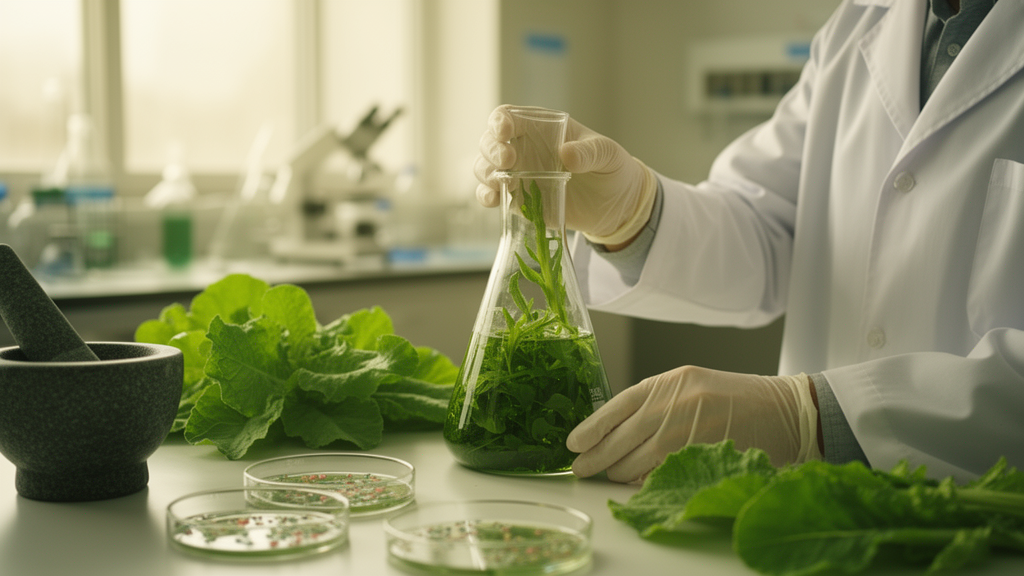
A newly published narrative review in Clinical Phytoscience brings together, for the first time, the scattered research on Launaea taraxacifolia, a leafy herb from the Asteraceae family long used in West African traditional medicine and often dismissed as a weed. The review, authored by researchers including Konei Emangbondji Hounsou, Mubo Adeola Sonibare and Taiwo Olayemi Elufioye and published on 12 August 2026, concludes that the plant, commonly called wild or African lettuce, shows consistent biological activity in laboratory and animal models that is relevant to cancer-related processes. Crucially, however, the authors stress that the evidence remains almost entirely preclinical, with no human clinical studies yet conducted.
The review team searched PubMed, Scopus, Embase, ScienceDirect, Web of Science, Google Scholar and African Journals Online between December 2025 and May 2026, considering publications from 2005 onward. From an initial pool of 532 relevant publications, they narrowed the set to 64 studies specifically examining the plant and cancer management: 56 original research articles, three reviews, one conference proceedings volume, one short communication and three online sources. Publication activity rose over time, peaking between 2020 and 2022, and geographically the work has been concentrated in West Africa, led by Nigeria and followed by Ghana and Benin, reflecting the plant’s abundance and traditional importance in that region.
Phytochemical analyses compiled in the review show that the leaves contain a broad array of bioactive constituents, including saponins, terpenoids, cardiac glycosides, steroids, tannins, flavonoids and alkaloids, along with phenolic compounds such as caffeic acid, chlorogenic acid, ellagic acid, quercetin and kaempferol. Essential oil studies have identified monoterpene hydrocarbons like limonene, sabinene and (E)-β-ocimene, plus the aldehyde citronellal. One research group reported isolating 47 compounds from a methanolic leaf extract, with palmitic acid, methyl-11-octadecenoate, erythritol, glycerol, linolelaidic acid methyl ester and phytol among the most abundant. The review’s authors suggest this chemical diversity may underpin the plant’s reported pharmacological effects, although in many studies the specific compounds responsible for observed activity have not been identified.
The direct anticancer evidence comes from cell culture work. One recent study assessed crude leaf extracts against two human cancer cell lines, breast adenocarcinoma MCF-7 and prostate cancer PC-3, and found a clear dose-dependent reduction in cell viability, with higher concentrations of 10 micrograms per microlitre suppressing viability more strongly than 2 micrograms per microlitre. Another team reported comparable cytotoxic effects, and a separate investigation documented dose-dependent killing of THP-1 human monocyte cells by a hydroethanolic leaf extract. These in vitro findings indicate that compounds in the extracts can interfere with the survival and proliferation of cancer cells in a dish, though the review’s authors caution that such assays do not replicate how extracts behave in a living body.
Studies probing mechanism rather than simple cytotoxicity add further detail. Aqueous extracts significantly inhibited the growth of WHC01 esophageal cancer cells compared with acetylsalicylic acid used as a positive control, and treatment induced arrest in the G0–G1 phase of the cell cycle, preventing cells from progressing toward division. The same treatment produced morphological changes characteristic of apoptosis, or programmed cell death, comparable to those seen with the standard chemotherapy drug 5-fluorouracil, and downregulated CYP1A2, a gene linked to carcinogen metabolism and metastatic processes. Ethanolic extracts have likewise been reported to inhibit proliferation of several cancer cell types through cell cycle arrest and apoptosis. Separately, in a rat model of benzene-induced haematotoxicity, co-administration of aqueous leaf extract at doses of 100, 200 and 400 milligrams per kilogram reversed benzene-driven imbalances in the adhesion molecules ICAM-1 and VCAM-1, alterations the review links to inflammatory dysregulation and carcinogenesis.
Beyond direct cytotoxicity, the review catalogs a set of supporting biological activities. In rats exposed to cisplatin-induced hepatorenal damage, aqueous leaf extract doses of 100 and 400 milligrams per kilogram mitigated structural injury in the liver and kidneys in a dose-dependent manner, suggesting cytoprotective potential against chemotherapy side effects, though whether the extract would diminish or preserve drug efficacy in patients remains untested. Antioxidant studies showed that a 70 percent methanolic leaf extract scavenged DPPH radicals with an IC50 of 16.18 micrograms per millilitre, nitric oxide at 123.3, hydroxyl radicals at 128.2 and metal chelating activity at 97.94, with a total antioxidant capacity of 80.28 micrograms per millilitre and lipid peroxidation inhibition at an IC50 of 23. In rats with aluminum chloride-induced oxidative stress, co-administration of various solvent fractions restored the antioxidant enzymes superoxide dismutase, catalase and glutathione peroxidase and markedly reduced malondialdehyde, a marker of lipid peroxidation.
Anti-inflammatory results follow a similar pattern. An n-hexane leaf extract inhibited lipoxygenase with an IC50 of 30.06 micrograms per millilitre, close to the standard drug indomethacin at 25.25, while an aqueous leaf extract showed bovine protein denaturation inhibition of 40 to 80 percent and an IC50 of 0.25 milligrams per millilitre. In LPS and IFN-gamma activated THP-1 cells, 50 and 100 micrograms per millilitre of a hydroethanolic extract significantly reduced TLR8 mRNA expression, and in a formalin-induced edema model the extract achieved complete inhibition of swelling four hours after administration. The review frames these antioxidant and anti-inflammatory effects as biologically relevant to cancer prevention, since oxidative stress and chronic inflammation contribute to tumor initiation and progression, while emphasizing that this connection remains inferential rather than demonstrated.
Safety data, though limited in scope, are comparatively encouraging. Using Lorke’s method and OECD guidelines, one team found aqueous leaf extract safe in Wistar rats up to 1000 milligrams per kilogram, with mostly normal organ histology and only mild spleen alterations, including follicular hyperplasia, congestion and edema, at 500 and 1000 milligrams per kilogram. Another group reported that rats tolerated a hydroethanolic extract up to 5000 milligrams per kilogram without mortality, with normal hematological and biochemical profiles and an LD50 exceeding 5000 milligrams per kilogram. A third study found no toxicity signs in rats given up to 1000 milligrams per kilogram over 14 days, or after 28 days of repeated dosing at 500 and 1000 milligrams per kilogram. One notable exception came from a non-mammalian model: Clarias gariepinus fish fingerlings exposed for 96 hours to an ethanolic leaf extract showed concentration- and duration-dependent behavioral abnormalities, histopathological changes and mortality, a finding the authors flag as evidence that toxicity can emerge under specific exposure conditions.
The review’s critical appraisal is unusually candid for a synthesis favorable to its subject. Most anticancer data derive from in vitro assays using crude or semi-purified extracts, which cannot reflect pharmacokinetic behavior in living organisms. Extraction methods, solvents, dosages and endpoints vary widely across studies, hampering reproducibility, and activity is frequently reported without identifying the responsible phytochemicals, blocking structure-activity analysis. Toxicological evaluations have generally been short-term and narrow in dose range, leaving long-term toxicity and herb-drug interactions poorly characterized. Most importantly, no clinical studies exist, so conclusions about efficacy, safety, dosage and therapeutic relevance in humans remain speculative.
The authors’ conclusion is accordingly measured: the accumulated evidence positions Launaea taraxacifolia as a promising candidate for anticancer drug discovery, but validating that promise will require bioactivity-guided fractionation to isolate active compounds, mechanistic work across cancer types, robust in vivo studies and, ultimately, well-designed clinical trials. They also point to emerging directions such as plant-derived nanoparticle synthesis to improve bioavailability and the use of molecular docking and AI-assisted target prediction to prioritize compounds. Until that pipeline is complete, the plant remains what it has long been in West Africa, a nutritious leafy vegetable and traditional remedy whose laboratory profile now merits rigorous scientific follow-up rather than premature therapeutic claims.
Subject of Research: A narrative review of the phytochemistry, anticancer activity and safety evidence for the medicinal plant Launaea taraxacifolia
Article Title: Bioactive metabolites of Launaea taraxacifolia (Willd.) Amin ex C. Jeffrey and their mechanistic roles in cancer suppression
Article References: Hounsou, K. E., Sonibare, M. A., & Elufioye, T. O. (2026). Bioactive metabolites of Launaea taraxacifolia (Willd.) Amin ex C. Jeffrey and their mechanistic roles in cancer suppression. Clinical Phytoscience, 12(1), Article 20. https://doi.org/10.1186/s40816-026-00437-1
Image Credits: AI Generated
DOI: 10.1186/s40816-026-00437-1
Keywords: Launaea taraxacifolia, African wild lettuce, anticancer, phytochemistry, apoptosis, cell cycle arrest, antioxidant, anti-inflammatory, in vitro, preclinical, toxicity, ethnopharmacology
News Source: Ophelia Keating. (October 29, 2026). African Wild Lettuce Shows Anticancer Activity in Lab Studies, Review Finds. Scienmag.



