• HOME
  • NEWS
  • EXPLORE
    • CAREER
      • Companies
      • Jobs
    • EVENTS
    • iGEM
      • News
      • Team
    • PHOTOS
    • VIDEO
    • WIKI
  • BLOG
  • COMMUNITY
    • FACEBOOK
    • INSTAGRAM
    • TWITTER
Saturday, February 7, 2026
BIOENGINEER.ORG
No Result
View All Result
  • Login
  • HOME
  • NEWS
  • EXPLORE
    • CAREER
      • Companies
      • Jobs
        • Lecturer
        • PhD Studentship
        • Postdoc
        • Research Assistant
    • EVENTS
    • iGEM
      • News
      • Team
    • PHOTOS
    • VIDEO
    • WIKI
  • BLOG
  • COMMUNITY
    • FACEBOOK
    • INSTAGRAM
    • TWITTER
  • HOME
  • NEWS
  • EXPLORE
    • CAREER
      • Companies
      • Jobs
        • Lecturer
        • PhD Studentship
        • Postdoc
        • Research Assistant
    • EVENTS
    • iGEM
      • News
      • Team
    • PHOTOS
    • VIDEO
    • WIKI
  • BLOG
  • COMMUNITY
    • FACEBOOK
    • INSTAGRAM
    • TWITTER
No Result
View All Result
Bioengineer.org
No Result
View All Result
Home NEWS Science News Biology

Reduced impact logging still harms biodiversity in tropical rainforests

Bioengineer by Bioengineer
October 23, 2017
in Biology
Reading Time: 2 mins read
0
Share on FacebookShare on TwitterShare on LinkedinShare on RedditShare on Telegram
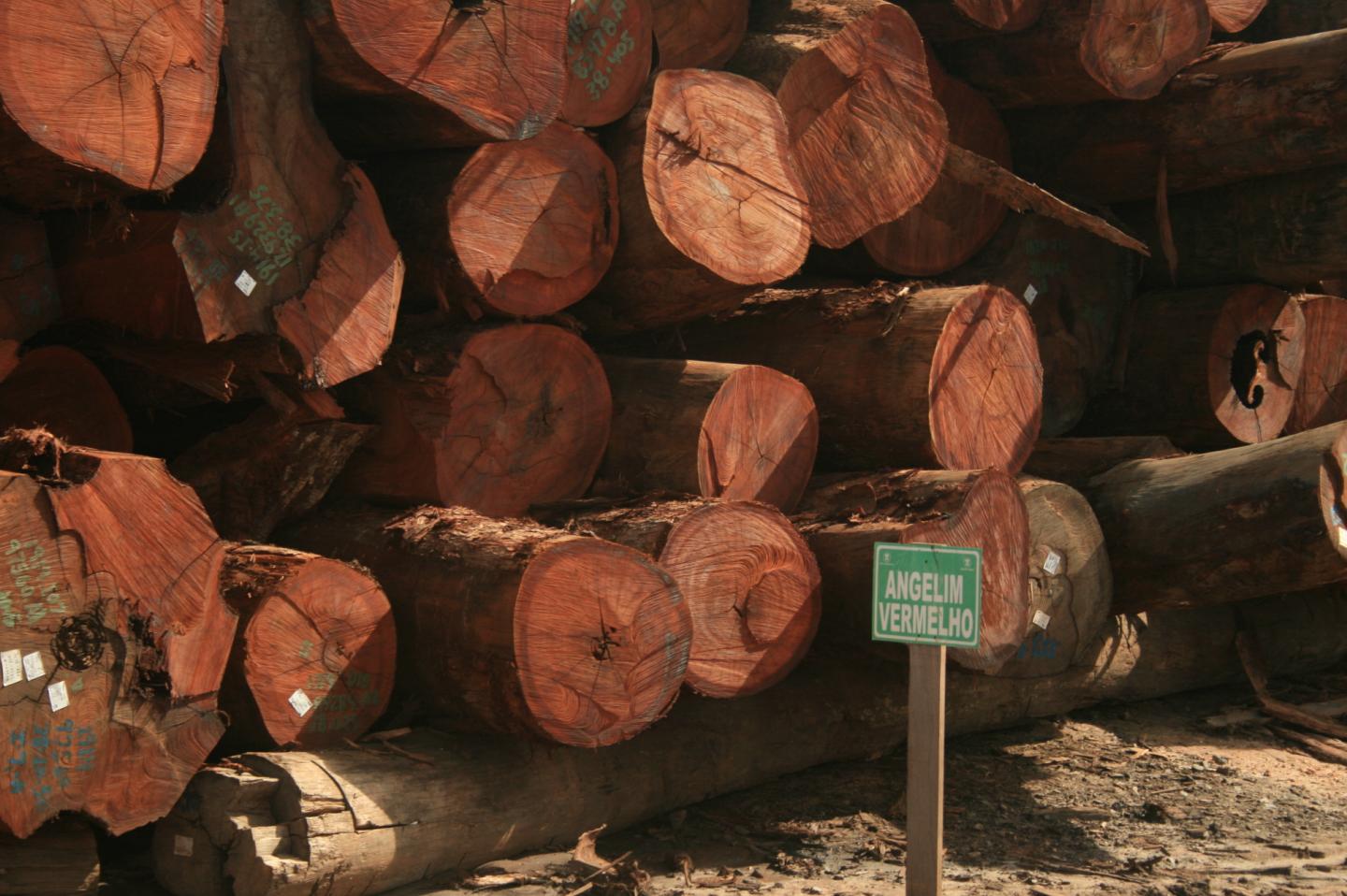
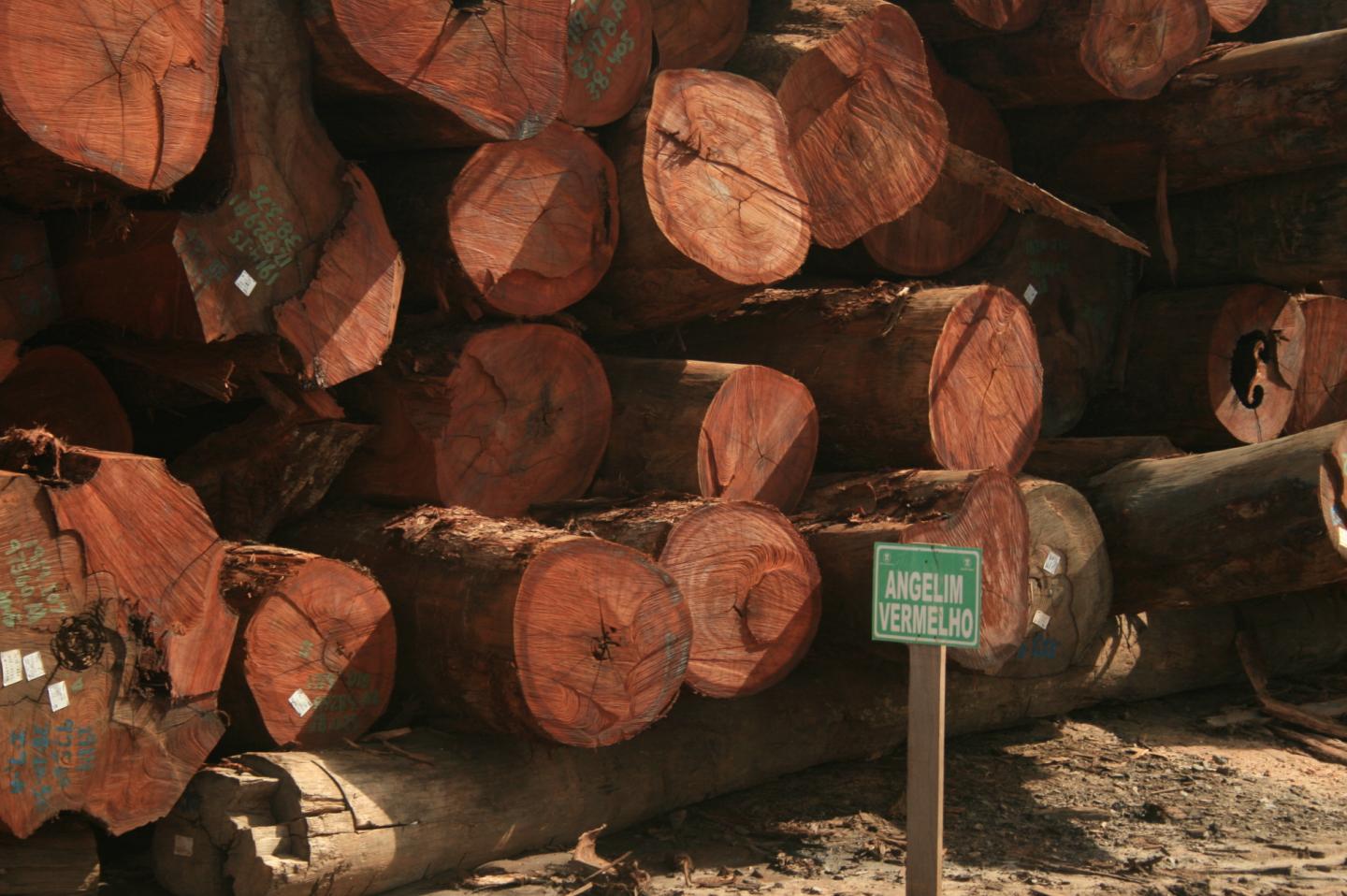
IMAGE

Credit: Felipe Franca

More than 403 million hectares of tropical forests worldwide have been earmarked for timber concessions with selective logging a common economic activity. The Brazilian Amazon alone holds around 4.5 billion m3 of commercial timber volume, and increased is the demand on Amazonian hardwood as African and Asian timber stocks are exhausted.

The international study, 'Identifying thresholds of logging intensity on dung beetle communities to improve the sustainable management of Amazonian tropical forests' looked at the impact of logging by examining its effect on forest dung beetles and the way in which the beetles remove dung and disturb the soil, considered as good indicators of forest and soil health.

The research, published in the scientific journal Biological Conservation, looked at 34 different plots situated in the state of Pará – an area two times that of Spain and a focal point for Amazon protection efforts in the last decades. They found that even low levels of logging leaded to negative effects on dung beetle diversity and rates of dung beetle-mediated soil removal.

"Our findings provide novel empirical evidence that biological consequences from Reduced Impact Logging depend strongly on the scale and intensity at which logging operations are developed" said lead researcher Filipe França from Lancaster University. "The dung beetle species richness and biomass, and the soil removal rates were negatively affected by increasing the logging intensity."

For context, the activity of almost 5,000 dung beetles from 53 species was recorded within the largest logging concession in the Brazilian Amazon, covering 544,000 hectares of native forest – an area 3.5 times that of London. There was a rapid reduction in biodiversity up to a logging intensity of around 10 -20 m3 of timber removal per hectare after which it flattened.

"Contrary to expectations, we found concave-shaped relationships between logging intensity and biodiversity and ecosystem functioning, demonstrating that sensitive dung beetle species and important processes may be lost following even low intensity anthropogenic forest disturbances", said co-author Professor Jos Barlow of Lancaster University.

"Taken together, these results suggest that production forests in the tropics need to reconsider the scale at which logging intensity is regulated, and put in place measures that further incentivise land sparing to enhance biodiversity conservation."

###

Media Contact

[email protected]
[email protected]
44-152-459-2612

http://www.lancs.ac.uk

Related Journal Article

http://dx.doi.org/10.1016/j.biocon.2017.10.014

Share12Tweet7Share2ShareShareShare1

Related Posts

Florida Cane Toad: Complex Spread and Selective Evolution

Florida Cane Toad: Complex Spread and Selective Evolution

February 7, 2026
New Study Uncovers Mechanism Behind Burn Pit Particulate Matter–Induced Lung Inflammation

New Study Uncovers Mechanism Behind Burn Pit Particulate Matter–Induced Lung Inflammation

February 6, 2026

DeepBlastoid: Advancing Automated and Efficient Evaluation of Human Blastoids with Deep Learning

February 6, 2026

Navigating the Gut: The Role of Formic Acid in the Microbiome

February 6, 2026
Please login to join discussion

POPULAR NEWS

  • Robotic Ureteral Reconstruction: A Novel Approach

    Robotic Ureteral Reconstruction: A Novel Approach

    82 shares
    Share 33 Tweet 21
  • Digital Privacy: Health Data Control in Incarceration

    63 shares
    Share 25 Tweet 16
  • Study Reveals Lipid Accumulation in ME/CFS Cells

    57 shares
    Share 23 Tweet 14
  • Breakthrough in RNA Research Accelerates Medical Innovations Timeline

    53 shares
    Share 21 Tweet 13

About

We bring you the latest biotechnology news from best research centers and universities around the world. Check our website.

Follow us

Recent News

Barriers and Boosters of Seniors’ Physical Activity in Karachi

Evaluating Pediatric Emergency Care Quality in Ethiopia

TPMT Expression Predictions Linked to Azathioprine Side Effects

Subscribe to Blog via Email

Enter your email address to subscribe to this blog and receive notifications of new posts by email.

Join 73 other subscribers
  • Contact Us

Bioengineer.org © Copyright 2023 All Rights Reserved.

Welcome Back!

Login to your account below

Forgotten Password?

Retrieve your password

Please enter your username or email address to reset your password.

Log In
No Result
View All Result
  • Homepages
    • Home Page 1
    • Home Page 2
  • News
  • National
  • Business
  • Health
  • Lifestyle
  • Science

Bioengineer.org © Copyright 2023 All Rights Reserved.