


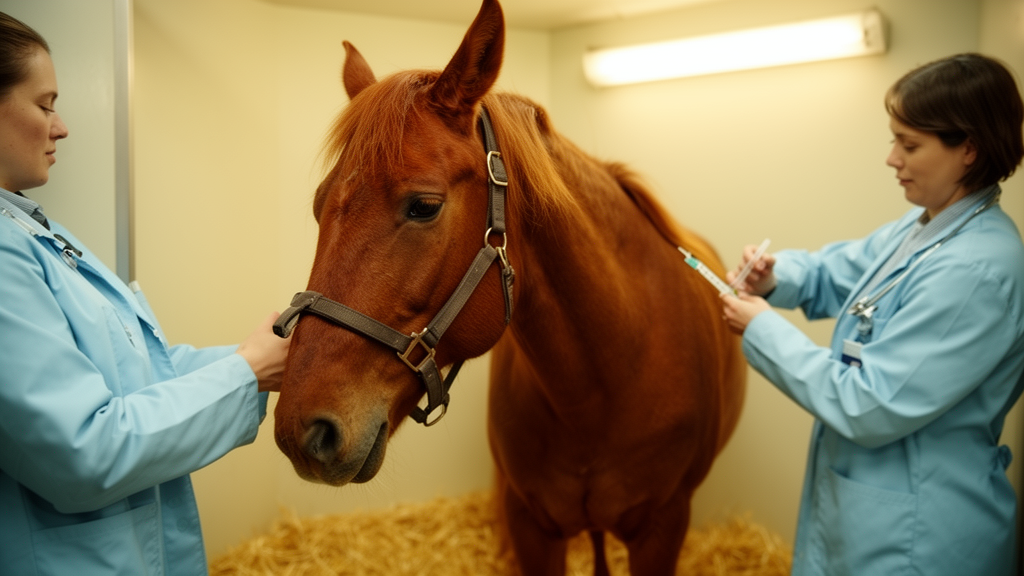
An 11-year-old Norwegian Warmblood mare that lost weight, grew hypersensitive to touch and developed spinal ataxia has become the first horse in Scandinavia with a laboratory-confirmed diagnosis of neuroborreliosis, a neurologic form of Lyme borreliosis caused by Borrelia burgdorferi sensu lato. The case, published as a case report in Acta Veterinaria Scandinavica, is notable not only for its geographic first but also because the diagnosis rested on a positive polymerase chain reaction test for Borrelia DNA in cerebrospinal fluid, and because the mare made a sustained recovery after a prolonged course of oral doxycycline, an outcome that previous reports of equine neuroborreliosis have rarely achieved.
The story began in September 2022, when a field veterinarian examined the mare for urticaria and progressive weight loss. Serological allergy testing revealed elevated allergen-specific IgE against the house dust mite Dermatophagoides farinae and the mold Alternaria alternata, and allergen-specific immunotherapy was started. Over the following week, however, the mare became increasingly dull, painful on muscle palpation and reluctant to move, and she continued to lose weight. She was referred to Bjerke Dyrehospital in Oslo, Norway, where a detailed neurologic and laboratory workup was undertaken.
On admission the mare was quiet but alert and responsive, with vital parameters within reference limits. She showed marked bilateral epaxial and cervical muscle atrophy, a body condition score of 3 out of 9 on the Henneke scale, generalized hyperesthesia, marked cervical pain with reduced range of motion, and lumbar back pain. Neurologic examination revealed grade 1 of 5 symmetrical ataxia affecting all four limbs, accentuated by head elevation and walking downhill. Both hind limbs displayed mild circumduction, and tail-pull testing indicated right-sided weakness. Reduced distal limb nociception was noted in all four limbs, a pattern consistent with diffuse spinal cord involvement. No cranial nerve deficits were detected.
Hematologic findings pointed to a systemic inflammatory response, including moderate anemia with a red blood cell count of 5.06 × 10^12 per liter, a hematocrit of 22 percent, hemoglobin of 80 g/L, mild leukopenia of 3.97 × 10^9 per liter, and a markedly increased serum amyloid A concentration of 651 mmol/L against a reference value below 20. Serum biochemistry showed only mild hyperglobulinemia. Vitamin E levels were normal, gastroscopy and an oral glucose absorption test were unremarkable, and survey radiographs of the cervical and thoracolumbar spine showed no osseous abnormalities, narrowing the differential diagnosis toward an inflammatory or infectious process of the nervous system.
The decisive sample came from the lumbosacral space. The cerebrospinal fluid was slightly cloudy, and laboratory analysis performed at LABOKLIN GmbH & Co. KG in Bad Kissingen, Germany, revealed a markedly increased white blood cell count of 2.644 × 10^9 cells per liter with neutrophilic pleocytosis and an elevated total protein concentration of 1.0 g/L, findings consistent with marked neutrophilic meningoencephalomyelitis. Bacterial culture of the fluid yielded moderate growth of Staphylococcus capitis, which the authors judged to be inadvertent sample contamination from a commensal skin organism rather than a true pathogen. Crucially, PCR testing of the cerebrospinal fluid was positive for Borrelia spp., while PCR tests for equine herpesvirus 1, Streptococcus equi subsp. equi and S. equi subsp. zooepidemicus were all negative, and ELISA testing for antibodies against tick-borne encephalitis virus was also negative.
Based on the compatible clinical presentation, the exclusion of alternative infectious etiologies, and the cytologic and molecular findings in the cerebrospinal fluid, the veterinary team made a diagnosis of neuroborreliosis. Treatment was initiated with doxycycline at 10 mg/kg orally every 12 hours together with the nonsteroidal anti-inflammatory drug flunixin meglumine at 1.1 mg/kg intravenously every 24 hours. Within seven days the mare showed marked improvement in mentation and comfort, accompanied by normalization of hematologic parameters and a falling serum amyloid A value of 381 mmol/L. The NSAIDs were discontinued after ten days, but clinical deterioration followed, so meloxicam at 0.6 mg/kg orally once daily was introduced for an additional five days, leading to clinical stabilization. Inflammatory markers returned to within reference limits thirteen days after treatment began, and the mare was discharged after nineteen days of hospitalization with continued doxycycline.
At re-examination ten days after discharge the mare was brighter and had gained 18 kilograms, though she still showed mild residual neurologic deficits, including grade 1 ataxia, hind limb toe dragging and right-sided weakness. Serum amyloid A was normal at 4 mmol/L, and hematology showed mild anemia and leukopenia. A follow-up cerebrospinal fluid sample was clear, with near-normal cytologic findings, a protein concentration of 1.07 g/L, negative bacterial culture and, importantly, a negative PCR for Borrelia spp., a result the authors interpret as supporting the efficacy of the antimicrobial therapy. Doxycycline was continued for a total of seven weeks. The mare continued to improve, with progressive weight gain and normalization of behavior, and after two months of rest ridden exercise was reintroduced without recurrence of neurologic or musculoskeletal abnormalities. At owner follow-up in early 2026, approximately three and a half years after the initial presentation, no recurrence had been reported and the mare remained clinically healthy, participating in recreational dressage training.
The authors emphasize that the diagnosis, while strongly supported, is not without limitations. The PCR assay identified Borrelia at the genus level without species-level characterization, so it remains unknown whether the infection was caused by B. burgdorferi sensu stricto, B. garinii, B. afzelii or another member of the B. burgdorferi sensu lato complex. Antibody testing was not performed in this case, which the authors acknowledge limits full diagnostic certainty, although they note that growing evidence suggests serology has limited diagnostic utility in equine neuroborreliosis, with several reported cases yielding equivocal or negative results in serum or cerebrospinal fluid. Viral encephalitis remained a consideration, and while testing for tick-borne encephalitis virus was negative, West Nile virus, Usutu virus and Louping ill virus were not specifically investigated, a limitation the report openly states. The mare had never traveled outside Norway, where West Nile virus has not been reported in horses, and clinical Usutu virus disease in equines has not been described to date.
The context of equine Lyme disease helps explain why a single well-documented case carries weight. Horses in endemic areas are frequently exposed to B. burgdorferi sensu lato, and studies of Scandinavian equine populations have reported apparent seroprevalence of 16.8 percent in Sweden, 29.0 percent in Denmark and 47 percent in Norway. Yet clinical disease remains rare, particularly in Europe, and diagnosis is controversial because serologic tests cannot distinguish past from active infection or confirm causality of clinical signs. Antigen detection on affected tissues is considered low yield, culture is technically challenging, and data on antimicrobial penetration across a presumably disrupted blood-brain barrier are limited. Reported clinical signs of equine neuroborreliosis are frequently non-specific and may include synovitis, muscle atrophy, progressive weight loss, cranial nerve deficits, laryngeal dysfunction, spinal ataxia, hyperesthesia, fasciculations and cervical and back stiffness, and a reported median duration of neurologic dysfunction preceding death is approximately 120 days, underscoring the stakes of delayed diagnosis.
The mare in this report had a relevant exposure history, having been pastured in southeastern Norway, where the prevalence of the tick vector Ixodes ricinus and of B. burgdorferi sensu lato is well documented. She presented with signs commonly associated with equine neuroborreliosis, including weight loss, muscle atrophy, proprioceptive and spinal ataxia, hyperesthesia and cervical stiffness, although other signs such as cranial nerve deficits, laryngeal dysfunction, synovitis and fasciculations were not observed, and none of these signs are pathognomonic. While PCR of cerebrospinal fluid is generally considered a low-yield procedure because of limited organism presence in the fluid, positive results are regarded as clinically meaningful, particularly in the absence of findings suggesting other pathogens and when serology is unavailable, as in this case. Antemortem diagnoses of equine neuroborreliosis have previously been reported based on supportive findings including a positive cerebrospinal fluid PCR, and newer techniques such as genomic hybrid capture may improve sensitivity for detecting B. burgdorferi DNA in cerebrospinal fluid samples.
Long-term recovery following treatment with oral doxycycline in combination with NSAIDs is an infrequently reported outcome, since many previously described equine neuroborreliosis cases deteriorated despite treatment. Although doxycycline is seen to have low cerebrospinal fluid penetration in healthy horses, the authors suggest its efficacy in this case may reflect improved access during inflammatory stages and early therapeutic intervention, and the later absence of detectable Borrelia DNA in the follow-up cerebrospinal fluid sample aligns with the favorable outcome previously reported in a comparable equine case treated with doxycycline as the sole antimicrobial agent. As a single case report, the findings cannot establish how often such recoveries occur, but the authors conclude that the case expands the documented geographic range of equine neuroborreliosis, provides molecular confirmation of Borrelia DNA in cerebrospinal fluid, and adds to the limited number of cases with documented treatment success and sustained long-term recovery, highlighting the potential for horses to recover when appropriate and timely antimicrobial therapy is initiated.
Subject of Research: The first documented case of equine neuroborreliosis in Scandinavia, diagnosed by cerebrospinal fluid PCR and successfully treated with doxycycline
Article Title: Equine neuroborreliosis in Scandinavia: cerebrospinal fluid PCR confirmation and successful treatment in a mare
Article References: Ruiz, S., Øverlie, M., Bergren, A., & Risnes Hellings, I. (2026). Equine neuroborreliosis in Scandinavia: cerebrospinal fluid PCR confirmation and successful treatment in a mare. Acta Veterinaria Scandinavica, 68(1), Article 38. https://doi.org/10.1186/s13028-026-00879-0
Image Credits: AI Generated
DOI: 10.1186/s13028-026-00879-0
Keywords: equine neuroborreliosis, Lyme borreliosis, Borrelia burgdorferi, cerebrospinal fluid PCR, doxycycline, horse, Norway, Scandinavia, case report, tick-borne disease, ataxia, veterinary neurology
News Source: William Thompson. (October 29, 2026). First Scandinavian Case of Equine Neuroborreliosis Confirmed by Spinal Fluid PCR in a Mare. Scienmag.



