

• HOME
  • NEWS
  • EXPLORE
    • CAREER
      • Companies
      • Jobs
    • EVENTS
    • iGEM
      • News
      • Team
    • PHOTOS
    • VIDEO
    • WIKI
  • BLOG
  • COMMUNITY
    • FACEBOOK
    • INSTAGRAM
    • TWITTER
Friday, October 30, 2026
BIOENGINEER.ORG
No Result
View All Result
  • Login
  • HOME
  • NEWS
  • EXPLORE
    • CAREER
      • Companies
      • Jobs
        • Lecturer
        • PhD Studentship
        • Postdoc
        • Research Assistant
    • EVENTS
    • iGEM
      • News
      • Team
    • PHOTOS
    • VIDEO
    • WIKI
  • BLOG
  • COMMUNITY
    • FACEBOOK
    • INSTAGRAM
    • TWITTER
No Result
View All Result
Bioengineer.org
No Result
View All Result
Home NEWS Science News Chemistry

Review Charts Design of Metal-Free Oxide–Graphene Catalysts for Seawater Electrolysis

by
October 29, 2026
in Chemistry, Technology
Reading Time: 2 mins read
0
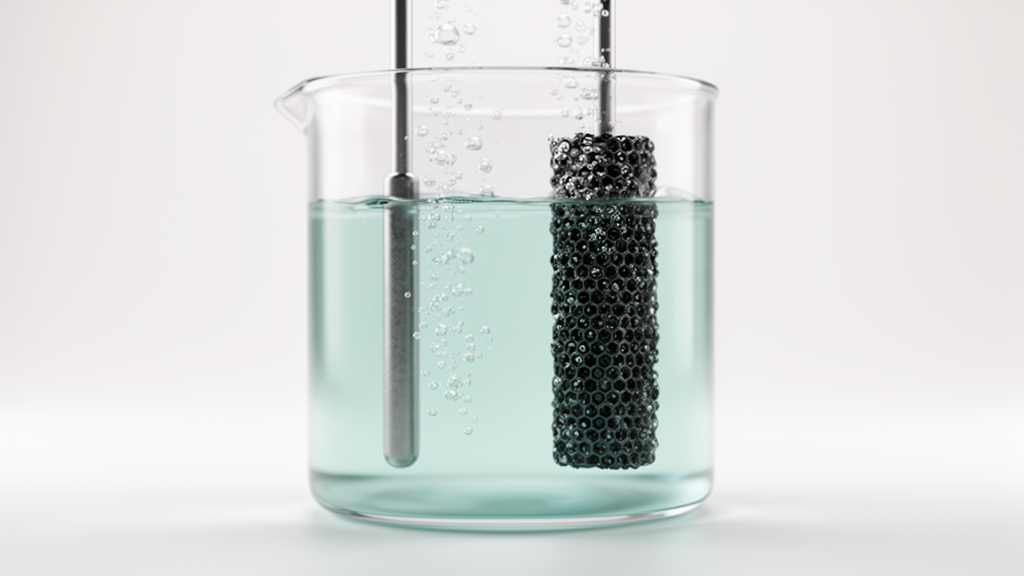
Review Charts Design of Metal-Free Oxide–Graphene Catalysts for Seawater Electrolysis

Review Charts Design of Metal-Free Oxide–Graphene Catalysts for Seawater Electrolysis

Share on FacebookShare on TwitterShare on LinkedinShare on RedditShare on Telegram

Hydrogen produced from seawater could become a cornerstone of a carbon-neutral energy system, but doing it efficiently without precious metals remains a major materials challenge. A new open-access review in Discover Chemical Engineering, published on 12 September 2026, examines how noble-metal-free oxide–graphene nanocomposites can be designed as electrocatalysts for direct seawater electrolysis. The article, authored by Gopi Krishna Bhonagiri, Dharani Kumar Chennamsetty, Shajahan Shaik and Venkata Satya Siva Srikanth Vadali, is being shared early as a peer-reviewed, accepted manuscript that is citable and carries a permanent DOI, with a final version of record to follow.

The review’s central argument is that seawater electrolysis cannot simply borrow the playbook from freshwater water splitting. Because freshwater resources are scarce, the authors argue that electrocatalytic water splitting driven by renewable energy offers a clean alternative to conventional hydrogen generation from fossil fuels, but the harsh seawater environment changes the requirements fundamentally. The paper systematically lays out the fundamental principles governing direct seawater electrolysis, including thermodynamics, reaction kinetics, and the electrochemical mechanisms underlying the hydrogen evolution reaction, the oxygen evolution reaction, and the competing chlorine evolution reaction that can sidetrack selectivity in chloride-rich electrolytes.

At the heart of the review is a design framework for catalysts. The authors identify five principles that govern performance: electronic structure, active site optimization, specific surface area, electrical conductivity, and resistance to chloride corrosion. The review also presents a comprehensive comparison of top-performing metal oxide–graphenaceous nanocomposites reported to date, giving researchers a benchmark table against which new materials can be judged.

Beyond individual catalysts, the authors confront the practical obstacles standing between laboratory performance and commercial deployment. Chloride-induced corrosion of catalysts and electrodes is singled out as a persistent problem, alongside system-level integration issues that arise when seawater electrolysis is scaled up. The review proposes benchmarking criteria for commercialization and closes with suggestions for future research and development directions. As a review, the article does not report new experimental results; rather, it consolidates the state of the art in noble-metal-free oxide–graphene electrocatalysts and frames the open questions that must be answered before direct seawater electrolysis can deliver hydrogen at scale.

Subject of Research: Design principles for noble-metal-free oxide–graphene nanocomposite electrocatalysts in direct seawater electrolysis

Article Title: A focused review on design aspects of noble-metal-free oxide-graphenaceous nanocomposites as electrocatalysts for direct seawater electrolysis

Article References: Bhonagiri, G. K., Chennamsetty, D. K., Shaik, S., & Vadali, V. S. S. S. (2026). A focused review on design aspects of noble-metal-free oxide-graphenaceous nanocomposites as electrocatalysts for direct seawater electrolysis. Discover Chemical Engineering. https://doi.org/10.1007/s43938-026-00142-y

Image Credits: AI Generated

DOI: 10.1007/s43938-026-00142-y

Keywords: seawater electrolysis, hydrogen evolution, electrocatalysts, graphene nanocomposites, metal oxides, chlorine evolution reaction, chloride corrosion, oxygen evolution reaction, catalyst design, review article, focused, review

News Source: Neil Sanderson. (October 29, 2026). Review Charts Design of Metal-Free Oxide–Graphene Catalysts for Seawater Electrolysis. Scienmag.


Tags: Catalyst Designchloride corrosionchlorine evolution reactionelectrocatalystsfocusedgraphene nanocompositeshydrogen evolutionmetal oxidesOxygen evolution reactionReviewreview articleseawater electrolysis
Share12Tweet7Share2ShareShareShare1

Related Posts

Systematic review maps sustainability tensions in offshore wind development

Systematic review maps sustainability tensions in offshore wind development

October 30, 2026
Amateur maps and sketches helped put Hong Kong's wartime pillboxes on official charts

Amateur maps and sketches helped put Hong Kong’s wartime pillboxes on official charts

October 30, 2026

Heavier logging trucks only pay off when the road network lets them work

October 30, 2026

Supersulfated cement outperforms Portland cement in curbing concrete’s alkali-silica reaction

October 30, 2026

POPULAR NEWS

  • Microbial Sources and Stress Shape the Hidden Endophytes of an Invasive Plant

    Microbial Sources and Stress Shape the Hidden Endophytes of an Invasive Plant

    29 shares
    Share 12 Tweet 7
  • Firebreaks Leave Lasting Scars in Grasslands While Wildfire Heals Fast

    29 shares
    Share 12 Tweet 7
  • ZNF207 shields glutamine transporter ASCT2 from degradation to fuel liver cancer growth

    29 shares
    Share 12 Tweet 7
  • Systematic review maps sustainability tensions in offshore wind development

    29 shares
    Share 12 Tweet 7

About

We bring you the latest biotechnology news from best research centers and universities around the world. Check our website.

Follow us

Recent News

Microbial Sources and Stress Shape the Hidden Endophytes of an Invasive Plant

Firebreaks Leave Lasting Scars in Grasslands While Wildfire Heals Fast

ZNF207 shields glutamine transporter ASCT2 from degradation to fuel liver cancer growth

Subscribe to Blog via Email

Enter your email address to subscribe to this blog and receive notifications of new posts by email.

Join 86 other subscribers
  • Contact Us

Bioengineer.org © Copyright 2023 All Rights Reserved.

Welcome Back!

Login to your account below

Forgotten Password?

Retrieve your password

Please enter your username or email address to reset your password.

Log In
No Result
View All Result
  • Homepages
    • Home Page 1
    • Home Page 2
  • News
  • National
  • Business
  • Health
  • Lifestyle
  • Science

Bioengineer.org © Copyright 2023 All Rights Reserved.
