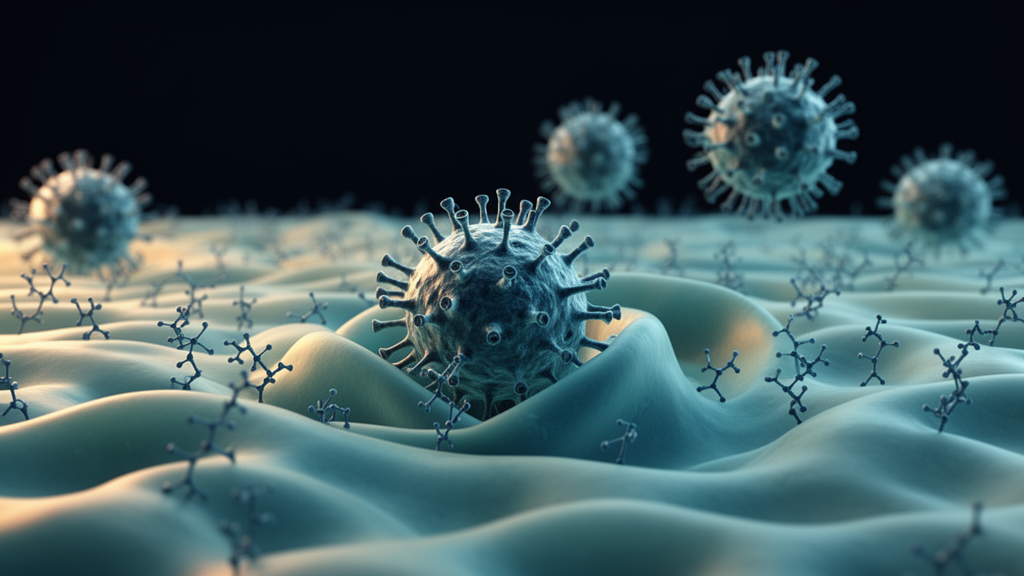
Sialic acid on the surface of host cells helps infectious bronchitis virus (IBV), a globally prevalent avian coronavirus that devastates poultry production, attach to cells and initiate its entry, according to a study published on 29 October 2026 in the open-access journal Cell Communication and Signaling. The work, led by Hongtao Xiao and Tao Ren with colleagues, examines the early steps of coronavirus cellular invasion, which rely on initial binding to cell-surface ligands classified as functional receptors, co-receptors, or attachment factors.
Although sialic acid is widely implicated in viral attachment, its mechanistic role during IBV infection has remained poorly defined. To address this, the researchers depleted cell-surface sialic acid using neuraminidase and found that this drastically impaired both IBV attachment and internalization. Confocal imaging confirmed a direct physical association between IBV particles and cell-surface sialic acids.
The team then probed how the virus recognizes this sugar. Molecular docking revealed multiple stable residues that mediate binding between sialic acid and the S1 proteins of IBV strains from distinct lineages, suggesting a conserved interaction across viral variants.
Competition experiments clarified the functional status of the interaction. Soluble free sialic acid failed to competitively block IBV entry, whereas lectin competitively inhibited viral adsorption. On this basis, the authors conclude that sialic acid acts as an auxiliary attachment factor rather than a primary functional receptor, refining how the binding step should be classified among the known categories of coronavirus entry ligands.
The study also found that IBV infection alters the expression of sialic acid-related genes. Conversely, interfering with genes involved in sialic acid transport and synthesis inhibited both IBV entry and replication, indicating that the host machinery supplying this ligand is functionally required throughout the infection process.
Mechanistically, the researchers report that IBV enters host cells through dynamin-dependent and macropinocytosis-mediated endocytosis.
To connect the attachment step to this entry route, the authors tracked co-localization between sialic acids and sorting nexin 5 (SNX5), a marker of macropinosomes. IBV infection enhanced this co-localization, whereas depletion of sialic acid synthetic genes diminished IBV-SNX5 co-localization. These data establish sialic acid as an essential upstream trigger for IBV-induced macropinocytic endocytosis, linking sugar recognition on the cell surface to the internalization program the virus activates.
Collectively, the work dissects the molecular cascade linking sialic acid recognition to IBV cellular entry, from binding through dynamin-dependent macropinocytosis. The authors state that these findings advance mechanistic knowledge of avian coronavirus infection and inform sialic acid-targeted antiviral design. Because IBV is a major pathogen of poultry, defining the host factors required at the earliest stage of infection may point toward strategies that interfere with attachment or the entry pathway it triggers. The study was published as peer-reviewed, accepted research under open access, and the reported findings are specific to IBV entry mechanisms characterized in this work.
Subject of Research: The role of sialic acid in infectious bronchitis virus attachment and entry
Article Title: Sialic acid functions as a primary attachment factor for avian coronavirus and initiates macropinocytosis-mediated viral entry
Article References: Xiao, H., Chen, Y., Chen, J., Yu, S., Lai, L., Xu, Z., Lin, Q., Wu, Y., Chen, L., & Ren, T. (2026). Sialic acid functions as a primary attachment factor for avian coronavirus and initiates macropinocytosis-mediated viral entry. Cell Communication and Signaling. https://doi.org/10.1186/s12964-026-03336-7
Image Credits: AI Generated
DOI: 10.1186/s12964-026-03336-7
Keywords: sialic acid, infectious bronchitis virus, avian coronavirus, macropinocytosis, viral entry, attachment factor, neuraminidase, SNX5, poultry, antiviral design, Sialic, acid
News Source: Kristina Jarvis. (October 29, 2026). Sialic acid drives attachment and entry of avian coronavirus. Scienmag.