


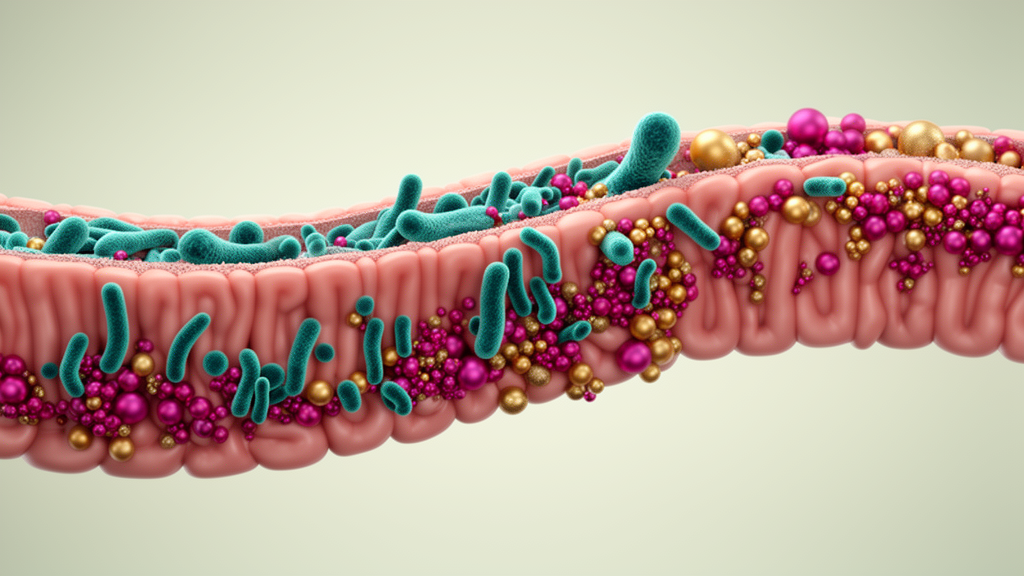
Women with fibromyalgia show distinct gut microbiome patterns that vary with how severe their symptoms are, according to a new study published in BMC Rheumatology. The research, based on 16S rRNA gene sequencing of stool samples from 101 female participants, suggests that symptom stratification may be key to understanding previously inconsistent microbiome findings in this chronic pain syndrome.
The study compared 50 patients with fibromyalgia against 51 healthy controls. Researchers assessed symptom severity using the Fibromyalgia Severity Scale (FSS) and stratified patients to enable comparisons across severity levels, rather than treating all patients as a single group.
The team found that while the dominant phyla and families of gut bacteria were preserved between patients and controls, significant diversity differences were observed. Notably, beta diversity differences — which reflect variation in overall microbial community composition between groups — were more pronounced in the severity-stratified analyses than in the aggregate comparison of all fibromyalgia patients versus all controls.
Reduced alpha diversity, a measure of microbial richness and diversity within individuals, was restricted to the intermediate-severity group.
Specific bacterial taxa also showed severity-linked patterns. Eubacterium hallii was consistently depleted in fibromyalgia, appearing reduced in the overall cohort as well as in the intermediate and severe strata. Two other groups, Bifidobacterium and Clostridia UCG-014, were reduced specifically in the intermediate-severity group.
The authors conclude that these findings suggest microbiome alterations in fibromyalgia are associated with symptom severity and follow a non-linear pattern, underscoring the importance of symptom stratification in microbiome studies. The findings are associations observed in a cross-sectional analysis and do not establish whether microbial changes contribute to fibromyalgia symptoms or result from them.
Fibromyalgia is a chronic pain syndrome with heterogeneous clinical manifestations that complicate diagnosis. According to the study’s background, although biomarkers could improve diagnostic accuracy, their identification has been limited by the disease’s multifactorial nature. Growing evidence suggests that alterations in the gut microbiota may contribute to the condition, but findings across cohorts have remained inconsistent, and their relationship with symptom severity had not been characterized.
By showing that aggregate comparisons can obscure severity-dependent patterns, the study offers a possible explanation for the inconsistent results reported across earlier cohorts.
The article was published open access on 30 September 2026 in BMC Rheumatology, with Vitor Ulisses Monnaka and colleagues as authors. The study focused exclusively on female participants, and the authors note that the findings highlight the value of accounting for symptom severity when designing microbiome studies of fibromyalgia.
Subject of Research: Gut microbiome variation across fibromyalgia symptom severity levels in women
Article Title: Gut microbiome variation across fibromyalgia symptom severity
Article References: Monnaka, V. U., Hesse, J., Dall’Osto, M., Alencar, L. A. N., Teixeira, B. L., Cruz, G. N. F., de Oliveira, L. F. V., Hernandes, C., & Halpern, A. S. R. (2026). Gut microbiome variation across fibromyalgia symptom severity. BMC Rheumatology. https://doi.org/10.1186/s41927-026-00699-9
Image Credits: AI Generated
DOI: 10.1186/s41927-026-00699-9
Keywords: fibromyalgia, gut microbiome, 16S rRNA sequencing, alpha diversity, beta diversity, Eubacterium hallii, Bifidobacterium, symptom severity, chronic pain, BMC Rheumatology, microbiome biomarkers, microbiome
News Source: Morgan Morrow. (October 29, 2026). Gut microbiome shifts in fibromyalgia track symptom severity, study finds. Scienmag.



