

• HOME
  • NEWS
  • EXPLORE
    • CAREER
      • Companies
      • Jobs
    • EVENTS
    • iGEM
      • News
      • Team
    • PHOTOS
    • VIDEO
    • WIKI
  • BLOG
  • COMMUNITY
    • FACEBOOK
    • INSTAGRAM
    • TWITTER
Friday, October 30, 2026
BIOENGINEER.ORG
No Result
View All Result
  • Login
  • HOME
  • NEWS
  • EXPLORE
    • CAREER
      • Companies
      • Jobs
        • Lecturer
        • PhD Studentship
        • Postdoc
        • Research Assistant
    • EVENTS
    • iGEM
      • News
      • Team
    • PHOTOS
    • VIDEO
    • WIKI
  • BLOG
  • COMMUNITY
    • FACEBOOK
    • INSTAGRAM
    • TWITTER
No Result
View All Result
Bioengineer.org
No Result
View All Result
Home NEWS Science News Technology

Flow Lines in TC25 Titanium Alloy Shape Strength Through Microtexture Formation

by
October 29, 2026
in Technology
Reading Time: 2 mins read
0
Flow Lines in TC25 Titanium Alloy Shape Strength Through Microtexture Formation

Flow Lines in TC25 Titanium Alloy Shape Strength Through Microtexture Formation

Share on FacebookShare on TwitterShare on LinkedinShare on RedditShare on Telegram

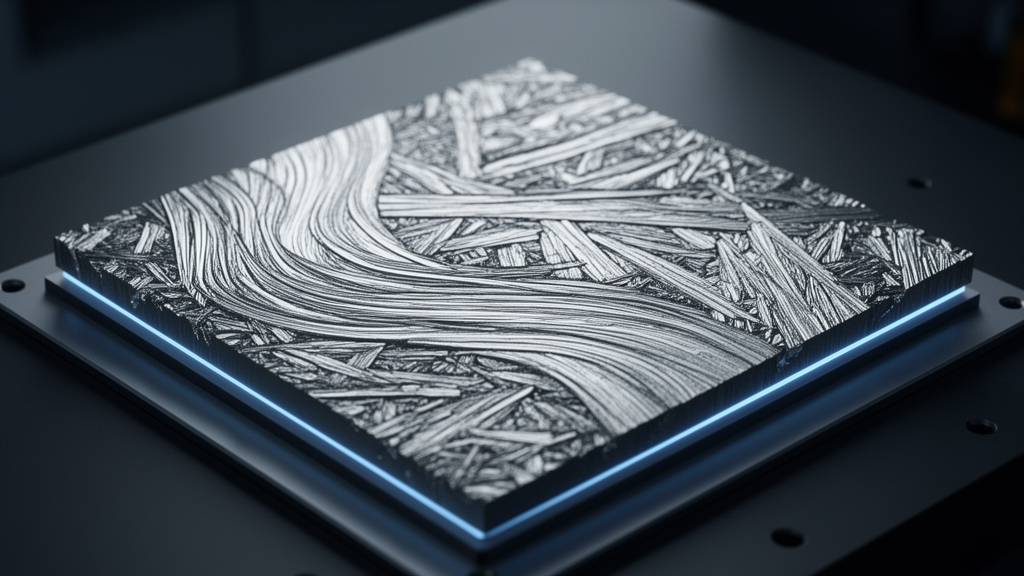
Forged titanium alloys often carry faint microstructural fingerprints known as flow lines, and a new study of the TC25 titanium alloy shows how these features form and why they matter for mechanical performance. According to the research, published in the Journal of Materials Science, flow lines are closely linked to the development of a microtexture that arises from a strong Burgers orientation relationship between the primary alpha phase and the prior beta phase, together with the variant selection this relationship induces in the secondary alpha phase.

Flow lines are common microstructural features in forged titanium alloys. They are typically associated with local variations in both microstructure and crystallographic orientation, and those variations can significantly affect the mechanical properties of the material. The study set out to investigate the formation mechanism of flow lines in TC25 alloy and their influence on how the material behaves under load.

The central finding concerns the crystallographic origin of the texture. Because the primary alpha phase inherits its orientation from the parent beta phase through the Burgers relationship, and because the secondary alpha phase then follows a preferred variant selection, the alloy develops a microtexture aligned with the flow lines. This means the visible flow lines in a forged component are not merely cosmetic traces of deformation but markers of an underlying orientation pattern that shapes mechanical response.

The mechanical consequences depend on direction. As the angle between the tensile loading direction and the flow lines increases, both yield strength and tensile strength increase, while elongation decreases. In other words, samples loaded at a larger angle to the flow lines resist the onset of plastic flow and fracture more strongly, but they accommodate less plastic deformation before failing.

The researchers attribute these differences mainly to deformation incompatibility between macrozones with soft and hard orientations.

Interfaces between zones of similar character behave favorably. The study reports that soft–soft interfaces facilitate dislocation transmission, promoting uniform plastic deformation.

Interfaces between mismatched zones behave very differently. Soft–hard interfaces act as effective slip barriers, inducing dislocation pileup and local stress concentration. This accumulation of stress at boundaries ultimately leads to premature failure of the material, explaining the reduced elongation observed when the tensile direction is more oblique to the flow lines.

The work was carried out by Zhoutian Wang, Bohua Zhang, Wuhua Yuan, Peng Zhang, Hao Deng, Songlin Li and Zibo Zhao, and appeared in the Journal of Materials Science in 2026.

Subject of Research: Formation mechanism of flow-line-associated microtexture in TC25 titanium alloy and its effect on mechanical properties

Article Title: Formation mechanism of microtexture associated with flow lines and its influence on the mechanical properties of TC25 titanium alloy

Article References: Wang, Z., Zhang, B., Yuan, W., Zhang, P., Deng, H., Li, S., & Zhao, Z. (2026). Formation mechanism of microtexture associated with flow lines and its influence on the mechanical properties of TC25 titanium alloy. Journal of Materials Science. https://doi.org/10.1007/s10853-026-13933-z

Image Credits: AI Generated

DOI: 10.1007/s10853-026-13933-z

Keywords: titanium alloy, TC25, flow lines, microtexture, Burgers orientation relationship, variant selection, macrozones, yield strength, tensile strength, elongation, dislocation transmission, forging

News Source: Neil Sanderson. (October 29, 2026). Flow Lines in TC25 Titanium Alloy Shape Strength Through Microtexture Formation. Scienmag.


Tags: Burgers orientation relationshipdislocation transmissionelongationflow linesforgingmacrozonesmicrotextureTC25tensile strengthtitanium alloyvariant selectionyield strength
Share12Tweet7Share2ShareShareShare1

Related Posts

Systematic review maps sustainability tensions in offshore wind development

Systematic review maps sustainability tensions in offshore wind development

October 30, 2026
Amateur maps and sketches helped put Hong Kong's wartime pillboxes on official charts

Amateur maps and sketches helped put Hong Kong’s wartime pillboxes on official charts

October 30, 2026

Heavier logging trucks only pay off when the road network lets them work

October 30, 2026

Supersulfated cement outperforms Portland cement in curbing concrete’s alkali-silica reaction

October 30, 2026

POPULAR NEWS

  • Microbial Sources and Stress Shape the Hidden Endophytes of an Invasive Plant

    Microbial Sources and Stress Shape the Hidden Endophytes of an Invasive Plant

    29 shares
    Share 12 Tweet 7
  • Firebreaks Leave Lasting Scars in Grasslands While Wildfire Heals Fast

    29 shares
    Share 12 Tweet 7
  • ZNF207 shields glutamine transporter ASCT2 from degradation to fuel liver cancer growth

    29 shares
    Share 12 Tweet 7
  • Systematic review maps sustainability tensions in offshore wind development

    29 shares
    Share 12 Tweet 7

About

We bring you the latest biotechnology news from best research centers and universities around the world. Check our website.

Follow us

Recent News

Microbial Sources and Stress Shape the Hidden Endophytes of an Invasive Plant

Firebreaks Leave Lasting Scars in Grasslands While Wildfire Heals Fast

ZNF207 shields glutamine transporter ASCT2 from degradation to fuel liver cancer growth

Subscribe to Blog via Email

Enter your email address to subscribe to this blog and receive notifications of new posts by email.

Join 86 other subscribers
  • Contact Us

Bioengineer.org © Copyright 2023 All Rights Reserved.

Welcome Back!

Login to your account below

Forgotten Password?

Retrieve your password

Please enter your username or email address to reset your password.

Log In
No Result
View All Result
  • Homepages
    • Home Page 1
    • Home Page 2
  • News
  • National
  • Business
  • Health
  • Lifestyle
  • Science

Bioengineer.org © Copyright 2023 All Rights Reserved.
