


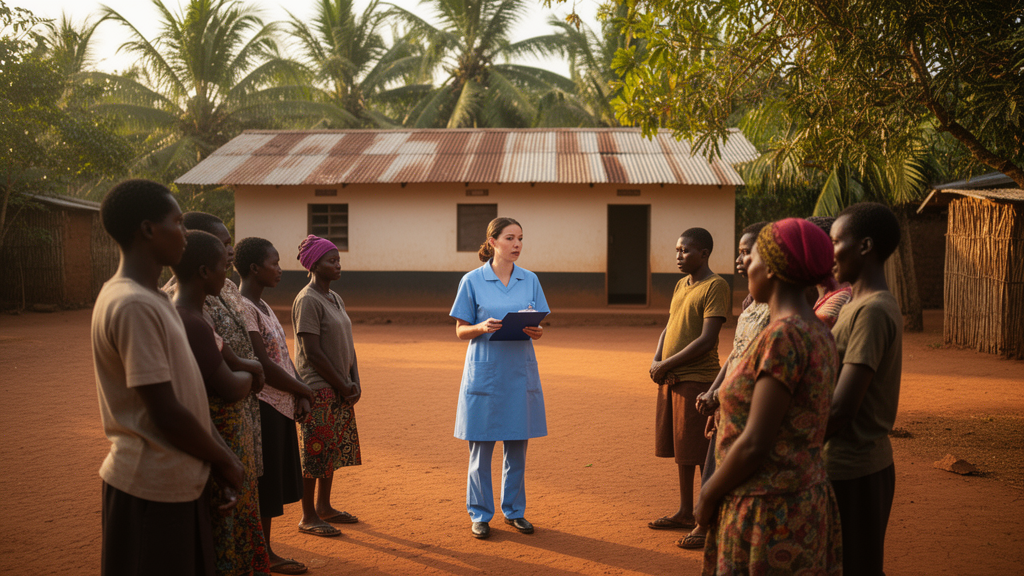
Community health workers (CHWs) at the front line of Madagascar's tuberculosis response have described what they need to do their jobs effectively, in a qualitative study of their lived experiences. Drawing on their lived experience, the researchers identified five interlinked priorities: stable and equitable socio-economic protection; standardized, continuous, and practical training; formative and collaborative supervision; reliable provision of tools, equipment, transport, and personal protective equipment; and recognition and integration within communities and the health system.
The study was conducted as part of the formative phase of a participatory action research initiative aimed at strengthening Madagascar’s community health workforce. Between August and September 2024, the research team held five focus group discussions with 26 CHWs in two contrasting regions, Analamanga and Atsimo-Andrefana. TB program support served as a tracer condition for service delivery relevant to universal health coverage. Discussions were conducted in Malagasy and its dialects, audio-recorded, transcribed, translated into French, and analyzed using inductive reflexive thematic analysis.
CHWs are central to primary health care delivery in Madagascar, yet their perspectives on what enables effective work are rarely centered in program design and implementation, the authors note. In the discussions, the health workers emphasized the importance of reliability and the fulfillment of promised entitlements.
According to the authors, the CHWs’ accounts point to a persistent implementation gap between policy commitments and the reliability of day-to-day support. They argue that addressing fragmentation and strengthening coordinated national stewardship and partner accountability will be essential to ensure predictable, equitable support for CHWs, which they describe as a prerequisite for advancing equitable progress toward universal health coverage in Madagascar.
The study’s recommendations are context-specific and grounded in the accounts of the 26 participating CHWs in the two regions studied. The authors propose that the findings can inform efforts to strengthen the effectiveness of Madagascar’s TB response by placing the perspectives of the health workers who deliver community-based services at the center of program design and implementation.
Subject of Research: Community health workers' perspectives on effective tuberculosis program delivery in Madagascar
Article Title: Voices from the front line: Community health workers’ perspectives on effectiveness and needs in Madagascar’s tuberculosis response
Article References: Ravololohanitra, O. G., Razanamiarana, A., Tiaray Harison, M., Nafeno, J., Raveloarisoa, L., Andriamasy, H. E., Razafimanantsoa, H., Neumann, A., & Muller, N. (2026). Voices from the front line: Community health workers’ perspectives on effectiveness and needs in Madagascar’s tuberculosis response. PLOS Global Public Health, 6(10), e0005797. https://doi.org/10.1371/journal.pgph.0005797
Image Credits: AI Generated
DOI: 10.1371/journal.pgph.0005797
Keywords: community health workers, Madagascar, tuberculosis, qualitative research, universal health coverage, primary health care, thematic analysis, health workforce, focus group discussions, health system, Voices, front
News Source: Phoebe Ingram. (October 29, 2026). Community health workers in Madagascar outline five priorities for a stronger tuberculosis response. Scienmag.



