


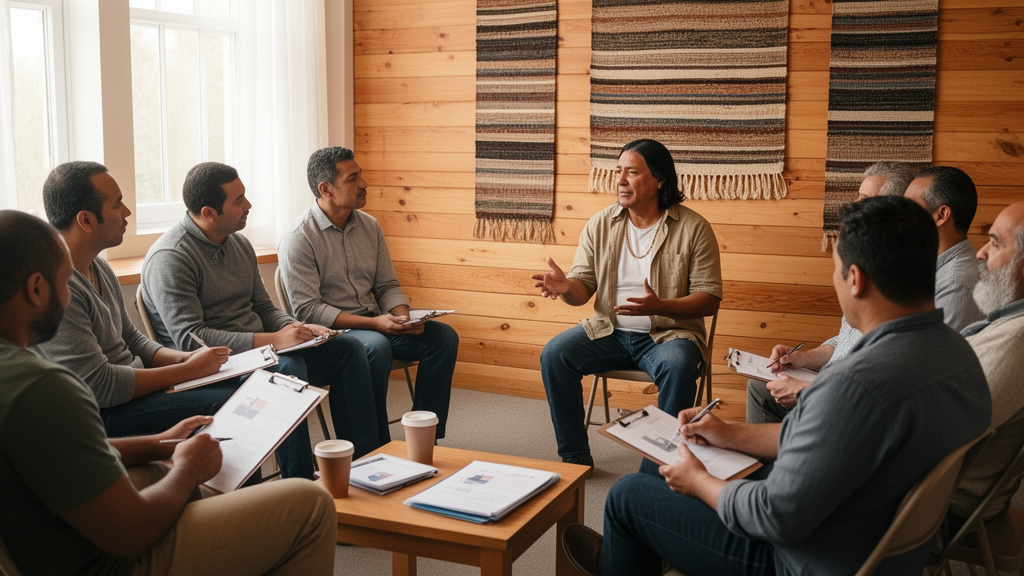
A new randomized controlled trial will test whether a culturally adapted intervention called Hastiin Bidziil, or Strong Man, can reduce substance use among American Indian men. The study protocol, published in Harm Reduction Journal, describes a trial registered as NCT06559774 that will enroll 160 adult American Indian men and compare the Strong Man intervention against a basic vehicle maintenance control condition. Because the article is a study protocol, it reports the trial’s planned design rather than any results on effectiveness.
The intervention is grounded in the Common Elements Treatment Approach, a transdiagnostic mental health treatment, and was adapted for rural American Indian men through the ADAPT-ITT adaptation process. The study team, described as AI/AN-led, carried out this formative work to produce a strength-based, culturally grounded secondary prevention program. The authors note that American Indian and Alaska Native men experience high rates of substance use along with related health conditions, mental health challenges, and premature mortality, while culturally grounded research addressing their health remains limited.
Participants will be randomly assigned to either the Strong Man intervention or the control group. Strong Man consists of a six-lesson skill-building curriculum, delivered in a minimum of five and a maximum of eight sessions, incorporating cognitive behavioral therapy, motivational interviewing, and harm reduction components. Control participants attend four workshops on basic vehicle maintenance, and they may access the intervention as a service after study completion. Assessments are scheduled at baseline, at post-intervention or control completion (or six months post-baseline, whichever comes first), and at an eight-month follow-up.
The primary outcome is substance use frequency over the past 14 days. Secondary outcomes include substance use involvement, depression, anxiety, and post-traumatic stress disorder. The investigators plan to analyze intervention effects using mixed-effects models. As with any trial protocol, these methods describe what will be measured and how; the trial itself will determine whether the intervention changes these outcomes.
The authors frame the trial as one of the first rigorous evaluations of a culturally adapted secondary prevention program for rural American Indian men. By intervening before substance use escalates, they write, Strong Man has the potential to reduce substance-related harms and strengthen protective behaviors such as culturally grounded coping strategies, community connectedness, and mental well-being. They state that findings will inform scalable, community-driven strategies to reduce substance-related harm in tribal communities. Until the trial is completed, any statement about the program’s effectiveness remains a prediction rather than an established finding.
Subject of Research: A randomized controlled trial protocol testing a culturally adapted substance use reduction intervention for American Indian men
Article Title: Study protocol for Hastiin Bidziil (Strong Man): a randomized controlled trial of a strength-based, culturally adapted intervention for substance use reduction among American Indian men
Article References: Dedman, K. L., Ivanich, J. D., Garriott, A., Skavenski, S., Dayal, R. R., Muñiz, F. B., Crowe, B., Lynch, R., Greyeyes, M., Myron, C., Figge, C. J., Tom, K., Haroz, E. E., Kemp, C. G., & Richards, J. R. (2026). Study protocol for Hastiin Bidziil (Strong Man): a randomized controlled trial of a strength-based, culturally adapted intervention for substance use reduction among American Indian men. Harm Reduction Journal. https://doi.org/10.1186/s12954-026-01525-8
Image Credits: AI Generated
DOI: 10.1186/s12954-026-01525-8
Keywords: American Indian men, substance use, randomized controlled trial, study protocol, cultural adaptation, harm reduction, cognitive behavioral therapy, motivational interviewing, rural health, mental health, protocol, Hastiin
News Source: Glenn Wilkins. (October 29, 2026). Strong Man trial to test culturally adapted substance use program for American Indian men. Scienmag.



