


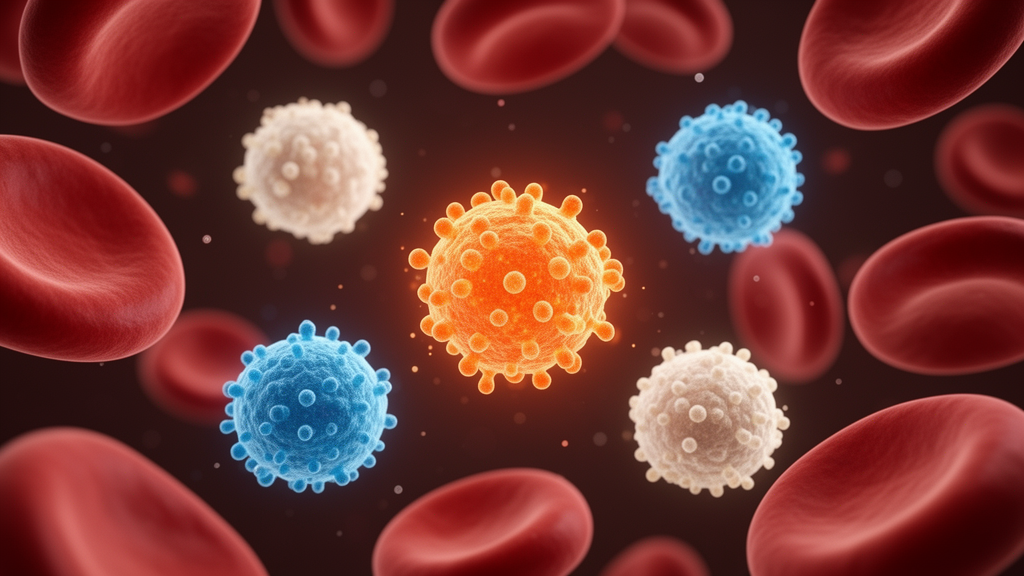
Sepsis has long been treated as a single syndrome that varies mainly in severity, but a narrative review published in June 2026 argues that this view no longer fits the evidence. Writing in the journal Critical Care: Sepsis and Severe Infection, Serge Chooklin and Serhii Chuklin synthesize clinical, immunological, and multi-omics literature showing that patients who meet the same clinical definition of sepsis can differ substantially in immune competence, endothelial injury, metabolic adaptation, organ vulnerability, and temporal trajectories of illness. The same bedside label, in other words, can cover patients whose underlying biology runs along very different paths, with different probabilities of responding to any given host-directed therapy.
The review, which searched PubMed, Scopus, and Google Scholar for publications available up to 30 April 2026, was designed as an interpretive synthesis rather than a systematic review or meta-analysis, so no formal risk-of-bias assessment or quantitative pooling was performed. Its authors frame sepsis heterogeneity not as a statistical inconvenience but as a fundamental biological feature of the syndrome. The infecting organism varies in virulence, inoculum, tissue tropism, and response to source control; the host varies in age, comorbidities, immune history, genetics, microbiome, and physiological reserve; and the timing of measurement determines which part of the host response is visible. As a result, a single Sepsis-3 threshold may capture a patient with rapidly reversible vasodilation, another with endothelial-dominant microvascular injury, another with profound immune exhaustion, and another with combined inflammatory and metabolic failure.
A key conceptual shift the review highlights is the rejection of the older linear model in which an early hyperinflammatory phase is followed by a later compensatory anti-inflammatory phase. Current evidence indicates that inflammatory and anti-inflammatory programs often coexist from the earliest stages of illness, while endothelial injury, coagulation abnormalities, and metabolic rewiring evolve at partly independent rates. Two patients with similar SOFA scores may therefore differ markedly in immune competence, vascular injury, and capacity for recovery. This layered, dynamic biology also explains why single biomarkers and static one-time assessments are often insufficient, and why trials conducted in unselected sepsis populations have repeatedly failed to show benefit.
The most influential bedside evidence comes from the SENECA analysis by Seymour and colleagues, a retrospective multicohort study that used routinely available variables collected early after hospital presentation to identify four clinical phenotypes associated with distinct laboratory patterns, organ-failure profiles, mortality risk, and potential treatment-effect heterogeneity. Subsequent work extended this static picture into the time dimension. Representation learning and spectral clustering applied in the emergency department, analyses of vital-sign and temperature trajectories, and studies of platelet and cortisol trajectories during the first intensive care days all show that the direction of physiological change can matter more than baseline values. Patients with hyperthermic, normothermic, or hypothermic temperature trajectories, for example, carry distinct inflammatory signatures and outcomes, and platelet trajectories identify ascending, stable, and descending patterns linked to different prognoses.
On the immunological side, the review devotes substantial attention to immunoparalysis, which it describes as one of the most clinically important and least well understood dimensions of sepsis heterogeneity. Rather than being a late compensatory phase, impaired antigen presentation, reduced monocyte HLA-DR expression, endotoxin tolerance, lymphocyte dysfunction, and susceptibility to secondary infection may emerge early and coexist with overt systemic inflammation. A patient can show marked inflammation in circulating biomarkers while remaining immunologically unable to clear a secondary infection. Reduced monocyte HLA-DR expression and blunted ex vivo lipopolysaccharide-stimulated tumor necrosis factor release remain practical indicators of a low-response immune phenotype, particularly when suppression persists. Neutrophils, too, behave non-uniformly, differing in adhesion, transmigration, neutrophil extracellular trap formation, and proteomic profile, while single-cell analyses reveal that suppressive programs may concentrate in specific monocyte, macrophage, or lymphocyte compartments while other populations stay activated.
Multi-omics research adds a molecular layer to this picture. Transcriptomic studies across cohorts consistently identify inflammatory, adaptive, interferon-dominant, neutrophil-suppressive, and immune-depleted states in blood gene expression. Landmark frameworks include the GAinS/Davenport sepsis response signature work, which distinguished SRS1 and SRS2 groups with different immune programs and outcomes, and the MARS consortium’s genomic endotyping of intensive care patients. Proteomic studies show that the plasma environment is organized into structured modules covering acute-phase proteins, neutrophil degranulation, complement, coagulation, and lipoprotein metabolism, while metabolomic profiling reveals coordinated disturbances of carbohydrate, lipid, amino acid, ceramide, and sphingomyelin pathways that are not always explained by routine clinical variables. Metagenomic and host-microbe blood analyses further indicate that phenotype identity arises from interactions between host response and microbial composition or burden, not from host characteristics alone.
Yet the omics literature also exposes a central limitation: discordance across biological layers. Consensus multi-omics studies, including the CMAISE framework, show that transcriptomic, proteomic, metabolomic, and phenomic labels only partly overlap, with only a small proportion of patients retaining concordant assignments across all layers. The authors interpret this not as a failure of any single platform but as evidence that each captures a different biological window, and they caution that a subtype defined in whole blood at emergency presentation is not necessarily equivalent to one derived from intensive care plasma proteomics or later metabolomic sampling. Omics-based approaches, they note, provide deeper biological resolution but remain limited by cost, turnaround time, platform dependence, and incomplete concordance, making them better suited to secondary refinement than to early triage.
Artificial intelligence and machine learning have become central tools in this field, not because they automatically resolve heterogeneity but because they can detect latent structure in high-dimensional data that threshold-based methods miss. The review stresses that the strongest machine-learning studies do more than generate clusters: they include external validation, assess temporal stability, and examine associations with treatment response. It also flags real implementation risks, since phenotypes derived from curated research datasets may lose performance in real-world electronic health records with missing data and differing local practice, and models trained on local populations may inherit biases. The most realistic near-term role of artificial intelligence, the authors argue, is to compress complex longitudinal data into transparent, auditable clinical support tools that report uncertainty and update as new data arrive.
On treatment, the review’s message is deliberately cautious. Credible signals of treatment-effect heterogeneity exist for immunomodulatory and adjunctive therapies, but most derive from secondary analyses, post-hoc subgroup evaluations, or early targeted trials that require prospective confirmation. Transcriptomic analyses associated with the VANISH randomized trial suggest that blood gene-expression signatures may identify patients with different responses to corticosteroid therapy, a hypothesis-generating signal that the authors say must not yet determine routine steroid allocation. The biologic substudy of LOVIT suggests sepsis subtypes may differ in their response to vitamin C, without establishing phenotype-guided vitamin C as standard care. The PROVIDE trial demonstrated the feasibility of immune-marker-based stratification, and the ImmunoSep randomized trial directly tested precision immunotherapy as a stratified intervention, but both are framed as proof-of-concept and validation steps rather than evidence that broad bedside implementation is ready.
The review also extends the framework beyond the acute episode. Persistent inflammation, immunosuppression, and catabolism syndrome, known as PIICS, describes a non-resolving state in which persistent inflammation, impaired protective immunity, and catabolic metabolism coexist, often with lymphopenia, hypoalbuminemia, muscle wasting, recurrent infection, and prolonged organ dysfunction. A 2025 sequential immune-profiling study by Halacli and colleagues reinforced the need for repeated assessment when PIICS is suspected, since a single marker is unlikely to suffice. The authors propose a staged model in which early stratification relies on routine variables such as infection source, SOFA components, lactate, and vasopressor requirement; repeated reassessment over the first 24 to 72 hours identifies patients with persistent shock or unstable trajectories; targeted immune or molecular refinement is reserved for selected high-risk patients; and patients beyond 72 hours with non-resolution are evaluated within a PIICS-oriented framework. Their overall conclusion is that sepsis subphenotyping should be interpreted as a staged framework for precision decision-making rather than a competition between rival taxonomies, and that future progress depends on identifying reproducible, time-sensitive, clinically measurable treatable traits that can be prospectively tested to guide therapy, organ support, trial enrichment, and long-term recovery research.
Subject of Research: Heterogeneity and subphenotyping in sepsis as a framework for precision therapy
Article Title: Beyond the sepsis label: heterogeneity, subphenotypes, and the path to precision therapy
Article References: Chooklin, S., & Chuklin, S. (2026). Beyond the sepsis label: heterogeneity, subphenotypes, and the path to precision therapy. Critical Care: Sepsis and Severe Infection, 1(1), Article 8. https://doi.org/10.1186/s44541-026-00013-7
Image Credits: AI Generated
DOI: 10.1186/s44541-026-00013-7
Keywords: sepsis, subphenotypes, endotypes, immunoparalysis, multi-omics, machine learning, precision medicine, PIICS, critical care, trajectories, treatable traits, corticosteroids
News Source: Ophelia Keating. (October 29, 2026). Sepsis is not one disease: how subphenotypes could reshape precision therapy. Scienmag.



