


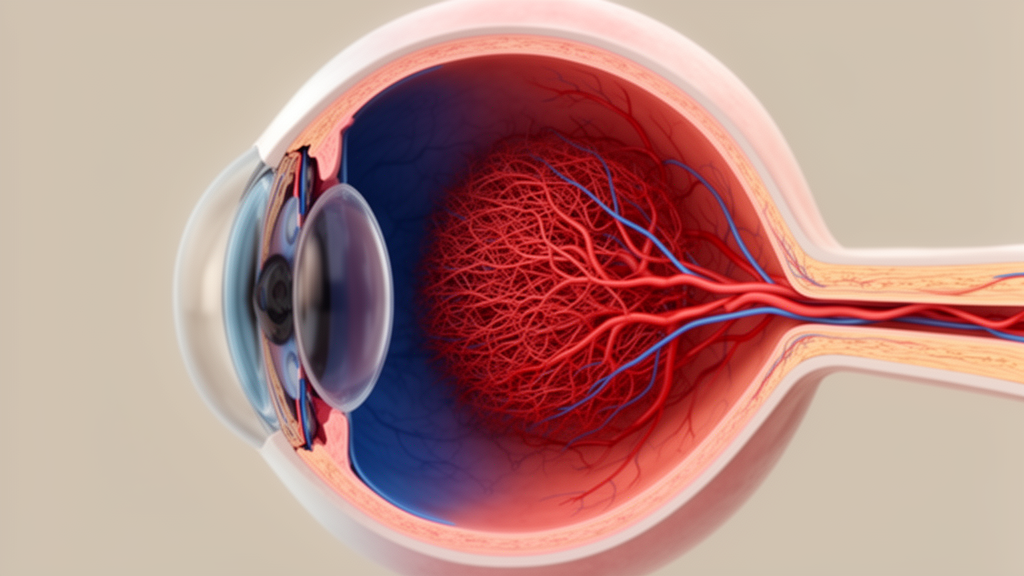
A nationwide retrospective cohort study drawing on a decade of South Korean health insurance data reports that 1,999 individuals were diagnosed with a solitary choroidal hemangioma between 2017 and 2023, while 342 individuals were diagnosed with both choroidal hemangioma and Sturge-Weber syndrome over the same period.
The study, published in BMC Ophthalmology, extracted data from the Health Insurance Review & Assessment (HIRA) Service system in Korea covering 2014 to 2023. The researchers excluded 2014 to 2016 as a washout period, meaning that only diagnoses recorded from 2017 onward entered the incidence calculations. Because the analysis is based on an accepted manuscript shared early for faster access, the authors note that the version is subject to further edits before the final Version of Record.
Identification of cases relied on a dual-coding approach. Sturge-Weber syndrome cases were verified using both the SWS registration code from the National Registry of Rare and Intractable Disease in Korea (code Q85.8) and the diagnostic code D18.08, which corresponds to choroidal hemangioma in the International Statistical Classification of Diseases, 10th Revision.
Over the 10-year observational period, the period prevalence of solitary choroidal hemangioma was 3.90 per 100,000 population (95% confidence interval 3.73 to 4.07), and the mean birth cohort incidence was 13.91 per 100,000 person-years (95% CI 13.19 to 14.66). The male-to-female ratio among these patients was 0.75 to 1, indicating that women were diagnosed somewhat more often than men in this dataset.
For patients who had both Sturge-Weber syndrome and choroidal hemangioma, the figures were substantially lower, as expected for a rare neuro-oculocutaneous syndrome. The period prevalence was 0.67 per 100,000 population (95% CI 0.60 to 0.74), and the mean birth cohort incidence was 1.77 per 100,000 person-years (95% CI 1.52 to 2.05). The male-to-female ratio in this group was 0.89 to 1, closer to parity than in the solitary cases.
The study also catalogued conditions that appeared alongside choroidal hemangioma in each group. Among patients with solitary choroidal hemangioma, congenital non-neoplastic nevus (code Q825) was the most frequently observed comorbidity, recorded in 35 cases, or 1.75 percent, followed by epidermal cyst (code L720) in 34 cases, or 1.70 percent. These figures describe co-occurring diagnoses in claims data rather than established causal relationships.
In the group with Sturge-Weber syndrome and choroidal hemangioma, the most frequent accompanying condition was epilepsy, captured by the codes G4090 and G4020, in 28 cases, or 8.19 percent.
The authors conclude that the study identified the prevalence, birth-cohort incidence, and associated comorbidities of choroidal hemangioma with and without Sturge-Weber syndrome in an East Asian population, and they suggest that these data could help promote a better understanding of the epidemiologic features of both conditions. Because the analysis covers South Korea only and relies on diagnostic and registry codes rather than independent clinical adjudication, the estimates apply to this national claims-based population and may not generalize directly to other regions or to clinically confirmed case series. The confidence intervals reported for each estimate indicate the precision of the figures within this dataset, and the washout period design means the counts reflect diagnoses recorded from 2017 to 2023 rather than the full data window.
Subject of Research: Population-based incidence and prevalence of choroidal hemangioma with and without Sturge-Weber syndrome in South Korea
Article Title: Incidence of choroidal hemangioma in solitary cases and Sturge-Weber syndrome: a nationwide population-based study in Korea
Article References: Lee, H., & Jeon, J. (2026). Incidence of choroidal hemangioma in solitary cases and Sturge-Weber syndrome: a nationwide population-based study in Korea. BMC Ophthalmology. https://doi.org/10.1186/s12886-026-05478-1
Image Credits: AI Generated
DOI: 10.1186/s12886-026-05478-1
Keywords: choroidal hemangioma, Sturge-Weber syndrome, incidence, prevalence, South Korea, HIRA database, retrospective cohort, ophthalmology, epilepsy, rare disease registry, epidemiology, choroidal
News Source: Phoebe Ingram. (October 29, 2026). Korean nationwide study charts how often choroidal hemangioma appears with and without Sturge-Weber syndrome. Scienmag.



