


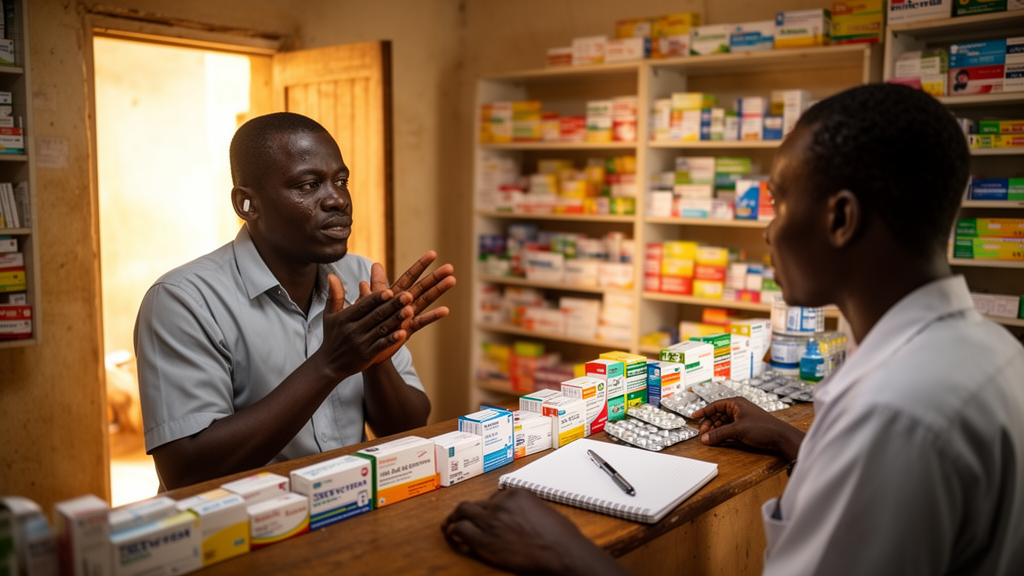
A recent quantitative descriptive cross-sectional study conducted in the Ashanti Region of Ghana has shed critical light on the pervasive issues of self-medication and antibiotic misuse within the Deaf community, highlighting significant public health challenges exacerbated by communication barriers and health literacy gaps. The research, which surveyed 327 Deaf adults aged 18 years and older, underscores the urgent need for culturally and linguistically tailored healthcare interventions to combat the rising threat of antimicrobial resistance (AMR) among this vulnerable population.
The findings revealed alarming prevalence rates for both self-medication and antibiotic self-medication. Specifically, 57.5% of the participants reported engaging in self-medication practices, with an even higher rate of 49.8% reporting the misuse of antibiotics for self-treatment. This high incidence of inappropriate medication use is a known major driver of antimicrobial resistance globally, yet evidence detailing these practices within the Deaf community, particularly in regions like Ghana, remains scarce. The study utilized a rigorous methodology, employing multistage purposive and snowball sampling techniques to recruit participants from various Deaf institutions and community networks, with data collection facilitated through structured questionnaires administered via Ghanaian Sign Language (GSL)-assisted interviews, ensuring the validity of the findings within this specific demographic.
Analysis of the reported antibiotic usage indicated specific patterns of preference. Amoxicillin emerged as the dominant antibiotic reported, accounting for 96.3% of all reported cases, and contributing to 55.1% of the total responses across the study. Following this, metronidazole was cited in 36.2% of cases, and co-amoxiclav was reported by 28.8% of respondents. These specific data points allow public health officials to better understand which classes of antibiotics are most frequently misused within the community, providing a foundation for targeted educational campaigns regarding appropriate prescribing and usage guidelines.
A critical aspect of the study focused on health literacy and awareness. The results indicated that only 59.9% of the participants demonstrated basic awareness regarding antibiotics. This low level of general knowledge, coupled with the high rates of self-medication, suggests widespread misconceptions about the efficacy, necessity, and dangers of antibiotic misuse persist within the Deaf population. This lack of fundamental understanding is likely compounded by the communication barriers inherent in accessing traditional healthcare information, which is often provided in spoken language and may not be fully accessible or understood by Deaf individuals.
Furthermore, the researchers identified specific predictors associated with the likelihood of engaging in self-medication. Multivariate logistic regression analysis revealed that an individual’s attitude toward antibiotics was a statistically significant independent predictor of self-medication (OR = 5.68, 95% CI: 2.07–15.60, p = 0.001). This substantial odds ratio suggests that a positive or permissive attitude toward antibiotic use is strongly linked to self-medication behaviors. Additionally, a higher education level was identified as another significant independent predictor (OR = 1.59, 95% CI: 1.19–2.13, p = 0.002). Conversely, demographic factors such as gender, age, and health insurance status were found to be non-significant in the multivariate analysis, indicating that the behavioral drivers are more closely tied to perceptions and educational attainment than to simple demographics.
The study’s conclusions strongly advocate for a paradigm shift in how healthcare is delivered to the Deaf community in Ghana. The high prevalence of misuse is not merely a matter of individual choice but is deeply embedded in systemic issues, including communication barriers and prevailing attitudes toward medication. The authors emphasize that addressing this crisis requires comprehensive and inclusive antibiotic stewardship interventions. Crucially, these interventions must be delivered in Ghanaian Sign Language (GSL) to ensure accessibility and comprehension, thereby directly mitigating the communication barriers identified in the research.
Beyond educational outreach, the findings necessitate broader systemic reforms. The researchers call for regulatory enforcement of antibiotic prescribing practices and significant healthcare system reform to ensure that the needs of Deaf patients are met within the broader public health framework. The persistence of self-medication and misuse among Deaf adults in the Ashanti Region serves as a stark reminder that health equity requires more than just the availability of services; it demands culturally competent and linguistically appropriate delivery of critical health information and medical oversight.
Subject of Research: Prevalence and predictors of self-medication and antibiotic misuse among Deaf adults in Ghana.
Article Title: Self-medication and antibiotic use among the deaf in Ghana’s Ashanti Region: a cross-sectional study of knowledge, practices, perceptions, and predictors
Article References: Owusu-Afriyie, B., Usman, M. B., Buabeng, N. B., & Danquah, C. A. (2026). Self-medication and antibiotic use among the deaf in Ghana’s Ashanti Region: a cross-sectional study of knowledge, practices, perceptions, and predictors. BMC Public Health. https://doi.org/10.1186/s12889-026-29624-y
Image Credits: AI Generated
DOI: 10.1186/s12889-026-29624-y
Keywords: Deaf community, antibiotic resistance, self-medication, Ghana, public health, health literacy, GSL, cross-sectional study, antibiotic, deaf, Ashanti, Region
News Source: Ophelia Keating. (October 28, 2026). High Self-Medication Rates Among Deaf Adults in Ghana’s Ashanti Region. Scienmag.



