• HOME
  • NEWS
  • EXPLORE
    • CAREER
      • Companies
      • Jobs
    • EVENTS
    • iGEM
      • News
      • Team
    • PHOTOS
    • VIDEO
    • WIKI
  • BLOG
  • COMMUNITY
    • FACEBOOK
    • INSTAGRAM
    • TWITTER
Monday, August 31, 2026
BIOENGINEER.ORG
No Result
View All Result
  • Login
  • HOME
  • NEWS
  • EXPLORE
    • CAREER
      • Companies
      • Jobs
        • Lecturer
        • PhD Studentship
        • Postdoc
        • Research Assistant
    • EVENTS
    • iGEM
      • News
      • Team
    • PHOTOS
    • VIDEO
    • WIKI
  • BLOG
  • COMMUNITY
    • FACEBOOK
    • INSTAGRAM
    • TWITTER
  • HOME
  • NEWS
  • EXPLORE
    • CAREER
      • Companies
      • Jobs
        • Lecturer
        • PhD Studentship
        • Postdoc
        • Research Assistant
    • EVENTS
    • iGEM
      • News
      • Team
    • PHOTOS
    • VIDEO
    • WIKI
  • BLOG
  • COMMUNITY
    • FACEBOOK
    • INSTAGRAM
    • TWITTER
No Result
View All Result
Bioengineer.org
No Result
View All Result
Home NEWS Science News Biology

Resolving traffic jams in human ALS motor neurons

Bioengineer by Bioengineer
October 17, 2017
in Biology
Reading Time: 2 mins read
0
Share on FacebookShare on TwitterShare on LinkedinShare on RedditShare on Telegram

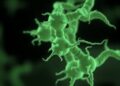
A team of researchers at VIB and KU Leuven used stem cell technology to generate motor neurons from ALS patients carrying mutations in FUS. They found disturbed axonal transport in these motor neurons, but also identified genetic and pharmacological strategies that mitigate this defect.

Amyotrophic lateral sclerosis (ALS) is a deadly, incurable neurodegenerative disorder. Patients experience progressive paralysis because both upper and lower motor neurons waste away.

There is no clear explanation as to why these motor neurons selectively degenerate. Several clues helped build the 'dying-back hypothesis', which postulates that ALS causes distal axons to lose their function and retract. It would explain why the longest and most energy-demanding motor neurons are among the most vulnerable ones.

FUS and transport defects

Genetic forms of ALS are rare, but can provide important insights into the disease mechanisms. One of the four major genes mutated in familial forms of ALS is FUS.

In collaboration with the Verfaillie lab at KU Leuven, the team of Prof. Ludo Van Den Bosch (VIB-KU Leuven) generated induced pluripotent stem cells from ALS patients with different FUS mutations. In this way, they could generate a new human neuronal model for the disease. Motor neurons derived from these stem cells showed typical cytoplasmic FUS mislocalization and hypoexcitability, but also progressive axonal transport defects of different cargoes, a pathological feature never observed before in these cells.

Dr. Wenting Guo, one of the main researchers involved in the study, explains: "Distal axonal sites are highly dependent on the supply of energy-producing organelles and other cargo's from the cell nucleus, so the implication of axonal transport in ALS is not surprising. It is an important step that we can reproduce this feature of the disease in cultured human motor neurons."

Axonal transport problems of mitochondria were previously described in models of mutant SOD1, which is also linked to familial ALS. In the case of SOD1, the transport defects were attributed to morphological changes in the mitochondria, but FUS mutations do not lead to gross mitochondrial damage. Wenting Guo: "Thanks to the expertise of our electron microscopy platform, we could demonstrate that mitochondria in FUS mutant neurons look healthy."

HDAC6 to the rescue

CRISPR/Cas9-mediated genetic correction of the FUS mutation rescues the axonal transport defects, underscoring the specificity of the pathology. However, more interestingly, pharmacological inhibition or genetic silencing of HDAC6 also restores the axonal transport defects.

Van Den Bosch: "HDAC6 deacetylates the building blocks of the microtubules, the tracks used for axonal transport. When HDAC6 is inhibited, acetylation increases and axonal transport is improved. This may prevent axons from dying back."

While he stresses that axonal transport dysfunction is only one aspect of the disease mechanism, Van Den Bosch is optimistic: "Axonal transport could play an important role in ALS pathology and HDAC6 inhibition could become a promising therapeutic approach, although stopping retraction alone might not be enough as a single therapeutic strategy."

###

Note: The lab of Ludo Van Den Bosch is part of the VIB-KU Leuven Center for Brain & Disease Research

Media Contact

Sooike Stoops
[email protected]
32-924-46611
@VIBLifeSciences

http://www.vib.be

Share12Tweet8Share2ShareShareShare2

Related Posts

Methylation puts parasites in motion

Methylation puts parasites in motion

August 31, 2026
Desiccation promotes DNA damage and rifampin resistance in Mycobacterium tuberculosis

Desiccation promotes DNA damage and rifampin resistance in Mycobacterium tuberculosis

August 31, 2026

Gastrointestinal Parasitism in Cattle and Water Buffaloes in Pakistan: Prevalence and Associated Risk Factors

August 31, 2026

Development of HPLC–PDA method for steviol glycosides analysis in food matrices

August 31, 2026
Please login to join discussion

POPULAR NEWS

  • β-Sitosterol from Ipomoea carnea Jacq. As a promising anti-inflammatory agent: Evidence from in silico modeling and in vitro validation

    29 shares
    Share 12 Tweet 7
  • Design, fabrication and characterization of a wearable Fiber Bragg grating sensor for cardiorespiratory monitoring using finger plethysmography

    29 shares
    Share 12 Tweet 7
  • KAIST opens the era of industrial-scale microbial foods, proposing growth strategies for the next-generation protein market

    29 shares
    Share 12 Tweet 7
  • Virologist awarded $2 million NIH grant to investigate how virus-infected cells live and die

    29 shares
    Share 12 Tweet 7

About

We bring you the latest biotechnology news from best research centers and universities around the world. Check our website.

Follow us

Recent News

β-Sitosterol from Ipomoea carnea Jacq. As a promising anti-inflammatory agent: Evidence from in silico modeling and in vitro validation

Design, fabrication and characterization of a wearable Fiber Bragg grating sensor for cardiorespiratory monitoring using finger plethysmography

KAIST opens the era of industrial-scale microbial foods, proposing growth strategies for the next-generation protein market

Subscribe to Blog via Email

Enter your email address to subscribe to this blog and receive notifications of new posts by email.

Join 85 other subscribers
  • Contact Us

Bioengineer.org © Copyright 2023 All Rights Reserved.

Welcome Back!

Login to your account below

Forgotten Password?

Retrieve your password

Please enter your username or email address to reset your password.

Log In
No Result
View All Result
  • Homepages
    • Home Page 1
    • Home Page 2
  • News
  • National
  • Business
  • Health
  • Lifestyle
  • Science

Bioengineer.org © Copyright 2023 All Rights Reserved.