• HOME
  • NEWS
  • EXPLORE
    • CAREER
      • Companies
      • Jobs
    • EVENTS
    • iGEM
      • News
      • Team
    • PHOTOS
    • VIDEO
    • WIKI
  • BLOG
  • COMMUNITY
    • FACEBOOK
    • INSTAGRAM
    • TWITTER
Monday, August 31, 2026
BIOENGINEER.ORG
No Result
View All Result
  • Login
  • HOME
  • NEWS
  • EXPLORE
    • CAREER
      • Companies
      • Jobs
        • Lecturer
        • PhD Studentship
        • Postdoc
        • Research Assistant
    • EVENTS
    • iGEM
      • News
      • Team
    • PHOTOS
    • VIDEO
    • WIKI
  • BLOG
  • COMMUNITY
    • FACEBOOK
    • INSTAGRAM
    • TWITTER
  • HOME
  • NEWS
  • EXPLORE
    • CAREER
      • Companies
      • Jobs
        • Lecturer
        • PhD Studentship
        • Postdoc
        • Research Assistant
    • EVENTS
    • iGEM
      • News
      • Team
    • PHOTOS
    • VIDEO
    • WIKI
  • BLOG
  • COMMUNITY
    • FACEBOOK
    • INSTAGRAM
    • TWITTER
No Result
View All Result
Bioengineer.org
No Result
View All Result
Home NEWS Science News Biology

Scientists create most powerful micro-scale bio-solar cell yet

Bioengineer by Bioengineer
October 17, 2017
in Biology
Reading Time: 2 mins read
0
Share on FacebookShare on TwitterShare on LinkedinShare on RedditShare on Telegram

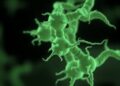
Credit: Binghamton University, State University of New York

BINGHAMTON, NY – Researchers at Binghamton University, State University of New York have created a micro-scale biological solar cell that generates a higher power density for longer than any existing cell of its kind.

A microfluidic lab-on-a-chip system that generates its own power is essential for stand-alone, independent, self-sustainable point-of-care diagnostic devices to work in limited-resource and remote regions, said Binghamton University Electrical and Computer Science Assistant Professor Seokheun Choi. Miniaturized biological solar cells (or micro-BSCs) can be the most suitable power source for those applications because the technique resembles the earth's natural ecosystem.

"Micro-BSCs can continuously generate electricity from microbial photosynthetic and respiratory activities over day-night cycles, offering a clean and renewable power source with self-sustaining potential," said Choi. "However, the promise of this technology has not been translated into practical applications because of its relatively low power and current short lifetimes."

Choi and PhD candidate Lin Liu created a microscale microfluidic biological solar cell that can attain high electrical power and long-term operational capability, which will provide a practical and sustainable power supply for lab-on-a-chip applications. The bio-solar cell generated the highest power density for the longest time among any existing micro-scale bio-solar cells.

"The device will release biological photo-energy conversion technology from its restriction to conceptual research and advance its translational potential toward practical and sustainable power applications for point-of-care diagnostics to work independently and self-sustainably in limited-resource and remote regions," added Choi.

###

The paper, "Self-sustainable, high-power-density bio-solar cells for lab-on-a-chip applications," was published in Lab on a Chip.

Media Contact

Seokheun Choi
[email protected]
607-777-5913
@binghamtonu

http://www.binghamton.edu

Related Journal Article

http://dx.doi.org/10.1039/C7LC00941K

Share12Tweet8Share2ShareShareShare2

Related Posts

Methylation puts parasites in motion

Methylation puts parasites in motion

August 31, 2026
Desiccation promotes DNA damage and rifampin resistance in Mycobacterium tuberculosis

Desiccation promotes DNA damage and rifampin resistance in Mycobacterium tuberculosis

August 31, 2026

Gastrointestinal Parasitism in Cattle and Water Buffaloes in Pakistan: Prevalence and Associated Risk Factors

August 31, 2026

Development of HPLC–PDA method for steviol glycosides analysis in food matrices

August 31, 2026
Please login to join discussion

POPULAR NEWS

  • β-Sitosterol from Ipomoea carnea Jacq. As a promising anti-inflammatory agent: Evidence from in silico modeling and in vitro validation

    29 shares
    Share 12 Tweet 7
  • Design, fabrication and characterization of a wearable Fiber Bragg grating sensor for cardiorespiratory monitoring using finger plethysmography

    29 shares
    Share 12 Tweet 7
  • KAIST opens the era of industrial-scale microbial foods, proposing growth strategies for the next-generation protein market

    29 shares
    Share 12 Tweet 7
  • Virologist awarded $2 million NIH grant to investigate how virus-infected cells live and die

    29 shares
    Share 12 Tweet 7

About

We bring you the latest biotechnology news from best research centers and universities around the world. Check our website.

Follow us

Recent News

β-Sitosterol from Ipomoea carnea Jacq. As a promising anti-inflammatory agent: Evidence from in silico modeling and in vitro validation

Design, fabrication and characterization of a wearable Fiber Bragg grating sensor for cardiorespiratory monitoring using finger plethysmography

KAIST opens the era of industrial-scale microbial foods, proposing growth strategies for the next-generation protein market

Subscribe to Blog via Email

Enter your email address to subscribe to this blog and receive notifications of new posts by email.

Join 85 other subscribers
  • Contact Us

Bioengineer.org © Copyright 2023 All Rights Reserved.

Welcome Back!

Login to your account below

Forgotten Password?

Retrieve your password

Please enter your username or email address to reset your password.

Log In
No Result
View All Result
  • Homepages
    • Home Page 1
    • Home Page 2
  • News
  • National
  • Business
  • Health
  • Lifestyle
  • Science

Bioengineer.org © Copyright 2023 All Rights Reserved.