


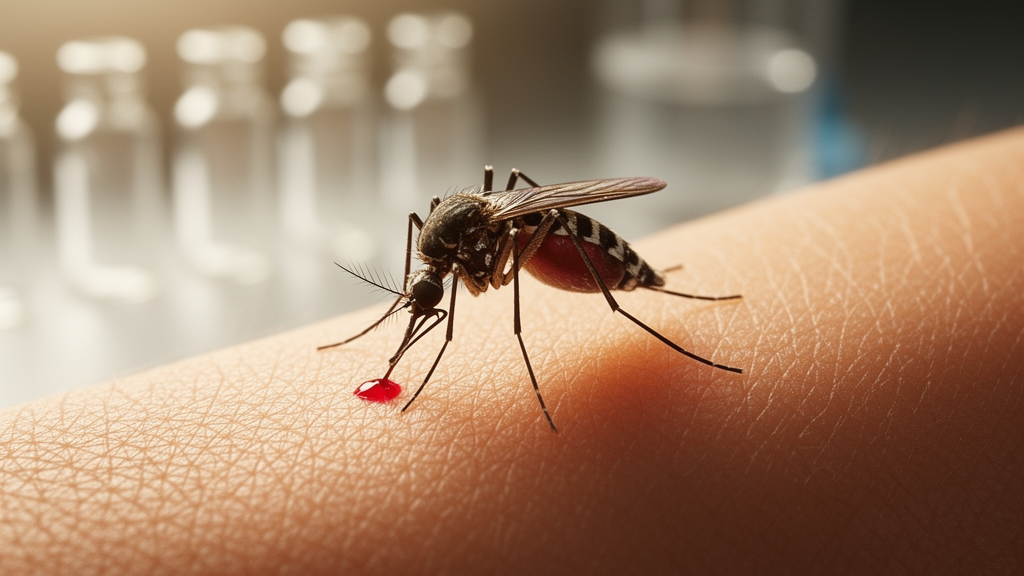
Human malaria infections begin when Plasmodium sporozoites are injected into the skin with mosquito saliva. Whole sporozoite immunizations have been used as a model to study immune responses to malaria parasites, an approach that culminated in circumsporozoite protein (CSP)-targeting vaccines and monoclonal antibodies. Yet antibody responses targeting non-CSP antigens on the sporozoite surface remain poorly characterized.
Researchers isolated single B cells from a human volunteer immunized with Plasmodium falciparum-infected mosquito bites, who had acquired non-CSP-specific antibodies that recognize sporozoites. From these cells they identified two monoclonal antibodies that bind to the surface of P. falciparum sporozoites but do not bind to CSP.
Using immunoprecipitation followed by mass spectrometry, the team found that the target of these antibodies is not a P. falciparum protein at all, but SG1L3, a protein from mosquito saliva. Recombinant SG1L3 was observed to bind to P. falciparum sporozoites, indicating that the salivary protein associates with the parasite surface.
However, the antibodies showed no protective function in laboratory tests. The SG1L3-specific monoclonal antibodies, SG1L3-specific polyclonal antibodies from the volunteer, and polyclonal antibodies raised against recombinant SG1L3 in rabbits all failed to block liver stage infection in vitro, making SG1L3 an unlikely target for functional antibodies.
The study also examined naturally acquired responses.
The authors conclude that they have identified the first human monoclonal antibodies against a mosquito saliva protein that binds to the surface of sporozoites. They note that future work should assess whether naturally acquired antibodies against this protein may be used as a serological marker of mosquito exposure, a potential application for monitoring transmission in endemic regions.
Subject of Research: Human antibody responses to the mosquito salivary protein SG1L3 following controlled Plasmodium falciparum-infected mosquito bite exposure
Article Title: Controlled human infection with Plasmodium falciparum- infected mosquito bites elicits antibodies against mosquito salivary protein SG1L3
Article References: Andrade, C. M., van Daalen, R. C., Fabra-García, A., Grievink, S., van Gemert, G.-J., Teelen, K., Hester, S. S., Stoter, R., van de Vegte-Bolmer, M., Drakeley, C., Tiono, A. B., Sauerwein, R. W., Bousema, T., & Jore, M. M. (2026). Controlled human infection with Plasmodium falciparum-infected mosquito bites elicits antibodies against mosquito salivary protein SG1L3. PLOS Pathogens, 22(10), e1014719. https://doi.org/10.1371/journal.ppat.1014719
Image Credits: AI Generated
DOI: 10.1371/journal.ppat.1014719
Keywords: malaria, Plasmodium falciparum, sporozoites, mosquito saliva, SG1L3, monoclonal antibodies, controlled human infection, CSP, Burkina Faso, serological marker, Anopheles, liver stage
News Source: Kristina Jarvis. (October 28, 2026). Mosquito bites against malaria reveal antibodies to salivary protein SG1L3. Scienmag.



