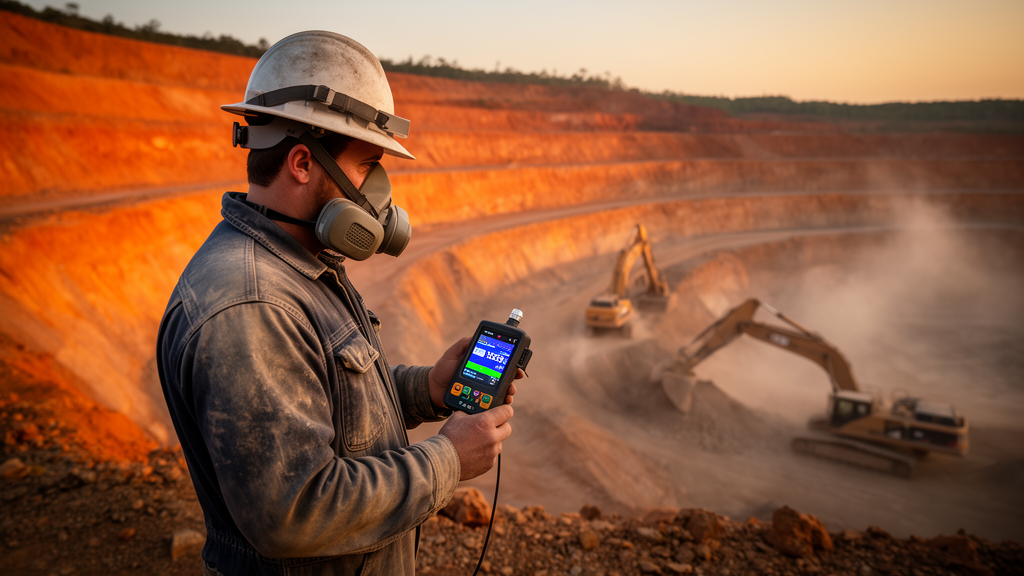
The minerals that power electric vehicle batteries, wind turbines and solar panels are being pulled out of the ground in East and Southern Africa at a rising pace, yet the health toll on the workers and communities who live beside the mines is barely being measured, according to a debate article published in Globalization and Health. Its central proposal is that health impact assessment, or HIA, should be institutionalised as a legal duty at every site of critical mineral extraction and processing, from licensing through to closure.
The authors frame the issue against a backdrop of surging demand. Demand for critical minerals is projected to double between 2025 and 2030, driven by low-carbon technologies such as electric vehicle batteries, wind turbines, solar photovoltaics and hydrogen electrolysers. African countries, particularly the Democratic Republic of Congo, Zimbabwe, Tanzania, Zambia and South Africa, are reported to hold significant shares of global reserves, including 55 percent of cobalt, 48 percent of manganese, 22 percent of graphite, 6 percent of copper, 6 percent of nickel and 11 percent of lithium. By 2023, Sub-Saharan Africa already accounted for high shares of global output, including 80 percent of cobalt and 26 percent of copper. Yet processing of these minerals largely happens elsewhere, with China reported to play a central role in refining nearly all of the major critical minerals except nickel, where Indonesia leads.
Both large-scale mining and artisanal and small-scale mining, known as ASM, contribute to this extraction. The ASM sector is substantial and growing: estimates cited in the paper suggest between 6.1 million people in 2009 and 10 million in 2017 were involved in ASM in Africa, and 2025 estimates suggest over 40 million people are directly involved in ASM in Sub-Saharan Africa, with five times that number of dependents and people indirectly involved. The sector is characterised by low mechanisation, low start-up capital and labour-intensive processes, and mixes informal, unregulated practice with formal, licensed operations. The authors note that the unregistered portion of ASM is poorly integrated into formal data systems, which complicates any attempt to count or protect the people it employs.
The health hazards documented in the paper are wide-ranging. Extraction of minerals in the region has generally been associated with dust particles, metal contaminants, gases, chemicals, earth movements, noise, vibrations and traffic hazards affecting workers and adjacent communities. Documented outcomes include injuries, respiratory diseases, tuberculosis, chronic obstructive pneumonia, pneumoconiosis, asthma, cancers, noise-induced hearing loss, musculoskeletal injury, toxic poisoning and a range of metabolic illnesses. People living close to mining sites, including children and pregnant women, are exposed to contaminants in polluted air, soils and water, which may also be ingested through affected crops and fish. Exposure to selected contaminants during pregnancy may affect foetal development, and contaminants at post-closure sites and in dumps have been associated with respiratory diseases and neurological and skin disorders. These hazards combine with poor living conditions, limited access to safe water and sanitation, crime and violence.
Despite this catalogue of risk, the authors find that health is poorly monitored in both large-scale and small-scale mining in the region, and particularly poorly monitored for vulnerable groups and surrounding communities. Systems for screening workers’ health do not routinely continue after mines close, under-reporting chronic morbidity, and many ex-miners are poorly tracked once they return to their home countries. Governments are reported to struggle with institutional weaknesses in providing screening for affected communities, particularly in the ASM sector and in conflict areas. Inadequate responses to injury, fatality, displacement and poor conditions have triggered protest and litigation, including a 2019 lawsuit against Huayou Cobalt in the Democratic Republic of Congo over human rights abuses that also implicated large Western transnational companies.
The paper also argues that environmental impact assessment, the tool most commonly mandated in the sector, does not fill this gap. A review of 44 impact assessment reports on mining projects found a heavy focus on environmental determinants, with health outcomes often limited to a few aspects such as HIV, malaria and injuries. A review of published environment, integrated or social impact analyses in Sub-Saharan Africa found only half addressed health, and all the assessments poorly identified how impacts were distributed across different affected social groups. In contrast, a systematic review of studies in the mining sector noted frequent reference to HIA as a valuable tool to identify and reduce health impacts, with calls for HIA and primary community-level data to be more widely applied.
To test what HIA can deliver, the authors drew on four desk-based HIAs implemented in 2025 in Zimbabwe, Zambia, Tanzania and the Democratic Republic of Congo as part of a regional online training programme, two focusing on ASM and two on both large-scale and small-scale mining. These followed the internationally recognised steps of HIA: screening, scoping, profiling and assessment, recommendations, reporting and monitoring. The HIAs reported chemical poisoning, respiratory illnesses from dust, musculoskeletal disorders, hearing loss from noise and mental ill-health among workers, with one reporting a 96 percent increase in ASM fatalities at the site between 2021 and 2023. They highlighted inadequate engineering controls for ventilation, dust and noise suppression, and the link between these conditions and unsafe exposure to dust, mercury, cyanide and noise.
The HIAs also looked beyond the mine gates. They profiled wider population exposure to chemical spills, traffic accidents and air pollution in the transport of materials from mining sites to markets. They documented dust emissions from pits exposing diggers, transporters, mineral washers and adjacent communities to respiratory and lung diseases, sulphur dioxide emissions from large-scale mining that regularly exceed World Health Organization safe limits, and soil contamination by cobalt, arsenic, copper and lead above international thresholds, which was linked to gynaecological disease in female workers and residents. Heavy metal and sulphate effluents in drinking water were linked to increased risks of diarrhoeal disease, cancers and heavy metal poisoning. In Lualaba in the Democratic Republic of Congo, the HIA traced how extreme poverty leads many women, pregnant women, children and young people to work in informal mining sites, exposing them to arsenic, copper, cobalt and lead contaminants. The reports consistently highlighted the inequity of exposure pathways extending to women and children in downwind and downstream communities, sometimes many kilometres from the mines.
Crucially, the assessments did not stop at description. All four HIAs recommended engineering and process controls for noise, dust and sulphur dioxide emissions, waste management systems to prevent leachate and runoff, and measures to prevent spillage from tailings dams. They proposed plans for health and education services, livelihood support and infrastructure, discussed with affected communities for prior informed consent before any displacement. They proposed reviews of laws on air quality, dust emission controls, soil contamination and waste discharge, comprehensive occupational health programmes, health surveillance in workers and communities, and strengthened state inspection of mining sites. The Zimbabwe HIA proposed specific triggers for public alerts, including mercury levels in the river above the WHO limit of 0.001 milligrams per litre triggering mill suspension, and increases in quarterly mining accident rates triggering safety retraining, controls and fines. All four HIAs also recommended integrating a legal duty to implement and report HIAs with plans to manage risks before mining licences are granted, and allocating a portion of mine-related revenue to improvements in mining communities.
The authors acknowledge limitations: the sample of HIAs was small, primary data were limited, and only English-language documents were included, potentially under-representing lusophone and francophone countries. The paper is a debate article based on a desk review of 65 public domain documents, not a systematic review or new field study. Nevertheless, the authors argue that the case for institutionalising HIA is urgent. They point to existing legal foundations in the region, including Zimbabwe’s Public Health Act 2018, which allows the Minister of Health to specify projects requiring an HIA before licensing, Tanzania’s 2009 Public Health Act, which requires an environmental health impact assessment study for activities including mining, and DRC’s 2018 law providing duties to assess activities that produce toxic risks. They note that a 2020 review found 96 percent of published HIAs were implemented in high-income countries, an inequity they say must be reversed in regions of extraction. By 2025, regional online training had trained 70 cadres from seven East and Southern African countries. As the authors conclude, a global energy transition that uses these minerals cannot be green if it is unjust.
Subject of Research: Health impact assessment in critical mineral extraction in East and Southern Africa
Article Title: Profiling health for equitable benefit-sharing in the global critical mineral value-chain: a lens from East and Southern Africa
Article References: Loewenson, R., Mlambo, L., Hinfelaar, M., Mukotanyi, F. I., Poncian, J., Lusambo, J. L., Buraye, J. K., Moyo, P. L., & Bwalya, D. (2026). Profiling health for equitable benefit-sharing in the global critical mineral value-chain: a lens from East and Southern Africa. Globalization and Health, 22(1), Article 74. https://doi.org/10.1186/s12992-026-01243-7
Image Credits: AI Generated
DOI: 10.1186/s12992-026-01243-7
Keywords: critical minerals, health impact assessment, artisanal and small-scale mining, East and Southern Africa, benefit-sharing, occupational health, environmental impact assessment, energy transition, cobalt, mining communities, public health law, health equity
News Source: Phoebe Ingram. (October 28, 2026). Health risks buried in the critical mineral boom, and a tool to expose them. Scienmag.