


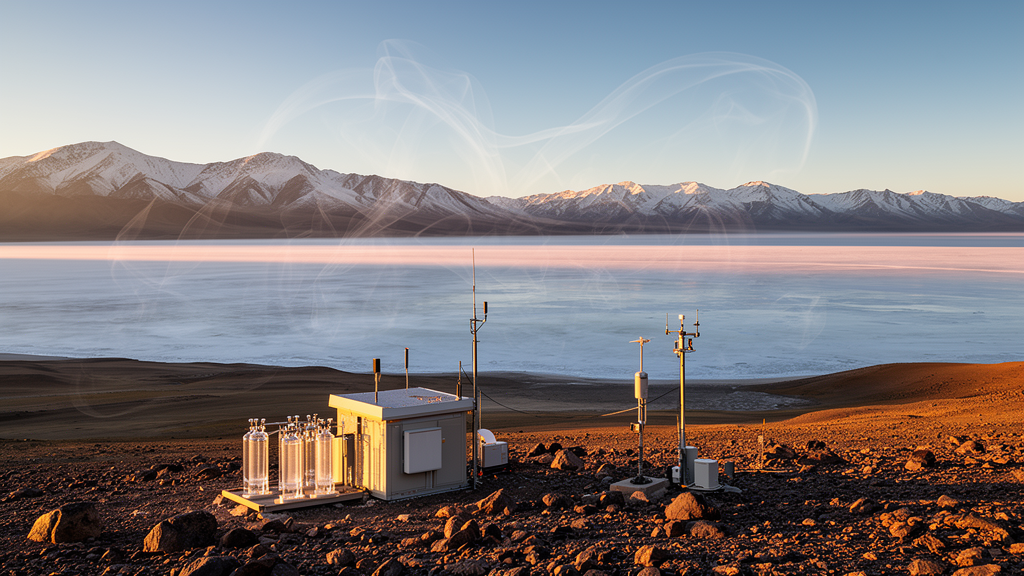
Volatile organic compounds (VOCs) occupy a central position in atmospheric photochemistry, serving as key precursors of tropospheric ozone and secondary organic aerosols (SOA), and thereby influencing climate forcing. A new review published in Air Quality, Atmosphere & Health synthesizes what is currently known about the spatial and temporal variation, environmental occurrence, analytical determination and climatic effects of VOCs on a global scale, with particular attention to climate-sensitive regions such as the Tibetan Plateau and the polar regions.
According to the review, existing studies indicate pronounced spatial heterogeneity in VOC concentrations, shaped by the combined effects of anthropogenic emissions, biogenic sources and meteorological conditions. In cold and high-altitude environments, the migration and transformation of VOCs across environmental media are strongly influenced by cryosphere processes.
On the analytical side, the authors report that gas chromatography–mass spectrometry (GC–MS) remains the most widely applied technique for VOC determination, while online and portable instruments are increasingly adopted for observations in remote regions.
The review emphasizes that, through their roles as precursors of ozone and SOA, VOCs influence climate via multiple and sometimes competing feedback mechanisms. However, research on the Tibetan Plateau and polar regions remains constrained by sparse long-term observations and by limitations in model parameterizations. The authors argue that addressing these gaps is essential for improving the reliability of future assessments of VOC–climate interactions in the regions most sensitive to a warming cryosphere.
Subject of Research: A review of volatile organic compounds in climate-sensitive regions including the Tibetan Plateau and the poles
Article Title: A review of volatile organic compounds in the Tibetan Plateau and polar regions: sources, environmental occurrence, analytical approaches, and climate feedback
Article References: Yan, J., Lin, X., Dotel, J., Ghmire, B., Yin, X., Gao, S., Li, H., & Sun, X. (2026). A review of volatile organic compounds in the Tibetan Plateau and polar regions: sources, environmental occurrence, analytical approaches, and climate feedback. Air Quality, Atmosphere & Health, 19(11), Article 241. https://doi.org/10.1007/s11869-026-02126-x
Image Credits: AI Generated
DOI: 10.1007/s11869-026-02126-x
Keywords: volatile organic compounds, Tibetan Plateau, polar regions, tropospheric ozone, secondary organic aerosols, permafrost thaw, GC-MS, climate feedback, cryosphere, atmospheric chemistry, review, volatile
News Source: Russell Cooper. (October 28, 2026). VOCs in the Tibetan Plateau and Polar Regions: A Review of Sources, Analysis and Climate Feedback. Scienmag.



