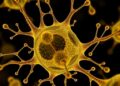
Credit: Berkeley Lab
The National Institutes of Health (NIH) has awarded $6.5 million to Lawrence Berkeley National Laboratory (Berkeley Lab) to integrate existing synchrotron structural biology resources to better serve researchers. The grant will establish a center based at the Lab's Advanced Light Source (ALS) called ALS-ENABLE that will guide users through the most appropriate routes for answering their specific biological questions.
The initiative brings together four groups of scientists who, for the past 15 years, have individually facilitated access to crystallography and small angle Xray scattering technologies on eight ALS beamlines for the structural biology community. The ALS is a DOE Office of Science User Facility that is available to staff and visiting scientists from the global scientific community.
"Leveraging the capabilities and expertise across the beamlines is designed to optimize the chances of successful structure determination for routine and challenging problems," said Paul Adams, director of Berkeley Lab's Molecular Biophysics & Integrated Bioimaging (MBIB) division and principal investigator on the grant.
ALS-ENABLE has three technology operations cores to address specific needs: rapid response crystallography; high quality and high throughput small angle X-ray scattering; and specialized crystallography.
For X-ray crystallography projects that are relatively straightforward, such as determining the position of different small molecules bound to the same protein, a fully automated pipeline will be put in place. Users' samples will be mounted at the beamline by robots, the diffraction data will be automatically collected and processed, and the researchers hope that the structure will be automatically solved. "It will be completely hands-off, which will significantly increase efficiency," said rapid response core lead Corie Ralston, a biochemist in MBIB.
Small angle X-ray scattering (SAXS) can provide lower resolution data for macromolecules in solution for samples that are not tractable to crystallization. Often, solution scattering and crystallography are complementary. As an example, the overall shape of a protein complex could be determined with the former. Then with the latter, the individual components are imaged and used to figure out how they fit together. Greg Hura, a biophysicist in MBIB, will lead the SAXS core.
Really challenging molecules, such as membrane proteins, tend not to crystallize or produce crystals that do not diffract very well. There are a number of tricks that have been devised to get usable structure data, including collecting data at different temperatures and capturing a few images each from a succession of crystals. This specialized crystallography core is led by James Holton, a biophysicist in MBIB, who is experienced in these techniques and will advise and assist users.
Jay Nix, beamline director for the Molecular Biology Consortium at ALS, will lead user training and outreach efforts, which will incorporate on-site workshops, remote training and online materials. In addition, web tools that have been developed independently by various members of the team will be consolidated onto a single website so as to be more accessible to users.
Other co-investigators on the grant are James Fraser, an associate professor in the Department of Bioengineering and Therapeutic Sciences at UCSF, and John Tainer, an MBIB visiting scientist and a professor of Molecular & Cellular Oncology at the University of Texas MD Anderson Cancer Center.
"I'm very excited that NIH has given us the opportunity to work together to provide structural biology users at the ALS with a coordinated and efficient resource that will stay at the forefront of technology," added Adams.
###
Lawrence Berkeley National Laboratory addresses the world's most urgent scientific challenges by advancing sustainable energy, protecting human health, creating new materials, and revealing the origin and fate of the universe. Founded in 1931, Berkeley Lab's scientific expertise has been recognized with 13 Nobel Prizes. The University of California manages Berkeley Lab for the U.S. Department of Energy's Office of Science. For more, visit http://www.lbl.gov.
DOE's Office of Science is the single largest supporter of basic research in the physical sciences in the United States, and is working to address some of the most pressing challenges of our time. For more information, please visit science.energy.gov.
Media Contact
Jon Weiner
[email protected]
510-486-4014
@BerkeleyLab
Original Source
http://newscenter.lbl.gov/2017/10/16/nih-awards-6-5-million-berkeley-lab-augmenting-structural-biology-research-experience/