• HOME
  • NEWS
  • EXPLORE
    • CAREER
      • Companies
      • Jobs
    • EVENTS
    • iGEM
      • News
      • Team
    • PHOTOS
    • VIDEO
    • WIKI
  • BLOG
  • COMMUNITY
    • FACEBOOK
    • INSTAGRAM
    • TWITTER
Thursday, October 29, 2026
BIOENGINEER.ORG
No Result
View All Result
  • Login
  • HOME
  • NEWS
  • EXPLORE
    • CAREER
      • Companies
      • Jobs
        • Lecturer
        • PhD Studentship
        • Postdoc
        • Research Assistant
    • EVENTS
    • iGEM
      • News
      • Team
    • PHOTOS
    • VIDEO
    • WIKI
  • BLOG
  • COMMUNITY
    • FACEBOOK
    • INSTAGRAM
    • TWITTER
No Result
View All Result
Bioengineer.org
No Result
View All Result
Home NEWS Science News Health

More Danes in their 50s and 60s are caring for ageing parents, study finds

by
October 28, 2026
in Health
Reading Time: 2 mins read
0
More Danes in their 50s and 60s are caring for ageing parents, study finds

More Danes in their 50s and 60s are caring for ageing parents, study finds

Share on FacebookShare on TwitterShare on LinkedinShare on RedditShare on Telegram

The share of Danes aged 52–67 who helped a parent or parent-in-law with at least one task in the past month rose from 27.9% in 1997 to 34.8% in 2022, an increase of 6.9 percentage points, according to a study published in the European Journal of Ageing.

The research, led by Anna Amilon and Mads Lybech Christensen, draws on the Danish Longitudinal Study of Ageing linked with population and education registry information covering the period from 1997 to 2022. It examines how adult children’s informal caregiving has evolved over 25 years.

The study period was marked by substantial societal and institutional shifts, including increasing longevity, delayed childbearing, educational expansion, rising female labour force participation and postponed retirement. The authors set out to assess how these developments may have shaped caregiving practices among people in their 50s and early 60s.

Methodologically, the researchers applied Kitagawa–Oaxaca–Blinder decomposition techniques and adjusted predictions from linear probability models to analyse changes in caregiving patterns and their association with socio-economic and demographic factors.

Descriptively, the provision of informal care was more likely among men, individuals in their 50s, those with tertiary education and those who were employed. However, the study finds that this pattern mainly reflects these groups’ greater likelihood of having a surviving parent or parent-in-law.

Once parental survival was accounted for, the socio-economic and demographic differences in caregiving largely disappeared. This suggests that the apparent social patterning of who provides care is largely a function of family structure rather than of differences in the propensity to care.

The authors conclude that the increase in caregiving over the 25-year period was driven primarily by a growing share of adult children with surviving parents or in-laws, coupled with an overall increase in the propensity to provide care, rather than by increasing socio-economic stratification in caregiving.

The findings are based on a Danish national sample of adults aged 52–67 and their caregiving for parents and parents-in-law, and the article is published as open access research. As the study is observational, it describes associations between demographic and socio-economic factors and caregiving over time rather than establishing causal effects, and the results pertain to the Danish context during the 1997–2022 period.

Subject of Research: Trends in informal caregiving by adult children for parents and parents-in-law in Denmark from 1997 to 2022

Article Title: 25 years of adult children’s caregiving in Denmark: demographic change, educational expansion, and longer working lives

Article References: Amilon, A., & Christensen, M. L. (2026). 25 years of adult children’s caregiving in Denmark: demographic change, educational expansion, and longer working lives. European Journal of Ageing. https://doi.org/10.1007/s10433-026-00950-9

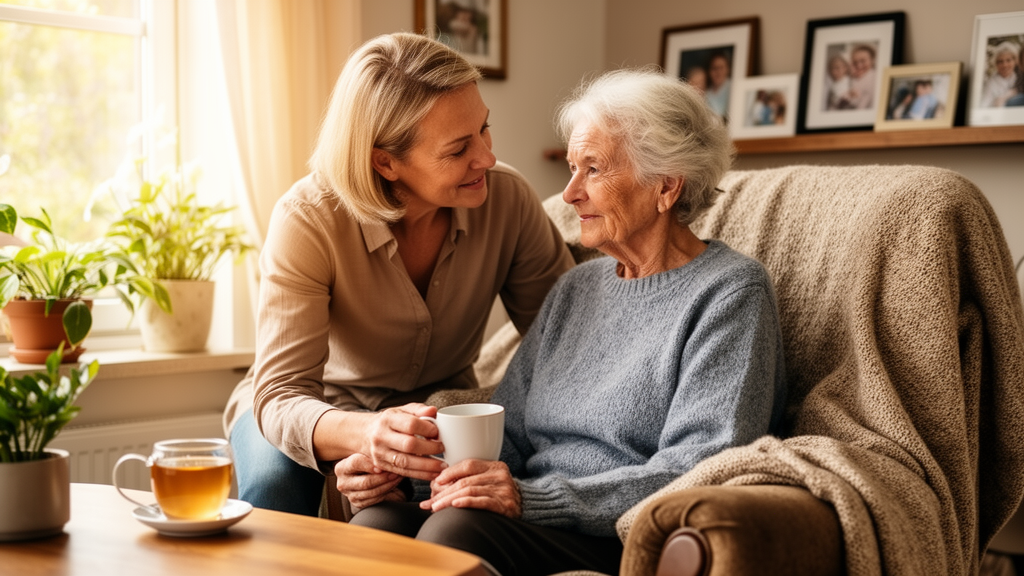
Image Credits: AI Generated

DOI: 10.1007/s10433-026-00950-9

Keywords: informal caregiving, Denmark, adult children, ageing parents, longevity, demographic change, socio-economic factors, labour force participation, registry data, decomposition analysis, European Journal of Ageing, parental survival

News Source: Beatrice Stafford. (October 28, 2026). More Danes in their 50s and 60s are caring for ageing parents, study finds. Scienmag.


Tags: adult childrenageing parentsdecomposition analysisdemographic changeDenmarkEuropean Journal of Ageinginformal caregivinglabour force participationlongevityparental survivalregistry datasocio-economic factors
Share12Tweet7Share2ShareShareShare1

Related Posts

One Transformer Reads Three Brain-Signal Types at Once, Hitting 71% Accuracy

One Transformer Reads Three Brain-Signal Types at Once, Hitting 71% Accuracy

October 29, 2026
Research report: Case Report: Probable paroxysmal sympathetic hyperactivity during vascular and postoperative critical illness with bilateral white matter abnormalities

Research report: Case Report: Probable paroxysmal sympathetic hyperactivity during vascular and postoperative critical illness with bilateral white matter abnormalities

October 29, 2026

Semi-quantitative urine test strips stumble on creatinine, study finds

October 29, 2026

Research report: Network analysis of the relationship between change fatigue and work withdrawal behavior among Chinese nurses

October 29, 2026

POPULAR NEWS

  • One Transformer Reads Three Brain-Signal Types at Once, Hitting 71% Accuracy

    One Transformer Reads Three Brain-Signal Types at Once, Hitting 71% Accuracy

    29 shares
    Share 12 Tweet 7
  • Research report: Case Report: Probable paroxysmal sympathetic hyperactivity during vascular and postoperative critical illness with bilateral white matter abnormalities

    29 shares
    Share 12 Tweet 7
  • Propionate, Not Extra Protein, Drives Reproductive Gains in Young Range Cows

    29 shares
    Share 12 Tweet 7
  • Deep Learning Model Predicts Adhesive Hydrogel Strength Under Distribution Shift

    29 shares
    Share 12 Tweet 7

About

We bring you the latest biotechnology news from best research centers and universities around the world. Check our website.

Follow us

Recent News

One Transformer Reads Three Brain-Signal Types at Once, Hitting 71% Accuracy

Research report: Case Report: Probable paroxysmal sympathetic hyperactivity during vascular and postoperative critical illness with bilateral white matter abnormalities

Propionate, Not Extra Protein, Drives Reproductive Gains in Young Range Cows

Subscribe to Blog via Email

Enter your email address to subscribe to this blog and receive notifications of new posts by email.

Join 85 other subscribers
  • Contact Us

Bioengineer.org © Copyright 2023 All Rights Reserved.

Welcome Back!

Login to your account below

Forgotten Password?

Retrieve your password

Please enter your username or email address to reset your password.

Log In
No Result
View All Result
  • Homepages
    • Home Page 1
    • Home Page 2
  • News
  • National
  • Business
  • Health
  • Lifestyle
  • Science

Bioengineer.org © Copyright 2023 All Rights Reserved.