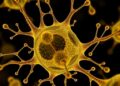
At its autumn session, the Joint Committee of the Deutsche Forschungsgemeinschaft (DFG, German Research Foundation) approved the funding of 17 high-performance electron microscopes with a total sum of €43 million. Funding for seven microscopes, amounting to €24 million, was awarded in the spring. This equipment will enable universities to benefit from state-of-the-art technology in life sciences research and physical materials science. The DFG invited proposals in the field of high-performance electron microscopy in summer 2016 – the reason for the large number of proposals for electron microscopes submitted this year.
"We're very pleased that so many universities have taken advantage of this opportunity. The DFG believes that university research in the life sciences, natural sciences and materials science is now better equipped for the future and that universities are better placed to provide the kind of advanced analytical methods in electron microscopy that excellent basic research requires," said the President of the DFG, Prof. Dr. Peter Strohschneider. "However, because technology cycles in this area too are accelerating, a high level of future investment will also be required to ensure timely upgrades and staff expertise and thus maintain the international competitiveness of German universities in the long term," he added.
The option of submitting proposals for major research instrumentation has been available since 2007, when the federal and state governments set up a programme to fund investments of this type at universities. The DFG receives an annual allocation of €85 million from the Federal Ministry of Education and Research (BMBF) for this purpose, which it awards through a co-financing arrangement with the relevant federal state in an open, research-driven proposal process. In this way, a total of €1.7 billion has been invested in research-oriented instrumentation in all areas of science and technology over the last ten years.
In summer 2016, in agreement with the BMBF, the DFG invited proposals for a specific technology for the first time since the Major Research Instrumentation Programme got underway. This was partly in response to the rapid pace of development in detector technology – the new microscopes offer resolutions down to an atomic scale – and partly in recognition of the urgent need for the new technology reported in the scientific community, especially in the life sciences. The BMBF substantially increased its funding for major research instrumentation, making possible the acquisition of a larger number of electron microscopes without reducing the budget for other instrumentation funded through the programme.
One key focus of the call for proposals was the use of cryo-electron microscopy in the field of structural biology – a technique whose development recently secured three researchers this year's Nobel Prize in Chemistry. This is a special technique in which frozen samples or individual particles can be mapped in minute detail, giving researchers unique insights into the three-dimensional structure of proteins. Previously, this level of detail could only be achieved by laboriously producing and analysing protein crystals. Through DFG funding, eight universities are currently establishing a focal area in high-performance cryo-electron microscopy: in Berlin (FU and Charité), Hamburg (UHH), Heidelberg, Cologne, Munich (LMU), Regensburg and Würzburg. Investments in this sector alone amount to a total of €48 million. The DFG will continue to promote and support the use and methodical development of the instrumentation after the funding period is over.
###
Further Information
Media contact:
DFG Press and Public Relations, Tel. +49 228 885-2109, [email protected]
Programme contact at DFG Head Office:
Dr. Gunter Merdes, Scientific Instrumentation and Information Technology Division, tel. +49 228 885-2476, [email protected]
Detailed information about the Major Research Instrumentation Programme can be found at: http://www.dfg.de/en/research_funding/programmes/infrastructure/scientific_instrumentation/equipment_91GG/
Media Contact
Magdalena Schaeffer
[email protected]
49-228-885-2130
http://www.dfg.de