Credit: © Lunghammer – TU Graz
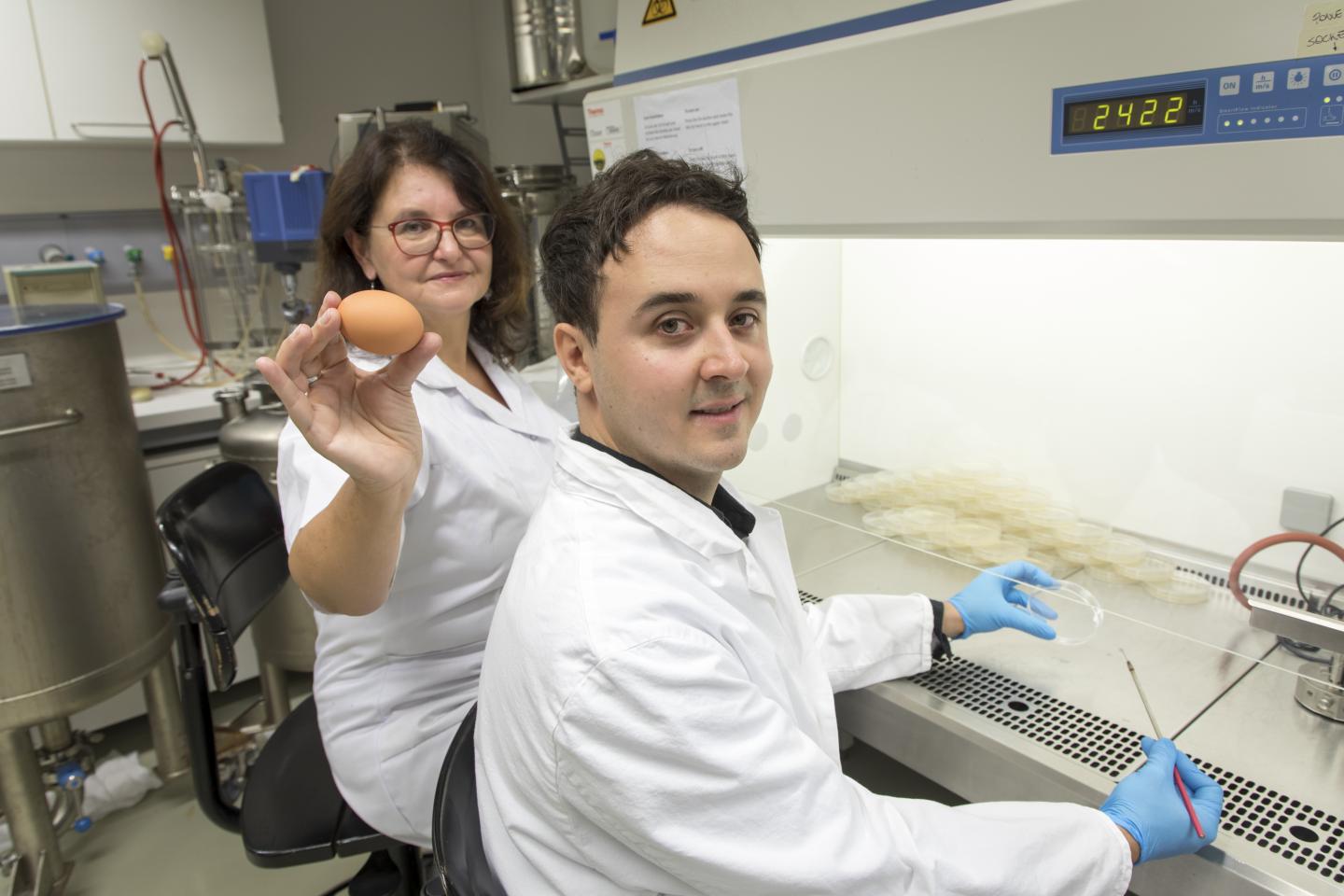
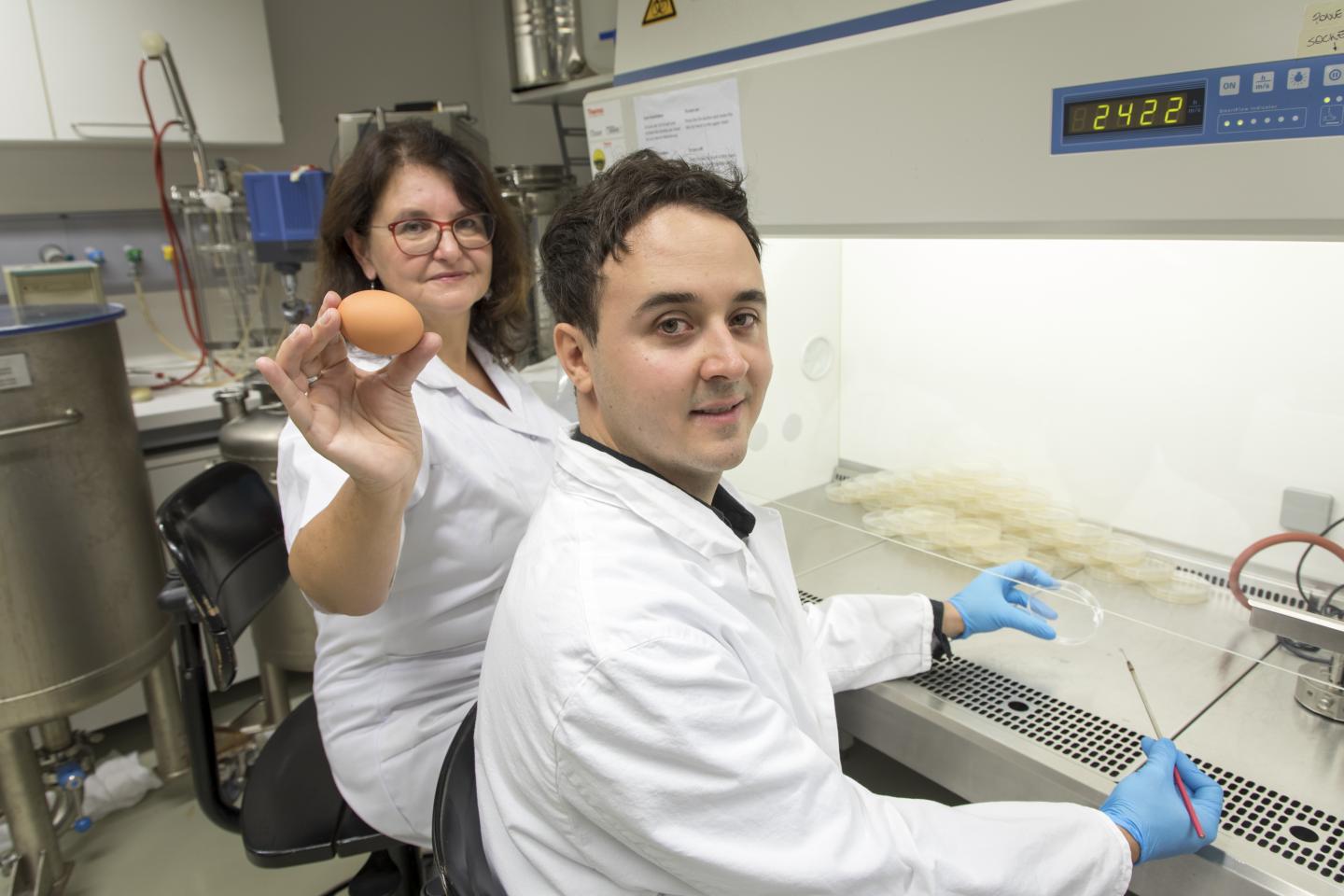
There was a Europe-wide outcry in the summer of 2017 as it emerged that hatching eggs were being treated with the insecticide fipronil, which is harmful to health. The use of fipronil is banned in the treatment of animals meant for food production. The eggs themselves were not treated directly with fipronil, but sitting hens infested with chicken lice were – and they passed on the toxic substance onto their eggs. But hatching eggs come into contact with toxic substances in quite legal, standardised ways. To prevent and fight against bacterial contaminations, the common practice of treating hatching eggs with formaldehyde has been carried out in European large-scale hatcheries for many years.
The eggs – just the hatching eggs, not those for direct consumption – are subjected to formaldehyde fumigation, something which local residents in the vicinity of the hatcheries cannot fail to notice. "Formaldehyde evaporates quickly and you can't control it completely in large-scale hatcheries – some gas always escapes," says Tomislav Cernava from the Institute for Environmental Biotechnology of TU Graz. In addition to the carcinogenic and harmful environmental effects of formaldehyde, this is also a reason why the EU is frantically searching for an effective alternative for the treatment of hatching eggs.
Microorganisms as natural antagonists
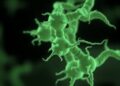
A promising and eco-friendly option based on useful microorganisms has just been successfully tested by researchers at TU Graz, the Austrian Centre of Industrial Biotechnology (acib) and the biotech start-up Roombiotic on a pre-industrial laboratory scale. The results have just been published in the scientific journal Scientific Reports. The group from Graz came across the bacteria with antimicrobial effects in a precursor project in 2009. At the time, specific microorganisms which protect Styrian oil-seed pumpkins from rot were identified for the first time.
"We continued to conduct research on the volatile substances of these bacteria to find out how they combat pathogens so effectively. We've now assessed the efficiency a few of them conducting microbiome analyses of the egg shells," says Gabriele Berg, head of TU Graz's Institute for Environmental Biotechnology. Bacteria producing pyrazines stood out in particular. When applied in pure form to the egg shells, pyrazines eliminated up to 99.6 percent of germs – a decontamination rate comparable to that of formaldehyde fumigation. The natural egg-shell microbiome is characterised by an unexpected bacterial diversity. "Interestingly, especially low pyrazine concentrations lead to a positive microbiome shift," underlines Gabriele Berg.
Looking for partners
Another advantage of this substance is that it is liquid at room temperature, but also evaporates easily. This means the same equipment can be used as is now used for fumigation with formaldehyde. As a next step, what works in the lab must now be tested on a large scale. To do this, the group is now looking for partners from industry who want to get involved.
###
This research topic is anchored in the Field of Expertise "Human & Biotechnology", one of the five strategic research foci at TU Graz.
Contact:
Gabriele BERG
Univ.-Prof. Dipl.-Biol. Dr.rer.nat.
TU Graz | Institute of Environmental Biotechnology
Phone: +43 316 873 8310
Email: [email protected]
Tomislav CERNAVA
Dr.techn. BSc MSc
TU Graz | Institute of Environmental Biotechnology
Phone: +43 316 873 8812
Email: [email protected]
Media Contact
Tomislav Cernava
[email protected]
43-316-873-8812
http://www.tugraz.at
Original Source
https://www.tugraz.at/en/tu-graz/services/news-stories/media-service/singleview/article/keimfreie-bruteier-alternative-zum-gaengigen-formaldehyd/ http://dx.doi.org/10.1038/s41598-017-13579-7