
• HOME
  • NEWS
  • EXPLORE
    • CAREER
      • Companies
      • Jobs
    • EVENTS
    • iGEM
      • News
      • Team
    • PHOTOS
    • VIDEO
    • WIKI
  • BLOG
  • COMMUNITY
    • FACEBOOK
    • INSTAGRAM
    • TWITTER
Saturday, February 7, 2026
BIOENGINEER.ORG
No Result
View All Result
  • Login
  • HOME
  • NEWS
  • EXPLORE
    • CAREER
      • Companies
      • Jobs
        • Lecturer
        • PhD Studentship
        • Postdoc
        • Research Assistant
    • EVENTS
    • iGEM
      • News
      • Team
    • PHOTOS
    • VIDEO
    • WIKI
  • BLOG
  • COMMUNITY
    • FACEBOOK
    • INSTAGRAM
    • TWITTER
  • HOME
  • NEWS
  • EXPLORE
    • CAREER
      • Companies
      • Jobs
        • Lecturer
        • PhD Studentship
        • Postdoc
        • Research Assistant
    • EVENTS
    • iGEM
      • News
      • Team
    • PHOTOS
    • VIDEO
    • WIKI
  • BLOG
  • COMMUNITY
    • FACEBOOK
    • INSTAGRAM
    • TWITTER
No Result
View All Result
Bioengineer.org
No Result
View All Result
Home NEWS Science News Biology

New antibiotic resistance genes found

Bioengineer by Bioengineer
October 16, 2017
in Biology
Reading Time: 2 mins read
0
Share on FacebookShare on TwitterShare on LinkedinShare on RedditShare on Telegram
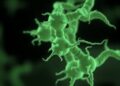
IMAGE

Credit: Chalmers University of Technology

Researchers at Chalmers University of Technology and the University of Gothenburg, Sweden, have found several previously unknown genes that make bacteria resistant to last-resort antibiotics. The genes were found by searching large volumes of bacterial DNA and the results are published in the scientific journal Microbiome.

The increasing number of infections caused by antibiotic-resistant bacteria is a rapidly growing global problem. Disease-causing bacteria become resistant through mutations of their own DNA or by acquiring resistance genes from other, often harmless, bacteria.

By analysing large volumes of DNA data, the researchers found 76 new types of resistance genes. Several of these genes can provide bacteria with the ability to degrade carbapenems, our most powerful class of antibiotics used to treat multi-resistant bacteria.

"Our study shows that there are lots of unknown resistance genes. Knowledge about these genes makes it possible to more effectively find and hopefully tackle new forms of multi-resistant bacteria", says Erik Kristiansson, Professor in biostatistics at Chalmers University of Technology and principal investigator of the study.

"The more we know about how bacteria can defend themselves against antibiotics, the better are our odds for developing effective, new drugs", explains co-author Joakim Larsson, Professor in environmental pharmacology and Director of the Centre for Antibiotic Resistance Research at the University of Gothenburg.

The researchers identified the novel genes by analysing DNA sequences from bacteria collected from humans and various environments from all over the world.

"Resistance genes are often very rare, and a lot of DNA data needs to be examined before a new gene can be found", Kristiansson says.

Identifying a resistance gene is also challenging if it has not previously been encountered. The research group solved this by developing new computational methods to find patterns in DNA that are associated with antibiotic resistance. By testing the genes they identified in the laboratory, they could then prove that their predictions were correct.

"Our methods are very efficient and can search for the specific patterns of novel resistance genes in large volumes of DNA sequence data," says Fanny Berglund, a PhD student in the research group.

The next step for the research groups is to search for genes that provide resistance to other forms of antibiotics.

"The novel genes we discovered are only the tip of the iceberg. There are still many unidentified antibiotic resistance genes that could become major global health problems in the future," Kristiansson says.

###

Media Contact

Johanna Wilde
[email protected]
46-317-722-029
@chalmersuniv

http://www.chalmers.se/en/

Related Journal Article

http://dx.doi.org/10.1186/s40168-017-0353-8

Share12Tweet8Share2ShareShareShare2

Related Posts

Florida Cane Toad: Complex Spread and Selective Evolution

Florida Cane Toad: Complex Spread and Selective Evolution

February 7, 2026
New Study Uncovers Mechanism Behind Burn Pit Particulate Matter–Induced Lung Inflammation

New Study Uncovers Mechanism Behind Burn Pit Particulate Matter–Induced Lung Inflammation

February 6, 2026

DeepBlastoid: Advancing Automated and Efficient Evaluation of Human Blastoids with Deep Learning

February 6, 2026

Navigating the Gut: The Role of Formic Acid in the Microbiome

February 6, 2026
Please login to join discussion

POPULAR NEWS

  • Robotic Ureteral Reconstruction: A Novel Approach

    Robotic Ureteral Reconstruction: A Novel Approach

    82 shares
    Share 33 Tweet 21
  • Digital Privacy: Health Data Control in Incarceration

    63 shares
    Share 25 Tweet 16
  • Study Reveals Lipid Accumulation in ME/CFS Cells

    57 shares
    Share 23 Tweet 14
  • Breakthrough in RNA Research Accelerates Medical Innovations Timeline

    53 shares
    Share 21 Tweet 13

About

We bring you the latest biotechnology news from best research centers and universities around the world. Check our website.

Follow us

Recent News

Phage-Antibiotic Combo Beats Resistant Peritoneal Infection

Boosting Remote Healthcare: Stepped-Wedge Trial Insights

Barriers and Boosters of Seniors’ Physical Activity in Karachi

Subscribe to Blog via Email

Enter your email address to subscribe to this blog and receive notifications of new posts by email.

Join 73 other subscribers
  • Contact Us

Bioengineer.org © Copyright 2023 All Rights Reserved.

Welcome Back!

Login to your account below

Forgotten Password?

Retrieve your password

Please enter your username or email address to reset your password.

Log In
No Result
View All Result
  • Homepages
    • Home Page 1
    • Home Page 2
  • News
  • National
  • Business
  • Health
  • Lifestyle
  • Science

Bioengineer.org © Copyright 2023 All Rights Reserved.