

• HOME
  • NEWS
  • EXPLORE
    • CAREER
      • Companies
      • Jobs
    • EVENTS
    • iGEM
      • News
      • Team
    • PHOTOS
    • VIDEO
    • WIKI
  • BLOG
  • COMMUNITY
    • FACEBOOK
    • INSTAGRAM
    • TWITTER
Monday, August 31, 2026
BIOENGINEER.ORG
No Result
View All Result
  • Login
  • HOME
  • NEWS
  • EXPLORE
    • CAREER
      • Companies
      • Jobs
        • Lecturer
        • PhD Studentship
        • Postdoc
        • Research Assistant
    • EVENTS
    • iGEM
      • News
      • Team
    • PHOTOS
    • VIDEO
    • WIKI
  • BLOG
  • COMMUNITY
    • FACEBOOK
    • INSTAGRAM
    • TWITTER
  • HOME
  • NEWS
  • EXPLORE
    • CAREER
      • Companies
      • Jobs
        • Lecturer
        • PhD Studentship
        • Postdoc
        • Research Assistant
    • EVENTS
    • iGEM
      • News
      • Team
    • PHOTOS
    • VIDEO
    • WIKI
  • BLOG
  • COMMUNITY
    • FACEBOOK
    • INSTAGRAM
    • TWITTER
No Result
View All Result
Bioengineer.org
No Result
View All Result
Home NEWS Science News Biology

New method creates liver bioscaffolds with intact ECM for reseeding and transplantation

Bioengineer by Bioengineer
October 13, 2017
in Biology
Reading Time: 2 mins read
0
Share on FacebookShare on TwitterShare on LinkedinShare on RedditShare on Telegram
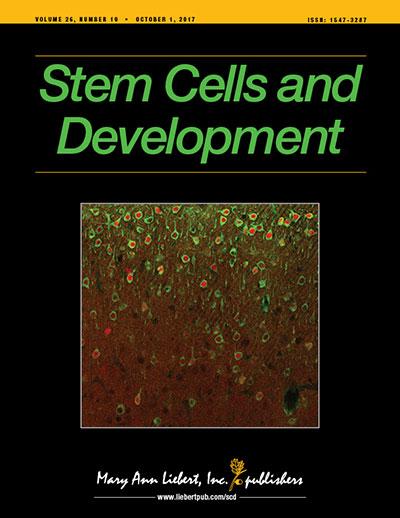
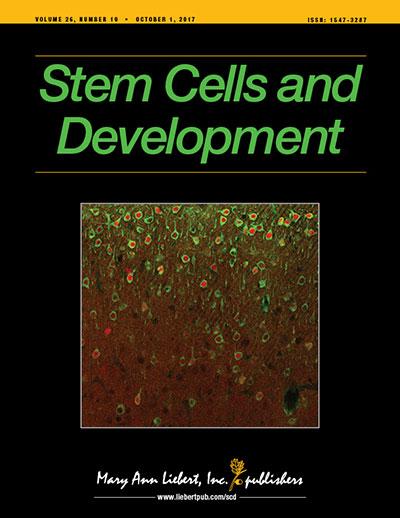
IMAGE

Credit: Mary Ann Liebert, Inc., publishers

New Rochelle, NY, October 13, 2017-Researchers have reported a method for successfully removing the cellular material from whole human livers while retaining the organ's three-dimensional structure and extracellular matrix (ECM) components. They further demonstrated the feasibility of reseeding these liver scaffolds with human cells, providing proof-of-concept for a nondestructive decellularization approach to generating bioengineered liver grafts for transplantation. The study is published in Stem Cells and Development, a peer-reviewed journal from Mary Ann Liebert, Inc., publishers. The article is available free on the Stem Cells and Development website.

Luc van der Laan, Jeroen de Jonge, and colleagues from Erasmus MC-University Medical Center, Rotterdam, The Netherlands, coauthored the article entitled "Decellularization of Whole Human Liver Grafts Using Controlled Perfusion for Transplantable Organ Bioscaffolds". They describe a decellularization protocol carried out by controlled machine perfusion that uses non-iogenic detergents to remove the existing liver cells, leaving intact the ECM, which is critically important for successful reseeding of the liver scaffold and eventual organ regeneration. The researchers showed that while the protocol completely removed cellular DNA and RNA, it left a bioscaffold that was non-toxic for newly introduced cells and maintained the anatomical characteristics of the native liver's microvascular and biliary drainage networks.

"The shortage of available transplant donors for patients with end stage liver disease makes clear the need for alternate therapeutic modalities. Here, the researchers present proof of concept for the successful decellularization and subsequent recellularization of the human liver," says Editor-in-Chief Graham C. Parker, PhD, The Carman and Ann Adams Department of Pediatrics, Wayne State University School of Medicine, Detroit, MI.

###

About the Journal

Stem Cells and Development is an authoritative peer-reviewed journal published 24 times per year in print and online. The Journal is dedicated to communication and objective analysis of developments in the biology, characteristics, and therapeutic utility of stem cells, especially those of the hematopoietic system. A complete table of contents and free sample issue may be viewed on the Stem Cells and Development website.

About the Publisher

Mary Ann Liebert, Inc., publishers is a privately held, fully integrated media company known for establishing authoritative peer-reviewed journals in many promising areas of science and biomedical research, including Cellular Reprogramming, Tissue Engineering, and Human Gene Therapy. Its biotechnology trade magazine, GEN (Genetic Engineering & Biotechnology News), was the first in its field and is today the industry's most widely read publication worldwide. A complete list of the firm's 80 journals, books, and newsmagazines is available on the Mary Ann Liebert, Inc., publishers website.

Media Contact

Kathryn Ryan
[email protected]
914-740-2250
@LiebertPub

http://www.liebertpub.com

Original Source

http://www.liebertpub.com/global/pressrelease/new-method-creates-liver-bioscaffolds-with-intact-extracellular-matrix-for-reseeding-and-transplantation/2271/ http://dx.doi.org/10.1089/scd.2017.0095

Share12Tweet8Share2ShareShareShare2

Related Posts

Methylation puts parasites in motion

Methylation puts parasites in motion

August 31, 2026
Desiccation promotes DNA damage and rifampin resistance in Mycobacterium tuberculosis

Desiccation promotes DNA damage and rifampin resistance in Mycobacterium tuberculosis

August 31, 2026

Gastrointestinal Parasitism in Cattle and Water Buffaloes in Pakistan: Prevalence and Associated Risk Factors

August 31, 2026

Development of HPLC–PDA method for steviol glycosides analysis in food matrices

August 31, 2026
Please login to join discussion

POPULAR NEWS

  • β-Sitosterol from Ipomoea carnea Jacq. As a promising anti-inflammatory agent: Evidence from in silico modeling and in vitro validation

    29 shares
    Share 12 Tweet 7
  • Design, fabrication and characterization of a wearable Fiber Bragg grating sensor for cardiorespiratory monitoring using finger plethysmography

    29 shares
    Share 12 Tweet 7
  • KAIST opens the era of industrial-scale microbial foods, proposing growth strategies for the next-generation protein market

    29 shares
    Share 12 Tweet 7
  • Virologist awarded $2 million NIH grant to investigate how virus-infected cells live and die

    29 shares
    Share 12 Tweet 7

About

We bring you the latest biotechnology news from best research centers and universities around the world. Check our website.

Follow us

Recent News

β-Sitosterol from Ipomoea carnea Jacq. As a promising anti-inflammatory agent: Evidence from in silico modeling and in vitro validation

Design, fabrication and characterization of a wearable Fiber Bragg grating sensor for cardiorespiratory monitoring using finger plethysmography

KAIST opens the era of industrial-scale microbial foods, proposing growth strategies for the next-generation protein market

Subscribe to Blog via Email

Enter your email address to subscribe to this blog and receive notifications of new posts by email.

Join 85 other subscribers
  • Contact Us

Bioengineer.org © Copyright 2023 All Rights Reserved.

Welcome Back!

Login to your account below

Forgotten Password?

Retrieve your password

Please enter your username or email address to reset your password.

Log In
No Result
View All Result
  • Homepages
    • Home Page 1
    • Home Page 2
  • News
  • National
  • Business
  • Health
  • Lifestyle
  • Science

Bioengineer.org © Copyright 2023 All Rights Reserved.