Credit: National University of Singapore
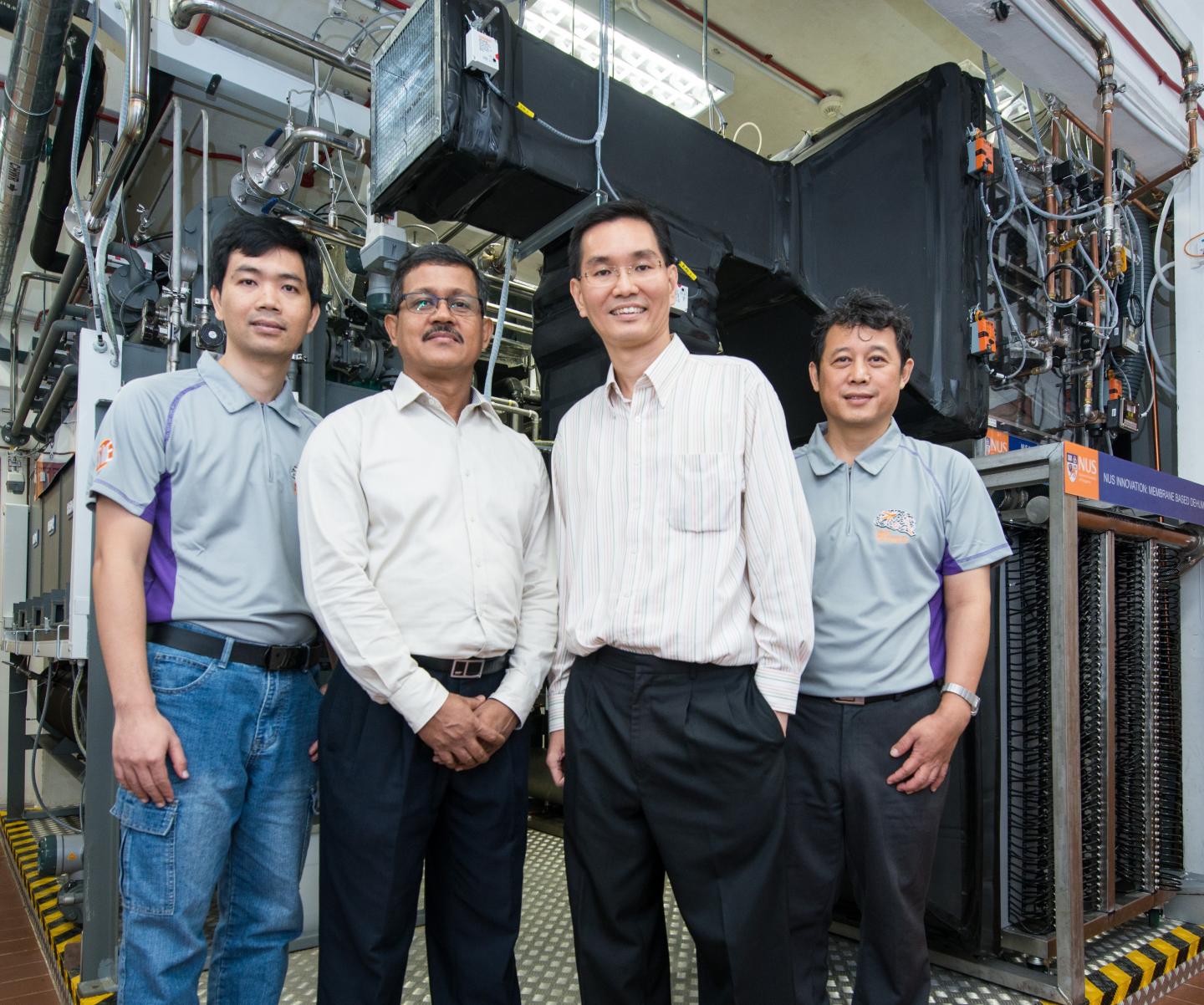
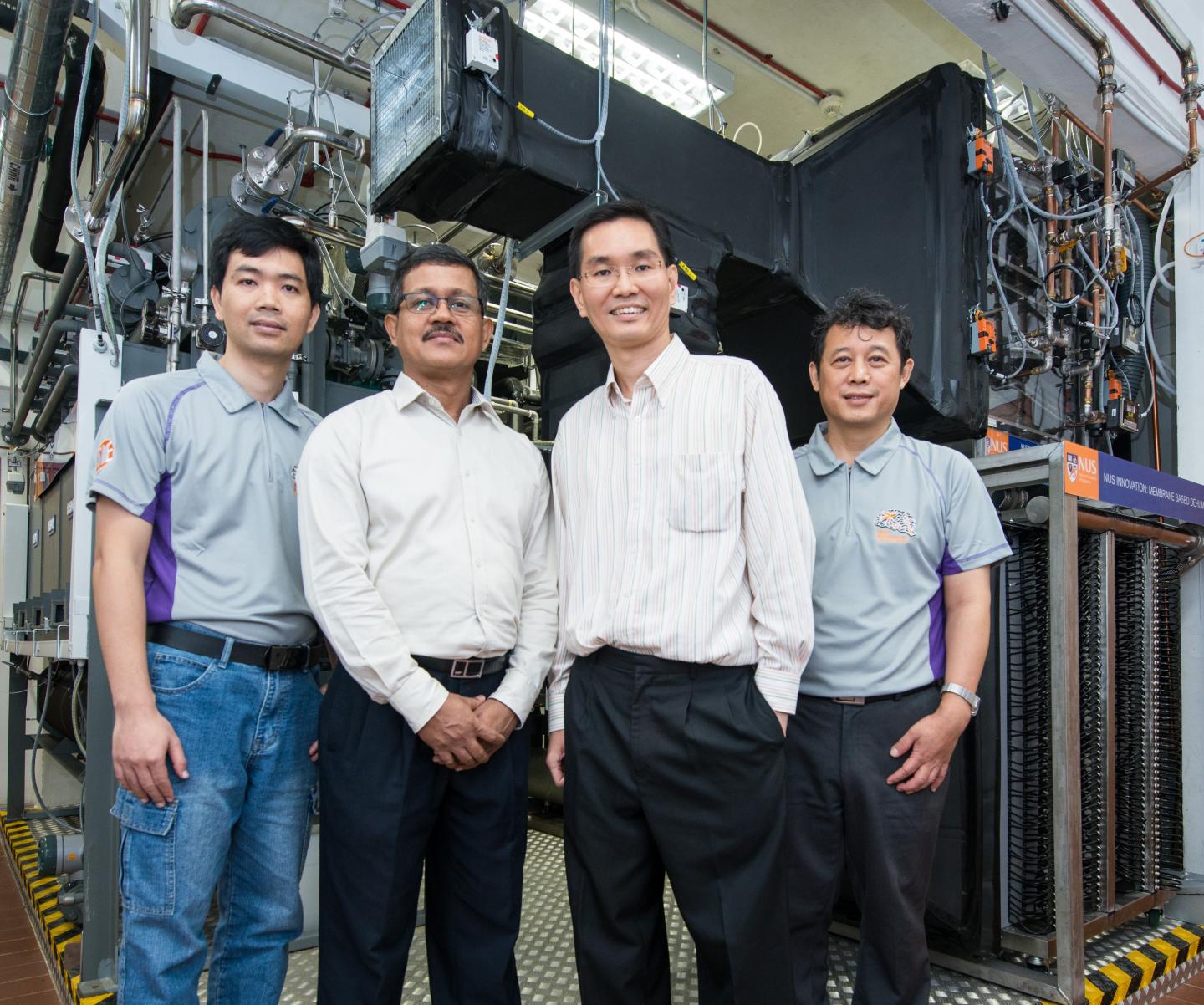
A research breakthrough achieved by a team led by Associate Professor Ernest Chua from the Department of Mechanical Engineering at National University of Singapore (NUS) Faculty of Engineering could pave the way for a more environmentally friendly and cost-effective way of producing key essentials for daily living – electricity, water, air-conditioning and heat. This novel system is suitable for housing and building clusters, as well as underground cities, especially those in the tropics.
The unique smart quad-generation plant produces all four key utilities simultaneously using a single, integrated system. Energy efficiency is optimised by maximising the recovery of waste energy that is generated. Specially designed for use in tropical countries, the plant offers greater energy and cost savings, and it is also more space efficient. In addition, this novel system can significantly reduce carbon dioxide emission by more than 30 per cent while meeting the various needs of electricity, water, cooling and heating.
Assoc Prof Chua said, "Currently, significant amount of energy is required for the generation of electricity, water, air-conditioning and heat. Running four independent processes also result in extensive energy wastage, and such systems take up a huge floor area. With our smart plant, these processes are carefully integrated together such that waste energy can be harvested for useful output. Overall, this novel approach could cut energy usage by 25 to 30 per cent and the 4-in-1 plant is also less bulky. Users can also enjoy cheaper and a more resilient supply of utilities. Furthermore, this approach could reduce Singapore's carbon emission by 2 to 4 per cent at business-as-usual levels."
Recovering waste heat
The smart plant uses natural gas to power micro turbines to produce electricity. Waste heat generated from exhaust gas in the process is efficiently recovered and channelled back to power chillers to produce chilled water, which is required to cool and dry air for air-conditioning. The plant is also able to recycle non-potable water, such as rain water and water discharged from showers and wash basins, to produce drinking water. Waste heat generated from the plant could also be used to produce hot water or steam.
The quad-generation plant also incorporates a dual-dehumidification system, which is designed by the NUS Engineering team after extensive research, to increase the efficiency of air-conditioning provision. Using novel super adsorbent materials and membranes, this system removes up to 50 to 60 per cent of moisture from air – optimal for human comfort – to enable cooling to take place faster. In addition, this unique system can cool air with water that is chilled to just 13 to 18 degrees Celsius, instead of the usual lower temperature of 4 to 7 degrees Celsius. This contributes significantly to the plant's overall efficiency as an increase in the temperature of chilled water by 1 degree Celsius translates into energy savings of about 3.5 to 4 per cent.
"The tropical climate is hot and humid, and our smart utilities plant is uniquely designed to operate efficiently in such weather condition. We developed innovative membranes to remove moisture from the air and coupled with a novel method of cooling the air, the plant significantly reduces the amount of energy needed to meet air-conditioning needs. This is unlike existing methods, which are usually very energy intensive," explained Assoc Prof Chua.
Smart features for easy tracking and customisation
The NUS Engineering team also incorporated smart features into the plant, such as real-time tracking of power consumption, and controlling valves and pumps remotely. This will facilitate evaluation of energy efficiency and optimisation of the different processes based on the specific needs of each community of users.
"The quad-generation plant is designed to be a distributed power entity. It is particularly suitable for serving clusters of buildings as well as underground cities, where key resources can be shared to reap economies of scale. As power grids could be vulnerable to national security threats, our smart plant could also serve as a resilient distributed energy resource to continue to provide these essential utilities and minimise disruptions to daily lives," added Assoc Prof Chua.
The NUS Engineering team hopes to explore opportunities to commercialise and test-bed some of their patented technologies that have been developed from this project.
This project is supported by the National Research Foundation Singapore's Competitive Research Programme.
###
Media Contact
Goh Yu Chong
[email protected]
656-601-1653
@NUSingapore
http://www.nus.edu.sg/
Original Source
http://news.nus.edu.sg/press-releases/smart-utilities-plant