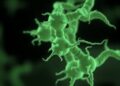
Researchers at Nanjing University and their collaborators have found that NatD, which mediates N-alpha-terminal acetylation (Nt-acetylation) of histone H4, promotes lung cancer progression by preventing histone H4 serine phosphorylation to activate the transcription factor Slug, a key regulator of the epithelial-to-mesenchymal transition (EMT). Their study results are published in the 13th October, 2017 issue of the journal Nature Communications (DOI:10.1038/s41467-017-00988-5).
This novel finding indicates that NatD is a crucial epigenetic modulator of cell invasion during lung cancer progression, implying a new therapeutic target for cancer treatment.
"These studies have demonstrated that NatD promotes the migratory and invasive capabilities of lung cancer cells both in vitro and in vivo. Thus, depletion of NatD suppresses the EMT of lung cancer cells via repression of the expression of transcription factor Slug" said Dr. Quan Zhao, professor of Biochemistry at the School of Life Sciences, Nanjing University, China. "Revealing this new epigenetic pathway (NatD/Slug/EMT) is important to better understand the individual steps of metastasis formation and may help predict at an early stage whether the tumor will spread."
In the future Professor Zhao and his colleagues want to further investigate the role of NatD more closely in the process of invasion-metastasis of lung cancer and other tumors. They will also screen for biochemical blockers of NatD which may also have applications in lung cancer and other invasive tumor treatments.
Key findings included:
- NatD is commonly upregulated in primary human lung cancer tissues where its expression level correlates with Slug expression, enhanced invasiveness, and poor clinical outcomes.
- NatD is essential for lung cancer cells to maintain a mesenchymal phenotype and to promote invasion by regulating EMT of lung cancer cells through epigenetic control of Slug.
- Nt-acetylation of histone H4 antagonizes histone H4 serine 1 phosphorylation (H4S1ph), and downregulation of Nt-acetylation of histone H4 facilitates CK2α binding to histone H4 in lung cancer cells, resulting in increased H4S1 phosphorylation and epigenetic reprogramming.
###
Funding from the National Natural Science Foundation of China (31470750, 31270811, 81421091, 2014CB542300, 81472820, 2015M571736, 2016M590442), the Fundamental Research Funds for the Central Universities 020814380073, 020814380081, and SQJ Biotechnologies Limited supported this research.
Other researchers involved in this study were:
Junyi Ju1, Aiping Chen2, Yexuan Deng1, Ming Liu1, Ying Wang1, Yadong Wang1, Min Nie1, Chao Wang3, Hong Ding4, Bing Yao1, Tao Gui1, Xinyu Li1, Zhen Xu5, Chi Ma1, Yong Song2, Marc Kvansakul6, Ke Zen1, Chen-Yu Zhang1, Cheng Luo4, Ming Fang3, David C. S. Huang5, C. David Allis7, Renxiang Tan1,8, Changjiang Kathy Zeng9, Jiwu Wei2, Quan Zhao1
1The State Key Laboratory of Pharmaceutical Biotechnology, School of Life Sciences, Nanjing University, Nanjing, China. 2Jiangsu Key Laboratory of Molecular Medicine, Medical School, Nanjing University, Nanjing, China. 3Institute of Life Sciences, Southeast University, Nanjing, China. 4Drug Discovery and Design Center, State Key Laboratory of Drug Research, Shanghai Institute of Materia Medica, Chinese Academy of Sciences, Shanghai, China. 5The Walter and Eliza Hall Institute of Medical Research, Department of Medical Biology, University of Melbourne, Melbourne, 3052, Australia. 6Department of Biochemistry & Genetics, La Trobe University, Melbourne, 3086, Australia. 7Laboratory of Chromatin Biology and Epigenetics, The Rockefeller University, New York, New York, USA. 8State Key Laboratory Cultivation Base for TCM Quality and Efficacy, Nanjing University of Chinese Medicine, Nanjing, China. 9SQJ Biotechnologies Limited, Palo Alto, California, USA.
Media Contact
Xi Chen
[email protected]
http://dx.doi.org/10.1038/s41467-017-00988-5