


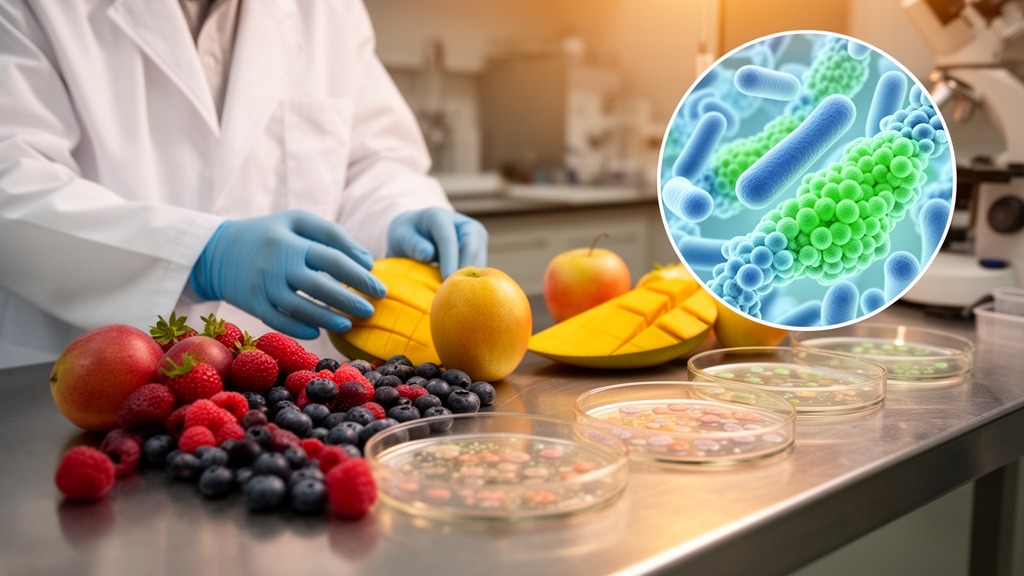
Researchers sampling unfermented functional fruits from farms and markets in Rajasthan, India, have recovered lactic acid bacteria that resist a striking range of clinically important antibiotics, with every one of the 124 isolates tested showing multidrug resistance to at least one antimicrobial that the World Health Organization ranks as critically or highly important for human medicine. The study, published in the journal Food Safety and Risk, is among the first systematic looks at antimicrobial resistance in lactic acid bacteria living on and inside fruits that people eat raw or with minimal processing, a niche the authors say has been far less studied than resistance in bacteria from fermented foods.
Between May 2023 and December 2025, the team collected 260 samples of nine fruits: pineapple, wood apple, banana, Indian jujube, guava, papaya, orange, pomegranate and dried grapes. Sampling spanned three agri-food settings in the Ajmer and Jaipur districts of Rajasthan: agricultural fields, rural markets and urban markets. The fruits were chosen because they are widely consumed as functional foods, valued for bioactive compounds that go beyond basic nutrition, and because their acidity and prebiotic components make them favorable matrices for lactic acid bacteria colonization.
From each sample, the researchers isolated bacteria living in two distinct lifestyles. Epiphytic bacteria were recovered by washing fruit surfaces and shaking them in broth, capturing microbes sitting on the peel. Endophytic bacteria were obtained after a five-step surface sterilization protocol involving ethanol, sodium hypochlorite and repeated sterile rinses, so that only microbes surviving inside the fruit tissue would grow. Control plates confirmed that the sterilization procedure itself was sterile and that no contamination occurred during processing. Isolation was qualitative rather than quantitative, meaning the team did not count bacterial loads but instead picked representative colonies of each distinct morphotype from every sample and fraction.
Presumptive lactic acid bacteria were identified to genus level using 16S rRNA gene-targeted polymerase chain reaction followed by DNA sequencing, with reference strains of Lactobacillus fermentum and Leuconostoc mesenteroides included as positive and cross-genus negative controls in every run. Of the isolates confirmed, 37 belonged to Lactobacillus and 87 to Leuconostoc. Each of the 124 isolates was then tested against a panel of 23 antimicrobials from 13 antibiotic classes, drugs used in human and veterinary medicine or in animal and plant agriculture, using the Kirby-Bauer disk diffusion method on MRS agar, with interpretation following Clinical and Laboratory Standards Institute criteria and European Food Safety Authority cut-off values where available.
The results were sobering. Resistance across the collection ranged from 9 to 96 percent depending on the drug, and the pattern held regardless of whether the bacteria came from fruit surfaces or fruit interiors, or from fields, rural vendors or urban supermarkets. More than 75 percent of isolates were resistant to each of trimethoprim, ceftazidime, cefoxitin, nalidixic acid and sulfamethoxazole-trimethoprim. More than half were resistant to doxycycline, nitrofurantoin, fosfomycin, azithromycin, ciprofloxacin, colistin, amoxicillin-clavulanate and ampicillin. Lower to moderate resistance, between 2 and 50 percent, was seen for tobramycin, streptomycin, gentamicin, amikacin, chloramphenicol, tetracycline, levofloxacin, meropenem, erythromycin and cefazolin.
Every single isolate was multidrug resistant, resistant to at least four of the 13 antibiotic classes examined, and the collection yielded 96 distinct multidrug resistance phenotypes in total. Lactobacillus isolates displayed 33 distinct phenotypes and Leuconostoc isolates 66, a difference in distribution that was statistically significant. Among Lactobacillus, the most common phenotype, amoxicillin-clavulanate, ceftazidime, nalidixic acid and trimethoprim, appeared in more than 90 percent of isolates. In Leuconostoc, the leading combination of cefoxitin, nalidixic acid, trimethoprim and sulfamethoxazole-trimethoprim was found in 84 percent. Notably, all isolates carried resistance to at least one drug on the WHO priority list, and the study isolates also showed resistance to last-resort drugs including meropenem and colistin.
Statistical analysis revealed meaningful structure within this resistance. Lactobacillus isolates showed greater overall resistance and more diverse resistance patterns than Leuconostoc, consistent with earlier reports from fermented foods and probiotic sources. Epiphytic bacteria were significantly more resistant than endophytic ones to cefazolin, ciprofloxacin, streptomycin, tobramycin, erythromycin, tetracycline, doxycycline and fosfomycin, and their resistance profiles were also more heterogeneous. The authors suggest this may reflect the harsher conditions on fruit surfaces, where epiphytic communities face pesticides, agrochemicals and other biotic and abiotic stressors that could favor resistant microbes, although they note that comparable data on epiphytic versus endophytic lactic acid bacteria are almost nonexistent, making interpretation difficult.
Perhaps surprisingly, resistance prevalence did not differ significantly across the three agri-food systems, with a Kruskal-Wallis test returning a p-value of 0.157. The presence of resistant bacteria in agricultural fields as well as in retail markets suggests that antibiotic-resistant lactic acid bacteria, and potentially their resistance genes, are distributed throughout these systems rather than concentrated at any single point in the chain. The authors caution, however, that the study design has structural limitations: each fruit type was sampled from only one agri-food system, so fruit type is confounded with source, and comparisons across settings are exploratory rather than definitive. The upstream supply chains of market samples were also not traced, so the independence of market-derived isolates cannot be assumed.
The findings matter because lactic acid bacteria are generally regarded as safe and are widely used in food fermentation and as potential probiotics, yet prior work has shown they can act as reservoirs of mobile antibiotic resistance genes. Previous studies have demonstrated that food-source Lactobacillus can transfer resistance traits to opportunistic and foodborne pathogens such as Enterococcus faecalis, Escherichia coli, Staphylococcus aureus, Listeria monocytogenes and Yersinia enterocolitica, and that resistance transfer between lactic acid bacteria occurs at higher frequency in plant environments than in the rumen. With the majority of global foodborne outbreaks linked to plant-origin foods, and with a recent outbreak of extensively drug-resistant Salmonella in the United States traced to moringa powder, the possibility that fruit-associated lactic acid bacteria could seed resistance through the food chain is a genuine food safety concern rather than a theoretical one.
The authors are explicit about the limits of what their data can show. Identification was performed only to genus level, so species-specific resistance patterns cannot be assessed, and the resistance analysis is entirely phenotypic, based on disk diffusion zones, with no genomic sequencing to identify the genetic determinants or transfer mechanisms underlying the observed resistance. The study also cannot establish whether these bacteria actually transmit resistance genes to pathogens in real-world settings. What the work does provide is a large, systematically collected dataset on resistance in Lactobacillus and Leuconostoc from unfermented functional fruits, spanning fruit-association lifestyle and agri-food system background, and a clear argument for genome-based follow-up studies to understand the ecology, genetics and evolution of antimicrobial resistance in the fruit microbiome. As the authors conclude, the presence of multidrug-resistant lactic acid bacteria across fields and markets alike marks these everyday fruits as a reservoir worth monitoring.
Subject of Research: Antimicrobial resistance in Lactobacillus and Leuconostoc isolated from unfermented functional fruits across Indian agri-food systems
Article Title: Antimicrobial resistance in functional fruits-associated lactic acid bacteria within agri-food systems
Article References: Duggirala, K. S., Dhanokar, A., Yadav, P., Kumar, A., Meena, P. R., Raj, D., Rana, A., Verma, P., & Singh, A. P. (2026). Antimicrobial resistance in functional fruits-associated lactic acid bacteria within agri-food systems. Food Safety and Risk, 13(1), Article 41. https://doi.org/10.1186/s40550-026-00164-y
Image Credits: AI Generated
DOI: 10.1186/s40550-026-00164-y
Keywords: antimicrobial resistance, lactic acid bacteria, Lactobacillus, Leuconostoc, functional fruits, food safety, multidrug resistance, agri-food systems, epiphytic bacteria, endophytic bacteria, disk diffusion, India
News Source: Morgan Morrow. (October 28, 2026). Multidrug-resistant lactic acid bacteria found on unfermented functional fruits in India. Scienmag.



