Liver biopsy, long considered the gold standard for evaluating chronic liver disease, no longer belongs in every diagnostic workup. A narrative review published in the Egyptian Liver Journal argues that the procedure’s value in the modern era is defined by precision rather than frequency: tissue examination should be reserved for cases where non-invasive tests leave genuine diagnostic uncertainty, produce discordant results, or where histology is likely to change treatment and follow-up decisions.
The review, authored by Fereshteh Sharbati and Reza Rezaei, synthesizes literature published primarily between January 2010 and March 2026, drawing on PubMed/MEDLINE, Scopus, Web of Science, and Google Scholar, with priority given to recent guidelines, systematic reviews, meta-analyses, and pathology-focused studies. Because it is a narrative review, the authors performed no formal meta-analysis, risk-of-bias assessment, or quantitative evidence synthesis; instead, they interpreted evidence according to clinical relevance, methodological quality, and applicability to routine hepatology and pathology practice.
The central shift the authors describe is driven by the spread of serum-based fibrosis scores, elastography, and other non-invasive tests (NITs). These tools now provide initial fibrosis risk stratification in many patients and have substantially reduced the need for routine biopsy solely for staging. This change has been especially evident in metabolic dysfunction-associated steatotic liver disease (MASLD), where stepwise algorithms combining simple serum scores, elastography, and selected second-line tests can identify many patients at low or high risk of advanced fibrosis without a single needle pass. Current European and American guidance supports serum-based scores as first-line triage tools, with elastography or patented serum tests as second-line assessments when results are indeterminate or elevated.
Among the commonly used non-invasive tools in MASLD are the FIB-4 score, the historically named NAFLD fibrosis score, vibration-controlled transient elastography, the Enhanced Liver Fibrosis test, and magnetic resonance elastography. In general, these tests are most useful for risk stratification and for excluding advanced fibrosis at low-risk thresholds, while their ability to confirm advanced fibrosis or define disease etiology is more limited. The authors caution that reported diagnostic performance should be read carefully, because studies differ in disease etiology, fibrosis-stage distribution, cut-off selection, reference standards, and patient spectrum. Even biopsy-based validation of these tests can be affected by sampling variability and imperfect histologic staging, which influence estimates of sensitivity, specificity, and AUROC.
Where, then, does biopsy still earn its place? The review identifies its greatest value in selected clinical settings: autoimmune hepatitis, suspected overlap syndromes, selected cholestatic liver diseases, drug-induced liver injury, and certain metabolic or genetic disorders. In typical presentations of primary biliary cholangitis, for example, cholestatic biochemistry and serology are usually sufficient, and biopsy should not be used routinely to confirm the diagnosis; its value rises in AMA-negative disease, atypical biochemical patterns, or suspected AIH-PBC overlap. Similarly, in primary sclerosing cholangitis, biopsy is not a routine diagnostic test when cholangiography is characteristic, but it may add information in suspected small-duct PSC, equivocal imaging, or possible overlap with autoimmune hepatitis—though histologic abnormalities in PSC can be patchy, nonspecific, or absent in limited samples.
In suspected autoimmune hepatitis, the biopsy’s contribution is to judge whether the overall pattern is compatible with the diagnosis within a composite framework of aminotransferase levels, IgG concentration, autoantibody profile, and exclusion of viral or drug-related injury. Interface hepatitis, plasma cell-rich infiltrates, hepatocyte rosetting, and emperipolesis may support the diagnosis, but none is individually specific, and all can overlap with viral hepatitis, drug-induced injury, and overlap syndromes. The procedure becomes especially valuable in seronegative disease, acute severe presentations, previously treated patients, and suspected overlaps, where it can help establish diagnostic confidence, assess persistent activity, or reveal an alternative process.
In MASLD and its inflammatory form, MASH, histology helps separate simple steatosis from steatohepatitis and allows assessment of activity and fibrosis stage in correlation with metabolic risk factors and exclusion of other causes. Macrovesicular steatosis indicates fat accumulation, while steatohepatitis is supported mainly by hepatocellular ballooning and lobular inflammation; Mallory-Denk bodies may be present but are not required. Because these findings vary in diagnostic specificity, fibrosis pattern and stage—including perisinusoidal fibrosis—should be interpreted separately from inflammatory activity and integrated with serum scores and elastography, particularly when non-invasive findings are indeterminate or discordant. A further practical strength of biopsy is the detection of more than one active process in the same specimen: a biopsy performed for suspected MASLD may reveal autoimmune-type hepatitis, cholestatic injury, iron overload, or alpha-1 antitrypsin globules, any of which may change treatment substantially.
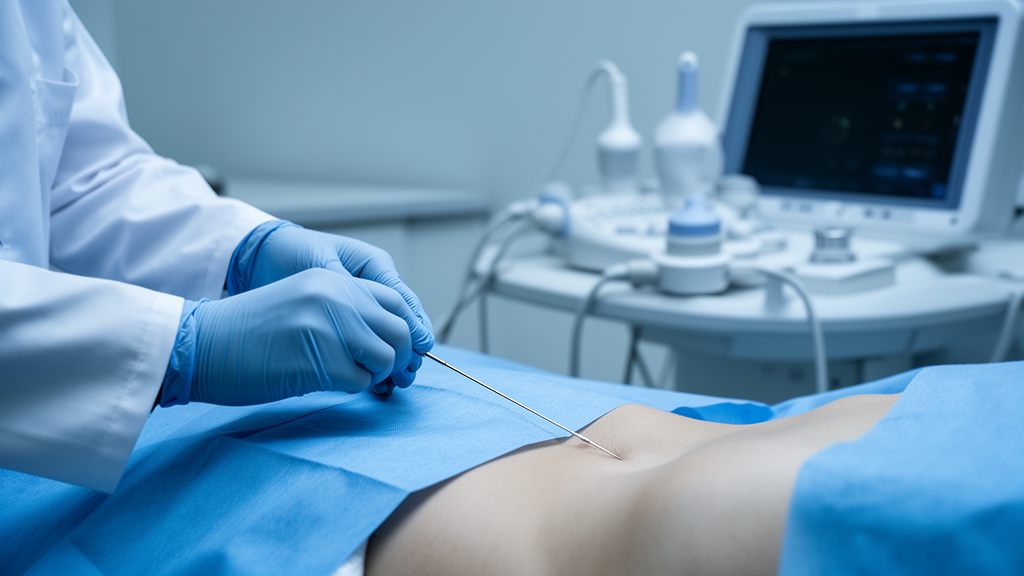
The review is equally emphatic about the procedure’s limits. Only a small portion of the liver is sampled, so fibrosis stage, inflammatory activity, or concurrent pathology may be underestimated or missed, particularly when disease is heterogeneous; recent evidence indicates biopsy size can influence fibrosis assessment in MASLD, where fibrosis may be unevenly distributed. Specimen adequacy is a major determinant of diagnostic confidence—short, fragmented, crushed, poorly oriented, or inadequately fixed samples can lead to underdiagnosis, overstaging, or understaging. Even with adequate tissue, interobserver and intraobserver variability affects semiquantitative assessment of fibrosis, activity, and borderline lesions, especially when disease is mild or close to diagnostic thresholds. Percutaneous biopsy is generally safe but remains invasive, carrying risks of pain, bleeding, and rarely serious complications, so procedural risk should be weighed against the incremental value of the tissue information.
Looking forward, the authors see technology reshaping rather than replacing tissue assessment. Digital pathology enables slide digitization, archiving, remote consultation, and computational analysis, potentially improving access to expert review. AI-assisted tools show promise for quantifying fibrosis, steatosis, ballooning, and inflammatory activity, particularly in MASLD and clinical trials, but current evidence remains heterogeneous, relying largely on retrospective datasets with limited external validation; improved reproducibility should not be assumed to translate into diagnostic accuracy or patient benefit without prospective validation and expert oversight. Molecular profiling and spatial transcriptomics and single-cell technologies may add biologic depth by mapping gene expression and cell-cell interactions in portal tracts, fibrotic septa, and lobular zones, but these methods remain largely research-oriented, and cost, tissue sampling, and analytic complexity may limit routine implementation.
The review’s conclusion is pragmatic: biopsy and non-invasive tests should be viewed as complementary rather than competing. Non-invasive assessment supports initial evaluation, risk stratification, and follow-up, while biopsy answers specific clinicopathologic questions that non-invasive methods cannot resolve. Advanced tools such as magnetic resonance elastography and patented serum panels can reduce unnecessary procedures, but their cost and infrastructure requirements may limit use in low-resource settings, making accessible non-invasive triage followed by selective biopsy the most efficient strategy. When applied selectively, interpreted critically, and integrated with clinical, biochemical, serologic, imaging, and non-invasive data, the authors conclude, liver biopsy remains a high-value diagnostic tool that supports more accurate diagnosis and more individualized patient care.
Subject of Research: The selective, contemporary role of liver biopsy in the diagnosis and management of chronic liver disease
Article Title: The evolving role of liver biopsy in chronic liver disease: a pathological and clinical perspective
Article References: Sharbati, F., & Rezaei, R. (2026). The evolving role of liver biopsy in chronic liver disease: a pathological and clinical perspective. Egyptian Liver Journal, 16(1), Article 76. https://doi.org/10.1186/s43066-026-00561-0
Image Credits: AI Generated
DOI: 10.1186/s43066-026-00561-0
Keywords: liver biopsy, chronic liver disease, non-invasive tests, fibrosis staging, MASLD, autoimmune hepatitis, elastography, FIB-4, drug-induced liver injury, digital pathology, artificial intelligence, hepatopathology
News Source: Ophelia Keating. (October 28, 2026). Liver Biopsy Becomes a Precision Tool in the Age of Non-Invasive Testing. Scienmag.