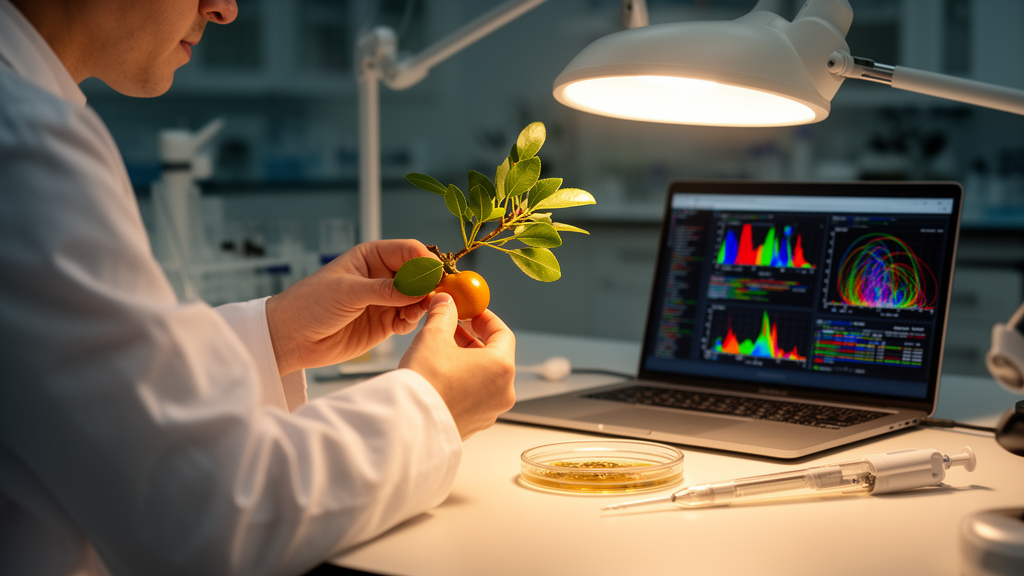
Researchers have carried out the first genome-wide survey of the UDP-glycosyltransferase (UGT) gene family in sour jujube (Ziziphus jujuba var. Spinosa), identifying 201 members of the family in the plant’s genome. The study, published in BMC Plant Biology, classifies these genes, called ZjUGTs, into 16 subfamilies and examines their structures, chromosomal locations, evolutionary relationships and expression patterns across organs. The work was released as an open access article on 21 October 2026.
UGTs form the largest glycosyltransferase family in plants. They regulate many metabolic processes, including the production of flavonoids, by transferring sugar moieties onto various small molecules. In sour jujube, this matters because the plant’s dried mature seed is known as Semen Ziziphi Spinosa, a classic traditional Chinese medicine in which flavonoids are the predominant secondary metabolites. These flavonoids have been reported to show potent sedative, anxiolytic and antidepressant activities, making the enzymes that modify them a target of scientific interest.
The phylogenetic analysis sorted the proteins into 16 subfamilies, and closely linked subfamilies showed more similarity in their motifs and in their numbers of introns and exons. The promoter regions of the genes contained numerous cis-elements associated with defence stress and hormone responses, suggesting points of regulation the authors say had not previously been explored on a genome-wide scale in this species.
Expression analysis revealed distinct expression patterns of ZjUGTs in different organs of the plant. Four members of the family were identified as potentially involved in the biosynthesis of spinosin, the active flavonoid in Semen Ziziphi Spinosa. The authors also examined how the genes respond to two treatments: low-temperature stress and methyl jasmonate (MeJA). Under both conditions, ZjUGTs displayed distinct expression patterns, indicating that members of the family respond differently to cold and to this hormone-related chemical treatment.
The study is an identification and characterisation exercise based on genome sequence and expression data, not a demonstration of functional effects in the plant. The finding that four ZjUGTs are potentially involved in spinosin biosynthesis is described as a potential role, and the response patterns to low temperature and MeJA are observations of expression changes rather than evidence of stress tolerance or increased flavonoid yield. The article was shared early as a peer-reviewed, accepted manuscript that is subject to further edits before the final version of record.
According to the authors’ conclusions, the study provides insights into the potential functions of ZjUGTs in sour jujube and advances understanding of their role in the regulation of the flavonoid compound biosynthesis pathway and in stress resistance in the species. Because the UGT family had remained largely unexplored in sour jujube, particularly regarding responses to low-temperature stress and MeJA treatment on a genome-wide scale, the catalogue of 201 genes and their subfamily organisation gives researchers a structured starting point for further work on which specific enzymes act on which flavonoid substrates, and how their expression is controlled under environmental and chemical treatments.
Subject of Research: Genome-wide identification of the UDP-glycosyltransferase gene family in sour jujube
Article Title: Genome-wide identification and characterization of UDP-glycosyltransferases gene family in sour jujube (Ziziphus jujuba var. Spinosa)
Article References: Zhang, Y., Wang, N., Yan, Y., Yang, W., Xue, M., Zhan, H., Pei, X., Wang, P., Du, C., & Wang, H. (2026). Genome-wide identification and characterization of UDP-glycosyltransferases gene family in sour jujube (Ziziphus jujuba var. Spinosa). BMC Plant Biology. https://doi.org/10.1186/s12870-026-10180-x
Image Credits: AI Generated
DOI: 10.1186/s12870-026-10180-x
Keywords: sour jujube, Ziziphus jujuba var. Spinosa, UDP-glycosyltransferases, gene family, flavonoids, spinosin, Semen Ziziphi Spinosa, genome-wide analysis, phylogenetics, low-temperature stress, methyl jasmonate, gene expression
News Source: Juliet Wilcox. (October 28, 2026). Scientists map 201 sugar-transfer genes in the sour jujube genome. Scienmag.