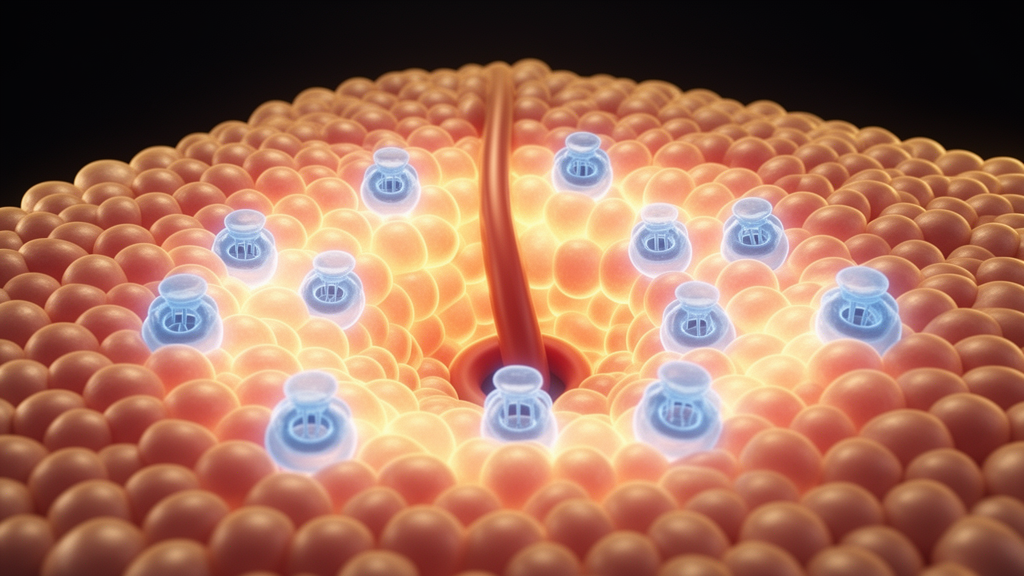
Liver regeneration has long been studied through the lens of chemical signals, but a new research highlight in Cell Regeneration draws attention to a different kind of cue: physical force. Writing about a Science article by Zhang and colleagues, the highlight describes how mechanical stress is sensed in a region-specific manner within the liver, and how that sensing sets regeneration in motion from a precise location inside each liver lobule.
The key finding concerns DPP4-positive zone 2 hepatocytes, the cells occupying the mid-lobule region of the liver. According to the highlight, these cells act as a mechanosensory population, meaning they are specifically equipped to detect mechanical forces acting on the tissue. When mechanical stress is applied, it is these mid-lobular cells that mount the regenerative response.
The molecular pathway at the center of the discovery is PIEZO1, a well-known mechanosensitive ion channel. The highlight reports that mechanical stress triggers the regenerative response through PIEZO1-mediated mechanotransduction, the process by which a physical stimulus is converted into a biochemical signal inside the cell.
Downstream of PIEZO1 activation, the study identifies a defined signaling chain. PIEZO1 activation in zone 2 hepatocytes induces NFATC3-dependent IGFBP2 expression. In other words, when the channel senses force, the transcription factor NFATC3 drives production of IGFBP2, establishing what the authors describe as a molecular link between tissue mechanics and spatially coordinated proliferation.
This spatial element is central to the work. The highlight notes that the study provides a mechanistic explanation for why regeneration originates from the mid-lobule rather than from other zones of the liver lobule. Zone 2 hepatocytes, on this account, are uniquely positioned and equipped to perceive and respond to mechanical cues, offering a framework for the spatial logic of liver repair.
The conclusions section of the highlight frames the broader significance: the study establishes mechanical force sensing as a central driver of liver regeneration, identifying PIEZO1 as a molecular switch that converts physical strain into a proliferative program. In this view, mechanotransduction sits alongside chemical signaling as a complementary control mechanism governing how the liver restores its form and function after injury.
Therapeutic implications are also discussed. The highlight states that the PIEZO1-NFATC3-IGFBP2 axis offers a promising target for acute liver failure and chronic liver disease, given that enhancing this pathway accelerates recovery. However, the authors caution that its efficacy and safety in chronic or fibrotic liver disease remain to be evaluated in additional disease settings.
Practical drug development challenges are acknowledged as well. Small-molecule agonists such as Yoda1 can activate PIEZO1, but the highlight notes that they exhibit potential off-target effects and poor pharmacokinetic profiles. The introduction of this druggable mechanotransduction axis is nonetheless presented as a pathway that might be enhanced to accelerate liver repair.
Ultimately, the research redefines the liver as a mechanosensitive organ in which physical forces are integral to regeneration. By identifying where force is sensed, which channel converts it into a signal, and which downstream genes translate that signal into proliferation, the work connects tissue mechanics, lobular architecture and cell proliferation into a single mechanistic account of how the liver rebuilds itself.
Subject of Research: Mechanosensory zone 2 hepatocytes and PIEZO1-mediated mechanotransduction in liver regeneration
Article Title: Liver regeneration governed by zonated PIEZO1 mechanotransduction
Article References: Xie, L., Zhang, C., Wei, Y., & Ning, W. (2026). Liver regeneration governed by zonated PIEZO1 mechanotransduction. Cell Regeneration, 15(1), Article 30. https://doi.org/10.1186/s13619-026-00305-w
Image Credits: AI Generated
DOI: 10.1186/s13619-026-00305-w
Keywords: liver regeneration, PIEZO1, mechanotransduction, zone 2 hepatocytes, DPP4, NFATC3, IGFBP2, liver zonation, mechanosensing, Yoda1, acute liver failure, Cell Regeneration
News Source: Gregory Coleman. (October 28, 2026). Zone 2 hepatocytes sense mechanical stress to drive liver regeneration via PIEZO1. Scienmag.