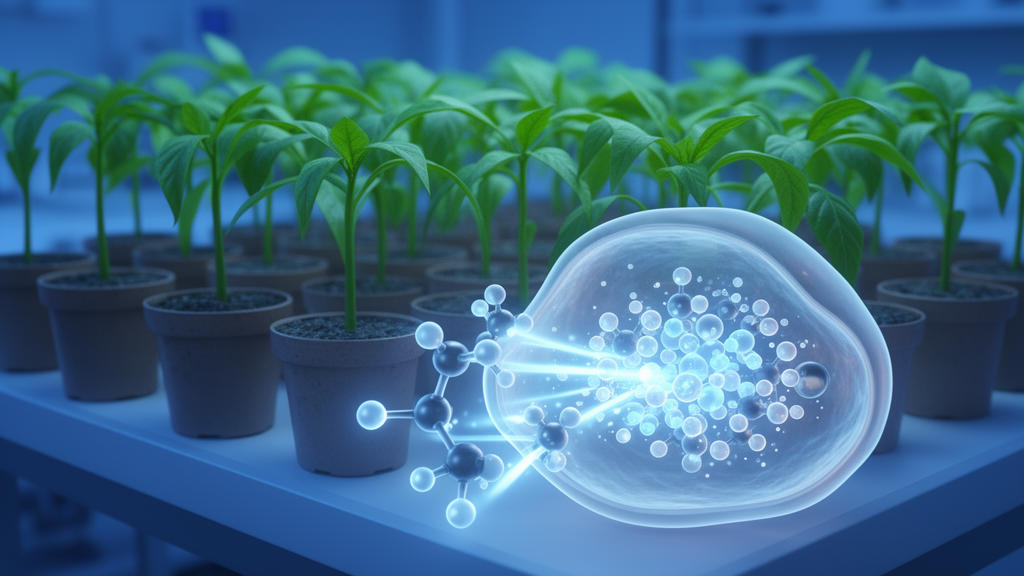
Pepper seedlings exposed to the double burden of low temperature and low light rely on a specific signaling chain to survive, and new research pins down its order: salicylic acid acts upstream of hydrogen sulfide. In a study of the cultivar ‘Hangjiao No. 2’, researchers applied salicylic acid, the hydrogen sulfide donor sodium hydrosulfide, the salicylic acid biosynthesis inhibitor 2-aminoindan-2-phosphonic acid, and the hydrogen sulfide scavenger hypotaurine to map how the two signals interact under the combined stress.
The combined stress activated the biosynthesis of both salicylic acid and hydrogen sulfide in the seedlings. When researchers supplied salicylic acid externally, hydrogen sulfide accumulated further, and the protein content of L-cysteine desulfhydrase, a key enzyme in hydrogen sulfide biosynthesis, went up. In the reverse direction, the hydrogen sulfide donor sodium hydrosulfide did not change salicylic acid content or the protein content of isochorismate synthase, a key enzyme in salicylic acid biosynthesis. Blocking salicylic acid synthesis with the inhibitor suppressed hydrogen sulfide production, supporting a one-way regulatory relationship in which salicylic acid promotes hydrogen sulfide generation by activating L-cysteine desulfhydrase.
The protective consequences of that hierarchy were broad. Exogenously applied salicylic acid and sodium hydrosulfide each alleviated the stress-induced degradation of photosynthetic pigments, the drop in photosynthetic rates, membrane lipid peroxidation, the accumulation of reactive oxygen species, and hormone imbalance. Both treatments also restored antioxidant enzyme activities and the redox homeostasis of the ascorbate–glutathione cycle, the cellular system that plants use to keep damaging oxidants in check.
The decisive test came from removing hydrogen sulfide while salicylic acid was present. When endogenous hydrogen sulfide was scavenged with hypotaurine, the ameliorative effects of salicylic acid on photosynthesis, membrane stability, reactive oxygen species scavenging, and hormone homeostasis were almost abolished. That result indicates hydrogen sulfide is not merely a parallel player but an indispensable downstream partner for several of salicylic acid’s protective actions.
The reciprocal experiment completed the picture. When salicylic acid synthesis was inhibited by 2-aminoindan-2-phosphonic acid, exogenous hydrogen sulfide still partially maintained stress tolerance-related functions. In other words, hydrogen sulfide can deliver part of the protective program on its own, but salicylic acid cannot deliver its full protection without hydrogen sulfide downstream. Together the two pharmacological tests place salicylic acid above hydrogen sulfide in the signaling cascade under the conditions examined.
According to the authors’ conclusions, hydrogen sulfide contributes to photosynthetic protection, osmotic adjustments, membrane stability, antioxidant defense, and hormone network remodeling as a downstream signaling molecule. The findings support a model in which the salicylic acid–hydrogen sulfide cascade acts as a central regulatory pathway in the pepper response to low temperature combined with low light stress, a constraint that limits the yield and quality of greenhouse-grown pepper.
The study’s design was built to test the hierarchy directly rather than only assessing the effect of a hydrogen sulfide donor, which the authors identify as a gap in earlier work. By combining a donor, a biosynthesis inhibitor, and a scavenger in one experiment, the team could ask whether salicylic acid-mediated protection depends on endogenous hydrogen sulfide, a question that had not been resolved for this stress combination in pepper.
Important limits frame these conclusions. All measurements were performed at a single time point, day 7 of the stress treatment, which the authors describe as a single stress endpoint. Because of that, the temporal order of salicylic acid and hydrogen sulfide signaling remains to be established by time-course experiments, and the upstream positioning of salicylic acid is supported by the endpoint evidence rather than by a resolved sequence of events over time. The work was conducted in seedlings of one pepper cultivar under controlled stress conditions, so extending the model to other genotypes, growth stages, and field or greenhouse environments remains open.
Within those boundaries, the study offers a mechanistically specific account of how two well-known plant stress signals cooperate. Salicylic acid, acting through the hydrogen sulfide biosynthesis enzyme L-cysteine desulfhydrase, elevates endogenous hydrogen sulfide, and that downstream signal is required for much of the protection of photosynthesis, membranes, redox balance, and hormone homeostasis that salicylic acid provides under combined low temperature and low light stress. The published article is an open-access peer-reviewed accepted manuscript in Chemical and Biological Technologies in Agriculture, shared early with a permanent DOI and subject to further edits before the final version of record.
Subject of Research: Signal hierarchy between salicylic acid and hydrogen sulfide in pepper seedlings under combined low temperature and low light stress
Article Title: Salicylic Acid Acts Upstream of Hydrogen Sulfide inAlleviating LowTemperature Combined with Low Light Stress inPepper Seedlings: Evidence from a Single Stress Endpoint
Article References: Ma, Y., Huo, J., Zhang, J., Gao, Y., Pu, K., Liang, Z., Zhang, L., Zhang, M., Nan, H., Li, Y., & Li, J. (2026). Salicylic Acid Acts Upstream of Hydrogen Sulfide inAlleviating LowTemperature Combined with Low Light Stress inPepper Seedlings: Evidence from a Single Stress Endpoint. Chemical and Biological Technologies in Agriculture. https://doi.org/10.1186/s40538-026-01106-8
Image Credits: AI Generated
DOI: 10.1186/s40538-026-01106-8
Keywords: salicylic acid, hydrogen sulfide, pepper seedlings, low temperature stress, low light stress, Capsicum annuum, antioxidant defense, photosynthesis, L-cysteine desulfhydrase, signal hierarchy, greenhouse peppers, plant hormones
News Source: Gregory Coleman. (October 28, 2026). Salicylic Acid Acts Upstream of Hydrogen Sulfide to Protect Pepper Seedlings from Combined Low Temperature and Low Light Stress. Scienmag.