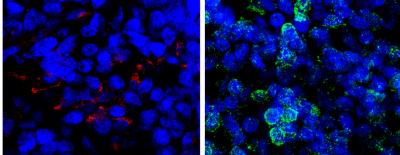
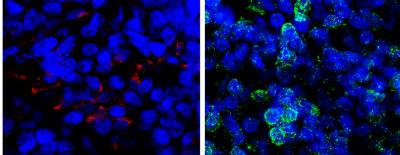
Credit: D'Or Institute for Research and Education (IDOR)
A Brazilian study, published in Scientific Reports on October 09, 2017, has identified changes in signaling pathways associated with neural plasticity, inflammation and neurodegeneration triggered by a compound from the family of dimethyltryptamine known as 5-MeO-DMT.
"For the first time we could describe psychedelic related changes in the molecular functioning of human neural tissue", states Stevens Rehen, study leader, Professor of Federal University of Rio de Janeiro (UFRJ) and Head of Research at D'Or Institute for Research and Education (IDOR).
Though recent studies have demonstrated that psychedelic substances, such as LSD (Lysergic acid diethylamide), MDMA (Methylenedioxymethamphetamine) and ayahuasca brew which contains DMT, hold therapeutic potential with possible anti-inflammatory and antidepressant effects, the lack of appropriate biological tools has been shown as a critical limitation for the identification of molecular pathways targeted by psychedelics in the brain.
In order to unveil the effects of 5-MeO-DMT, Vanja Dakic (IDOR) and Juliana Minardi Nascimento (IDOR and University of Campinas) have exposed cerebral organoids, which are 3D cultures of neural cells that mimic a developing human brain, to a single dose of the psychedelic.
By employing mass spectrometry-based proteomics to analyze cerebral organoids, they identified that 5-MeO-DMT altered the expression of nearly thousand proteins. Then, they mapped which proteins were impacted by the psychedelic substance and their role in the human brain.
Researchers found that proteins important for synaptic formation and maintenance were upregulated. Among them, proteins related to cellular mechanisms of learning and memory, key components of brain functioning.
On the other hand, proteins involved in inflammation, degeneration and brain lesion were downregulated, suggesting a potential neuroprotective role for the psychedelic substance.
"Results suggest that classic psychedelics are powerful inducers of neuroplasticity, a tool of psychobiological transformation that we know very little about", states Sidarta Ribeiro, Director of the Brain Institute of Federal University of Rio Grande do Norte (UFRN) and coauthor of the study.
According to Professor Draulio Araujo (UFRN) and coauthor of the study, ""The study suggests possible mechanisms by which these substances exert their antidepressant effects that we have been observing in our studies."
"Our study reinforces the hidden clinical potential of substances that are under legal restrictions, but which deserve attention of medical and scientific communities", Dr. Rehen said.
###
This study is a result of a collaboration between IDOR, UFRJ, UFRN and UNICAMP, and was funded by the following Brazilian funding agencies: National Council for Scientific and Technological Development (CNPq), Research Support Foundation of the State of Rio de Janeiro (FAPERJ), Coordination for the Improvement of Higher Education Personnel (CAPES), Funding Authority for Studies and Projects (FINEP), Brazilian Development Bank (BNDES) and São Paulo Research Foundation (FAPESP).
Short term changes in the proteome of human cerebral organoids induced by 5-MeO-DMT. Freely available online at http://www.nature.com/articles/s41598-017-12779-5
Media Contact
Cinthia Fonseca
[email protected]
55-213-478-3126
@institutodor
www.idor.org