Post-infectious persistent pain, or PIPP, is a common long-term outcome of infection, yet the link between a transient infection and pain that lingers for months remains poorly understood. A mini-review published in Anesthesiology and Perioperative Science proposes that signaling between pathogen-associated molecular patterns and pattern recognition receptors, known as PAMP–PRR signaling, may serve as a key mechanistic bridge from acute infection to persistent pain. The authors argue that traditional explanations, such as tissue injury, residual inflammation, and nerve damage, do not fully explain why pain frequently persists long after pathogens have been cleared and overt inflammation has resolved.
The review defines PIPP descriptively as pain that develops during or after infection and remains present or recurrent at least three months after the onset of the acute illness, consistent with the IASP/ICD-11 criterion for chronic pain and broadly aligned with the temporal criteria applied to conditions such as postherpetic neuralgia and the post-COVID-19 condition, although disease-specific definitions vary. Across different post-infectious conditions, pain persists beyond the expected resolution of infection in approximately 10 to 33 percent of individuals, according to the review. Regardless of its underlying cause, PIPP imposes substantial functional and psychosocial burdens, reducing quality of life and physical functioning while frequently co-occurring with depression, anxiety, and other affective disorders.
The central proposal is that microbial ligands from bacterial, viral, fungal, and parasitic pathogens activate pattern recognition receptors in immune cells, sensory neurons, glia, and epithelial cells, triggering shared neuroimmune programs. These programs include inflammatory amplification, neuron–immune crosstalk, glial activation, and sensitization of peripheral and central pain pathways. Importantly, the authors stress that implicating PAMP–PRR signaling in PIPP does not imply that persistent pain necessarily reflects ongoing infection. Rather, retained microbial products, long-lasting innate immune reprogramming, and secondary sterile inflammatory pathways may sustain nociceptive sensitization even after the infectious insult has resolved.
Immune cells provide a major interface between infection-related signals and sensory pathways, according to the review. Through pattern recognition receptors, they detect persistent pathogens or retained microbial products and initiate inflammatory programs required for host defense. Prior infection can also leave innate immune cells epigenetically and metabolically reprogrammed, leading to exaggerated responses after pathogen clearance, a phenomenon related to trained immunity. These immune alterations may modulate sensory neurons through cytokine and chemokine release, thereby contributing to nociceptor activation and sensitization. Evidence from broader inflammatory and neuropathic pain studies supports roles for tumor necrosis factor-alpha, interleukin-1 beta, and interleukin-6 in nociceptor sensitization, while the chemokine CCL2 has been shown to increase the excitability of primary afferents through CCR2/Nav1.8-related mechanisms.
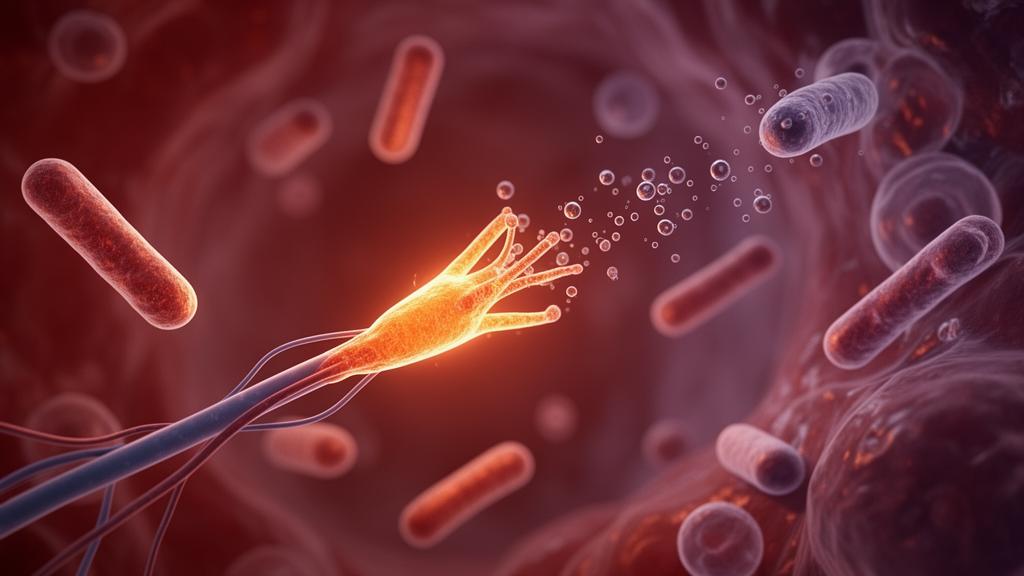
Sensory neurons themselves are a key convergence site for persistent pathogen and microbial debris. Nociceptors express pattern recognition receptors and, in some contexts, can directly detect microbial ligands, suggesting that microbial signals can activate nociceptors without first being relayed through immune cells. Activated nociceptors also release neuropeptides and neurotransmitters such as substance P and calcitonin gene-related peptide, which can act on immune cells to modulate inflammatory responses and immune cell recruitment. These reciprocal interactions form a neuroimmune axis in which immune activation drives nociceptor sensitization, while neural activity in turn shapes immune cell function, reinforcing persistent sensitization.
Glial cells are described as key contributors to the transition from microbially triggered signaling to longer-lasting sterile neuroinflammation, particularly as direct microbial input wanes over time. Pattern recognition receptors expressed in glial cells allow microbial signals to trigger inflammatory and subsequently danger-related signals that drive a pathological neuroinflammatory state. Through these responses, glial cells amplify neuronal excitability, disturb synaptic homeostasis, and promote central sensitization. Satellite glial cells surrounding sensory neuron somata contribute to ganglionic neuroimmune signaling, Schwann cells produce inflammatory mediators that influence axonal function, and in the spinal cord, microglia release factors such as interleukin-1 beta and tumor necrosis factor that enhance excitatory synaptic transmission, while astrocytes sustain neuroinflammatory signaling through cytokines and gliotransmitters.
The review also highlights how different pathogen classes engage distinct upstream mechanisms that converge on persistent receptor-mediated neuroimmune activation. Bacterial lipopolysaccharide, a major component of the outer membrane of Gram-negative bacteria, is recognized by Toll-like receptor 4 in association with MD-2 and CD14. In primary sensory neurons, LPS–TLR4 signaling may engage downstream pro-inflammatory pathways and could contribute to enhanced TRPV1-mediated nociceptor excitability, and TLR4 endocytosis triggers TRIF-dependent signaling that induces type I interferon responses that further sensitize nociceptors and activate spinal microglia. In multiple infection models, LPS-associated hypersensitivity can persist for weeks and has been associated with delayed clearance or sequestration of LPS in tissues. Gram-positive lipoteichoic acid is recognized by TLR2, peptidoglycan fragments are sensed by NOD1 and NOD2, CpG DNA activates TLR9-dependent signaling, and flagellin, recognized by TLR5, has been implicated in promoting A-fiber hypersensitivity and mechanical allodynia.
Viral infections generate nucleic acid-based PAMPs sensed by endosomal and cytosolic receptors, and viral latency is described as a key mechanism by which viral nucleic acids persist within host tissues and continue to engage innate immune sensing. Varicella-zoster virus establishes lifelong latency in sensory ganglia characterized by highly restricted viral transcription, which may generate nucleic acid species capable of engaging cytosolic RNA sensors such as RIG-I and MDA5, potentially predisposing nociceptor sensitization and the development of postherpetic neuralgia. Persistent SARS-CoV-2 reservoirs have also been proposed; the spike protein can engage TLR4 to trigger neuroimmune signaling, and persistent reservoirs in the gut or host cells have been proposed to serve as a continued source of viral RNA or protein PAMPs that could contribute to persistent pain in a subset of patients with long COVID. Fungal and parasitic infections, by contrast, have comparatively limited direct mechanistic evidence linking their PAMPs to PIPP, but they illustrate how incomplete pathogen clearance, recurrent antigen exposure, trained immunity, and prolonged neuroimmune remodeling may create conditions permissive for persistent pain.
On the therapeutic side, the review is explicit that no therapy has been established specifically for PIPP by directly targeting PAMP–PRR signaling. Most supporting data come from general inflammatory or neuropathic pain models rather than PIPP-specific settings, and clinical translation remains uncertain. Pharmacological and genetic studies show that specific NLRP3 inflammasome inhibitors can block inflammasome activation and downstream microglial interleukin-1 beta release, and small-molecule modulators such as ACT001 and lovastatin have been reported to target the TLR4 co-receptor MD-2, reducing glial activation and improving pain behaviors in preclinical neuropathic pain models. Intriguingly, recent evidence demonstrates that activating, rather than blocking, the STING pathway in sensory neurons elevates interferon-beta levels, which subsequently decreases nociceptor action potential firing, although such effects are likely cell-type- and context-dependent. The authors also propose resolution-oriented strategies, including specialized pro-resolving mediators that in preclinical studies promote a phenotypic switch in hyper-responsive microglia and macrophages, and biomarker-driven patient stratification using circulating NLRP3 inflammasome components and neurofilament light chains to distinguish active PAMP-driven neuroinflammation from structural nerve damage.
Overall, the review reframes post-infectious persistent pain as a dynamic neuroimmune disorder rather than simply the residue of tissue damage. Persistent pain after infection should not, by itself, be interpreted as evidence of ongoing infection, because receptor signaling may be sustained by retained microbial products, products derived from latent pathogens, recurrent antigen exposure, trained innate immunity, or a transition to damage-associated molecular pattern-mediated sterile neuroinflammation, depending on the pathogen, tissue, and disease context. The authors argue that therapeutic translation should emphasize mechanism- and timing-guided strategies that promote neuroimmune resolution while preserving host defense, rather than relying solely on pathogen eradication or prolonged pattern recognition receptor blockade. As the authors themselves emphasize, these proposals remain a working model intended to guide future mechanistic studies and clinical trial design, and the therapeutic approaches discussed remain hypothesis-generating rather than validated treatments for PIPP.
Subject of Research: Microbial PAMP–PRR neuroimmune signaling as a proposed mechanism underlying post-infectious persistent pain
Article Title: Microbial PAMPs-PRR driven neuroimmune signaling in the development of post-infectious persistent pain
Article References: Hong, Y., Wang, G., Zhou, M., Xu, Y., Wang, H., Ye, M., Xiao, X., Zhou, L., Hu, G., & Jiang, C. (2026). Microbial PAMPs-PRR driven neuroimmune signaling in the development of post-infectious persistent pain. Anesthesiology and Perioperative Science, 4(1), Article 52. https://doi.org/10.1007/s44254-026-00199-6
Image Credits: AI Generated
DOI: 10.1007/s44254-026-00199-6
Keywords: post-infectious persistent pain, PAMP–PRR signaling, neuroimmune, nociceptor sensitization, glial activation, viral latency, trained immunity, TLR4, NLRP3 inflammasome, long COVID, postherpetic neuralgia, sterile neuroinflammation
News Source: Kristina Jarvis. (October 28, 2026). How Microbial Sensing May Drive Persistent Pain After Infection Clears. Scienmag.