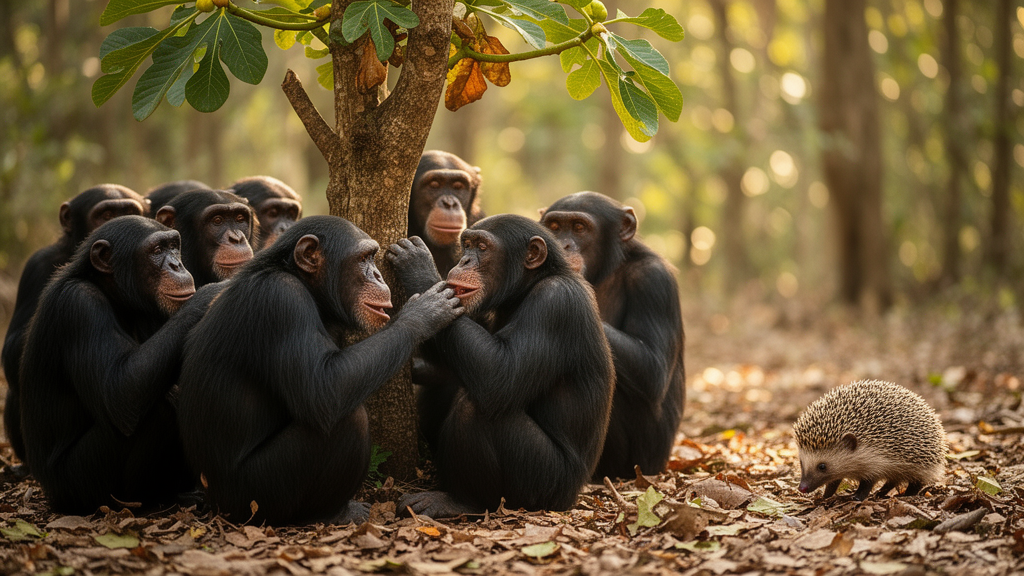
Carnivores, it turns out, may have been following the same social brain rulebook as primates all along — researchers just were not measuring it correctly. A new study in BMC Ecology and Evolution argues that the social brain hypothesis, long considered a uniquely primate phenomenon in its full quantitative form, applies to carnivores too once the right brain indices and statistical methods are used.
The social brain hypothesis holds that the size of the brain’s neocortex predicts the social group sizes animals can maintain. But the research team, led by R. I. M. Dunbar and Susanne Shultz, points out a crucial oversight in earlier tests: the relationship is not a single homogenous line. Instead, it consists of a series of grades, and the presence of these grades can cause conventional regression analysis to radically underestimate the slope of the relationship.
Using more appropriate brain indices and less error-prone statistical methods, the researchers showed that carnivores do exhibit a quantitative social brain relationship. More strikingly, carnivores map directly onto the primate socio-cognitive grades, dividing between loose sociality and bonded sociality in a pattern that parallels what is observed in primates.
The picture is different for insectivores. Although insectivores do not show a full quantitative social brain relationship, their neocortex size does increase with the transition from a solitary lifestyle to a loose form of pairliving, in a way similar to that found in other mammals and birds.
According to the authors, these findings suggest that common trajectories and constraints might underlie social evolution in all mammals. In particular, a transition from a solitary lifestyle to a form of pairliving may have been an important early step in the evolution of mammalian sociality.
The study also raises questions about whether the different carnivore grades exhibit similar kinds of cognition to those found in the corresponding primate grades — a question the authors flag as an open avenue for future research.
The work was published as an open access article in BMC Ecology and Evolution on 16 October 2026, and is being shared early to provide faster access to peer-reviewed, accepted research, with the final version of record to follow.
By reframing the social brain relationship as a graded series rather than a single line, the study offers a revised framework for comparing social evolution across mammalian orders, and suggests that the cognitive demands of bonded sociality may have deeper evolutionary roots than previously thought.
Subject of Research: The social brain relationship and socio-cognitive grades in carnivores and insectivores
Article Title: Carnivores, but not insectivores, map onto the same social brain relationship as primates
Article References: Dunbar, R. I. M., & Shultz, S. (2026). Carnivores, but not insectivores, map onto the same social brain relationship as primates. BMC Ecology and Evolution. https://doi.org/10.1186/s12862-026-02599-5
Image Credits: AI Generated
DOI: 10.1186/s12862-026-02599-5
Keywords: social brain hypothesis, carnivores, insectivores, primates, neocortex, bonded sociality, pairliving, mammalian social evolution, socio-cognitive grades, BMC Ecology and Evolution, onto, same
News Source: Cassandra Pierce. (October 28, 2026). Carnivores follow the primate social brain rule, but insectivores do not. Scienmag.