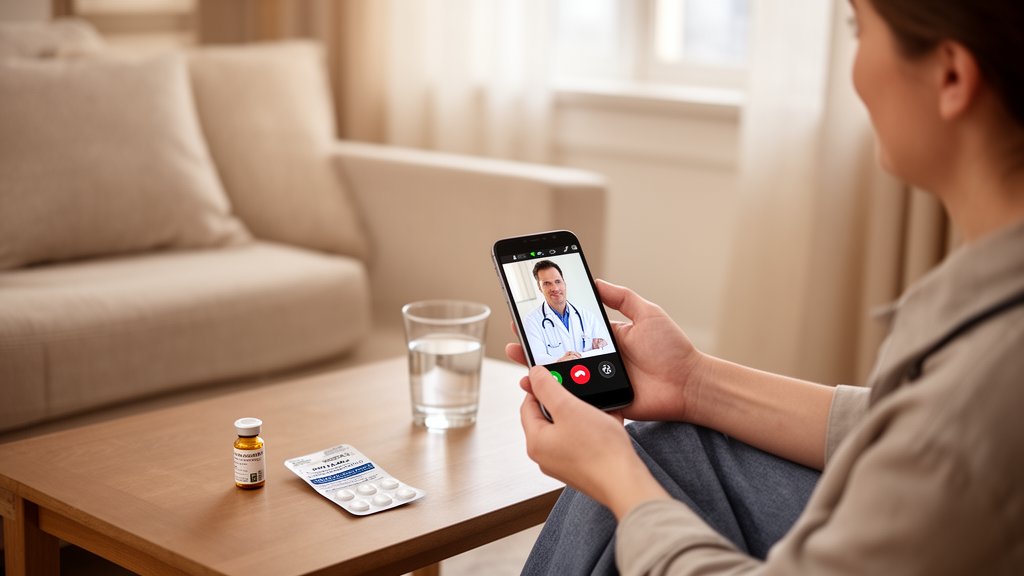
Patients receiving personalized sublingual immunotherapy (SLIT) through a fully remote US telemedicine platform reported predominantly mild adverse events across 18,398 adherence-adjusted patient-years of exposure, according to a retrospective longitudinal study published in Allergy, Asthma & Clinical Immunology. The analysis, covering treatment between 2020 and 2026, graded reported events using CTCAE version 5.0 and found that severe reactions were rare, with no deaths recorded.
The study drew on 29,675 patients who received SLIT through the platform, of whom 13,584, or 45.8 percent, were included in the safety analysis after completing at least one survey following shipment receipt. Overall, 28.1 percent of requested surveys were completed, a participation rate the authors flag as a key limitation. Among included patients, the median treatment duration was 17.1 months, with an interquartile range of 11.1 to 25.4 months.
Exposure was derived from shipment records, capped at an administrative cutoff, and adjusted for self-reported adherence. When rates were standardized this way, the cohort reported eight adverse events per 100 patient-years, with a 95 percent confidence interval of 7.60 to 8.42. The bulk of this burden came from Grade I events, which accounted for 6.37 events per 100 patient-years (95 percent CI 6.01 to 6.75).
At the patient level, 7.76 percent of included patients reported a Grade I event and 1.95 percent reported a Grade II event. Grade III events were reported by 0.09 percent of patients, and Grade IV events by 0.01 percent, with the Grade IV events judged unrelated to SLIT. No Grade V events, meaning deaths, were recorded. The most frequently reported symptoms were predominantly mild and involved the upper respiratory tract, and reported adverse events gradually accumulated over the course of treatment.
Beyond the graded events, the researchers identified five confirmed or suspected cases of eosinophilic esophagitis (EoE) in patients without a prior diagnosis, while three patients with pre-existing EoE reported exacerbations. Two patients reported anaphylaxis or severe allergic reactions, one of which was considered treatment-related. These findings place the severe end of the safety spectrum at a small absolute number of cases within the cohort, though the authors note that incomplete survey participation means the true rates could differ.
Discontinuation patterns provided a further safety signal. Using Kaplan–Meier analysis, the team assessed time to first reported adverse event, and using Gray’s test with other reasons for stopping treatment as competing events, they compared cumulative incidence of adverse-event-related discontinuation between included and excluded patients. At 36 months, the cumulative incidence of discontinuation due to adverse events was 1.8 percent (95 percent CI 1.5 to 2.1) among included patients, compared with 3.1 percent (95 percent CI 2.8 to 3.5) among excluded patients, a difference the authors report as statistically significant with a Gray’s test p value below 0.001.
SLIT is described in the study as an effective disease-modifying treatment for allergic respiratory disease, and its use has been increasing in the United States. However, the authors note that real-world safety data for personalized SLIT delivered through fully remote care had remained limited, which motivated the retrospective analysis of the telemedicine platform’s records.
The authors conclude that, in this real-world telemedicine cohort, reported adverse events were predominantly mild and severe events, including anaphylaxis and EoE, were rare, suggesting that SLIT may be administered and monitored at home using fully remote telemedicine with low rates of reported serious adverse events. They caution, however, that incomplete survey participation and the higher adverse-event-related discontinuation observed among excluded patients may limit the generalization of these findings, since patients who engaged less with surveys may have experienced different safety outcomes than those who reported them.
Subject of Research: Real-world safety of personalized sublingual immunotherapy delivered through a US telemedicine platform
Article Title: Real-world safety of personalized telemedicine-delivered sublingual immunotherapy: reported adverse events across 18,398 patient-years
Article References: Tharpe, C., Mardaga, K., Davidson, J., Solow, C., Kakaulin, G., Kruzick, T., Herold, J., Snyder, M., & Hakobyan, B. (2026). Real-world safety of personalized telemedicine-delivered sublingual immunotherapy: reported adverse events across 18,398 patient-years. Allergy, Asthma & Clinical Immunology. https://doi.org/10.1186/s13223-026-01079-1
Image Credits: AI Generated
DOI: 10.1186/s13223-026-01079-1
Keywords: sublingual immunotherapy, telemedicine, allergic rhinitis, adverse events, drug safety, eosinophilic esophagitis, anaphylaxis, patient-reported outcomes, retrospective study, allergy treatment, Real-world, safety
News Source: Nathaniel Bowman. (October 28, 2026). Telemedicine-delivered allergy immunotherapy shows mostly mild adverse events in 18,398 patient-years. Scienmag.