


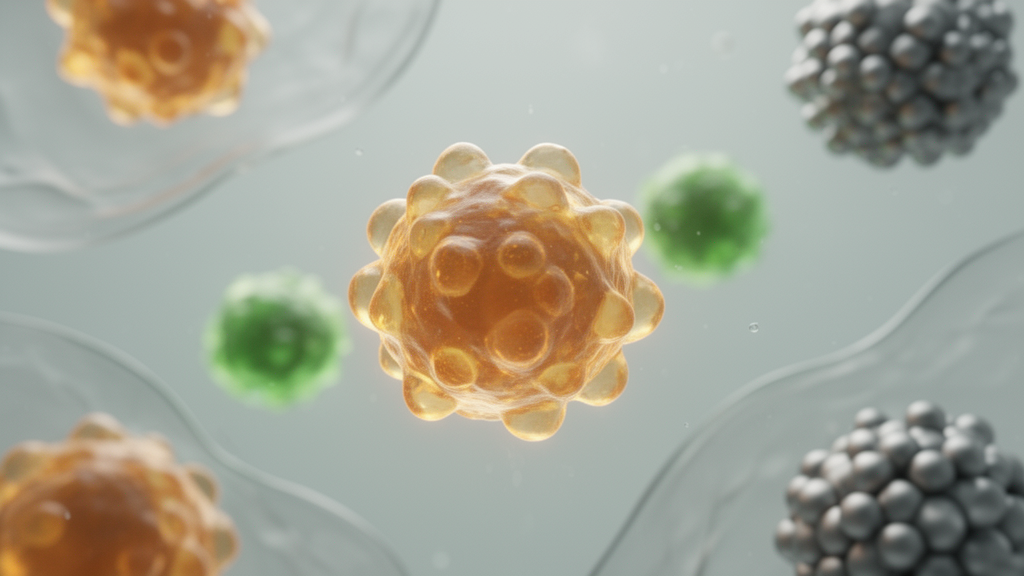
Theranostic nanomedicine—the strategy of packing diagnostic and therapeutic functions into a single nanoscale platform—has long been dominated by inorganic materials, whose distinctive imaging and therapeutic properties made them the default choice for researchers. A newly published review argues that this dominance is now being challenged from within, as attention shifts decisively toward organic and hybrid organic/inorganic nanoplatforms that promise better biocompatibility and degradability without sacrificing performance.
The review, published in the Springer Nature journal Biomedical Materials Science by Matteo Battaglini, Alessio Carmignani and Gianni Ciofani, surveys the current landscape of organic-based theranostic systems, spanning hybrid nanostructures, polymeric nanoparticles, lipid-based carriers and carbon-based materials. Its central message is provocative: growing evidence indicates that organic and hybrid platforms can achieve theranostic performance comparable to, or in some cases surpassing, that of inorganic systems—findings that, according to the authors, challenge the long-standing assumption that inorganic nanomaterials are inherently more effective for theranostic applications.
The motivation behind this shift lies in a persistent clinical problem. Inorganic nanomaterials, despite their useful optical, magnetic and electronic properties, suffer from poor biodegradability, long-term accumulation in tissues and potential toxicity. These drawbacks have limited their translation from laboratory studies into routine medical use, even as the field has produced increasingly sophisticated diagnostic and therapeutic designs. Organic and hybrid systems, by contrast, offer improved biocompatibility and the possibility of breaking down safely in the body, addressing one of the most stubborn barriers between preclinical promise and clinical practice.
Hybrid platforms occupy a middle ground in this landscape. They combine organic matrices with inorganic components, enabling multimodal imaging and synergistic therapies that draw on the strengths of both material classes. The organic component contributes biocompatibility, tunability and functionalization chemistry, while the inorganic part supplies imaging contrast or stimulus-responsive therapeutic action. Yet the review is candid about the trade-off: because these structures still contain inorganic elements, concerns about their persistence in the body remain, and the very problem that motivates the shift away from inorganic materials is only partially resolved.
Fully organic systems—particularly polymeric and lipid-based nanostructures—represent the other end of the spectrum. According to the review, these platforms offer high tunability, efficient drug delivery and versatile functionalization, making them adaptable to a wide range of clinical scenarios. On the diagnostic side, they support imaging modalities including fluorescence, magnetic resonance imaging (MRI) and nuclear imaging. The combination of these functions within a single biodegradable carrier is what defines the theranostic ideal.
Carbon-based nanomaterials add a further dimension to the field. The review highlights their intrinsic optical properties and multifunctionality as features that expand the design space for organic theranostics, allowing a single carbon framework to participate in imaging, therapy and surface functionalization simultaneously. Together with polymeric and lipid-based nanostructures, these carbon-based materials form part of the landscape of organic-based theranostic systems surveyed in the review.
One of the review’s key conceptual contributions is the argument that the performance of organic-based theranostic nanoplatforms is not determined solely by the therapeutic or imaging agents loaded into them, but is fundamentally governed by the chemical composition and structural organization of the organic matrix itself. Polymer architecture, lipid supramolecular assembly and carbon framework hybridization each establish distinct structure–function relationships that regulate drug loading, biodegradation, targeting capability, imaging performance and therapeutic efficacy. The authors identify this rational relationship between molecular structure and biological function as one of the main strengths of organic nanotheranostics, because it means that properties can be engineered at the level of the material itself rather than left to chance.
This structure-guided perspective also informs the review’s assessment of a common objection to organic systems: that they respond less readily to external physical stimuli than their inorganic counterparts. The authors acknowledge this reduced degree of so-called smart responsiveness as a genuine disadvantage, but they counter that advances in materials chemistry are progressively overcoming traditional limitations. Stimuli-responsive polymers, biomimetic lipid assemblies, supramolecular architectures and intrinsically functional carbon nanomaterials have enabled the design of organic platforms that respond to biochemical or physiological stimuli with high specificity while maintaining favorable biodegradation and safety profiles.
None of this enthusiasm, however, obscures the obstacles that still stand between organic theranostics and the clinic. The review identifies a set of bottlenecks that hinder clinical implementation across the field: limited reproducibility and scalability of nanomaterial synthesis, batch-to-batch variability, and the difficulty of achieving precise control over physicochemical properties at large scale. Regulatory uncertainty compounds the problem, because theranostic platforms combine diagnostic and therapeutic functions and therefore do not always fit neatly within existing approval frameworks. Incomplete understanding of in vivo behavior—including biodistribution, clearance pathways, immune interactions and long-term safety—continues to slow translation, and economic factors such as high production costs and complex manufacturing requirements further complicate widespread adoption.
Looking ahead, the authors sketch several directions likely to shape the field’s evolution. The integration of precision medicine approaches, including patient-specific targeting strategies and biomarker-driven design, is expected to enhance therapeutic efficacy and reduce off-target effects. The convergence of nanotechnology with artificial intelligence and advanced imaging techniques may enable real-time monitoring, adaptive treatment and improved predictive modeling of nanoplatform behavior in the body. Standardized protocols for characterization, safety assessment and manufacturing will be essential to ensure reproducibility and regulatory compliance, while efforts to design fully biodegradable and metabolizable nanostructures are described as critical to addressing long-term safety concerns. The use of naturally derived materials such as lipids, proteins and polysaccharides, along with bioinspired and cell-derived nanocarriers, is highlighted as a promising avenue, and improving the scalability and cost-effectiveness of production will be necessary for industrial translation. The review concludes with the expectation of a progressive shift in the coming years from predominantly inorganic nanomaterials toward hybrid or fully organic platforms—a transition driven not by simple substitution but by an improved understanding of how organic chemical structures govern biological performance, and one that the authors believe could ultimately make theranostic nanotechnologies safer, more effective and more readily integrated into routine medical practice.
Subject of Research: Organic-based nanoparticles for combined diagnostic and therapeutic (theranostic) applications in nanomedicine
Article Title: Organic-based nanoparticles for theranostic uses
Article References: Battaglini, M., Carmignani, A., & Ciofani, G. (2026). Organic-based nanoparticles for theranostic uses. Biomedical Materials Science, 1(1), Article 9. https://doi.org/10.1186/s44495-026-00008-z
Image Credits: AI Generated
DOI: 10.1186/s44495-026-00008-z
Keywords: theranostics, nanomedicine, organic nanoparticles, polymeric nanoparticles, lipid carriers, carbon nanomaterials, hybrid nanostructures, biodegradability, precision medicine, clinical translation, photothermal therapy, photodynamic therapy
News Source: Ophelia Keating. (October 28, 2026). Organic Nanoparticles Emerge as Safer Rivals to Inorganic Theranostic Platforms. Scienmag.



