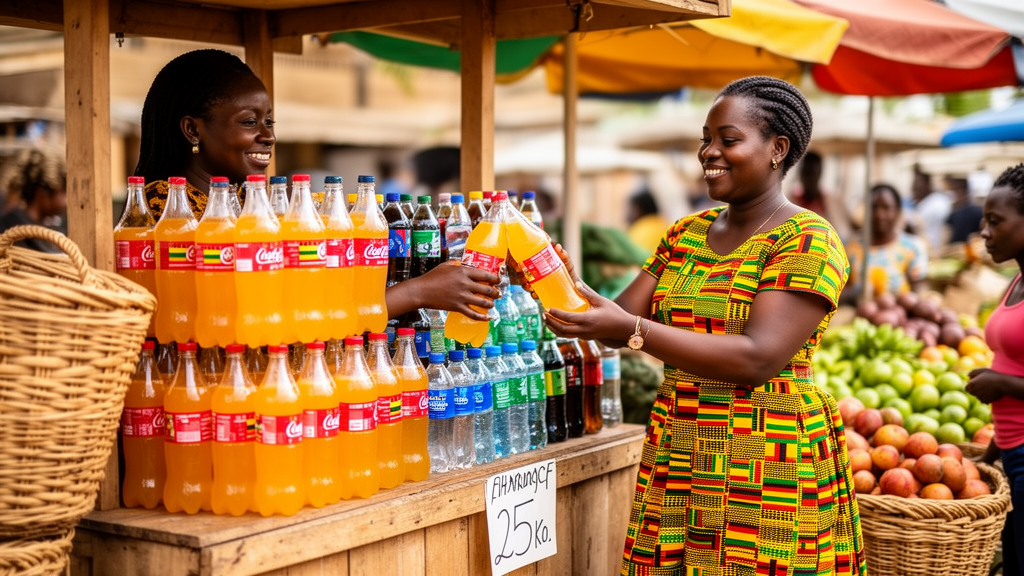
Months after Ghana introduced a 20 percent excise tax on sugar-sweetened beverages, most consumers surveyed in the Cape Coast Metropolis said they back the idea of taxing sugary drinks, yet a majority wanted a far smaller levy than the one actually imposed. The findings come from an exploratory cross-sectional study published in BMC Public Health, based on interviews with 384 adults conducted between August and October 2023, shortly after the tax took effect. The researchers, Kasim Abdulai and Portia Bangkuu, used an interviewer-administered survey covering sociodemographic characteristics, health opinions and perceptions of the beverage tax.
Responses were analysed with descriptive statistics and Spearman's correlation in SPSS version 26. The survey captured an early snapshot of public opinion in selected urban communities of one Ghanaian city, immediately following implementation of the national policy. Support for the tax appeared to rest on health awareness.
A strong majority of participants, 81.8 percent, believed that high sugar consumption is detrimental to health, and 67.7 percent supported the principle of taxing sugar-sweetened beverages. This alignment suggests that acceptance of the policy in this sample was largely rooted in recognition of the health risks associated with excessive sugar intake, a concern that has grown as non-communicable diseases rise across sub-Saharan Africa amid a nutrition transition towards energy-dense, nutrient-poor diets. Yet the study revealed a striking discrepancy between endorsement of the policy in principle and approval of its actual design.
While 67.7 percent supported an SSB tax, 62.2 percent of participants favoured a tax rate of less than 2 percent, dramatically below the 20 percent rate implemented nationally in 2023. In other words, many consumers who accepted the idea of taxing sugary drinks balked at the magnitude of the levy the government chose. The statistical analysis added nuance to these patterns.
The correlation between consumer opinion and perceived tax effectiveness was moderate and statistically significant (ρ = 0.350, p < 0.01), indicating that respondents who viewed the tax favourably also tended to see it as effective. By contrast, age was not significantly associated with these views (ρ = 0.024, p > 0.05), suggesting that acceptance of the tax in this sample did not vary meaningfully across age groups. The authors frame the work as exploratory post-implementation evidence from a single urban Ghanaian setting.
Because the study sampled 384 adults in selected communities of the Cape Coast Metropolis rather than a nationally representative population, the findings cannot be generalised to all Ghanaian consumers, and the cross-sectional design captures opinions at one point in time rather than tracking how attitudes evolve as the tax matures. Even with those limits, the results carry practical weight for policymakers. The Cape Coast data indicate that Ghanaian consumers in this sample broadly accepted the rationale for the tax but preferred a substantially lower rate, a gap that could shape political sustainability of the policy.
The study's conclusions point toward several priorities: sustained public education about the health risks of high sugar intake, transparent communication about how tax revenue is used, and broader nationally representative research on public understanding and acceptability of SSB taxation. For now, the study offers one of the earliest windows into how consumers in an urban African setting responded to a newly enacted sugary drink tax. It documents a public that largely understands the health stakes and accepts the principle of taxation, while remaining uneasy about the size of the burden placed on their purchases, a tension that future research and policy communication will need to address.
Subject of Research: Consumer perspectives on Ghana's sugar-sweetened beverage excise tax in the Cape Coast Metropolis
Article Title: Taxation of sugar-sweetened beverages: an exploratory study on consumer perspectives in the cape coast metropolis, Ghana
Article References: Abdulai, K., & Bangkuu, P. (2026). Taxation of sugar-sweetened beverages: an exploratory study on consumer perspectives in the cape coast metropolis, Ghana. BMC Public Health. https://doi.org/10.1186/s12889-026-29380-z
Image Credits: AI Generated
DOI: 10.1186/s12889-026-29380-z
Keywords: sugar-sweetened beverages, excise tax, Ghana, Cape Coast, non-communicable diseases, public health, consumer attitudes, nutrition transition, cross-sectional study, health policy, Taxation, sugar-sweetened
News Source: Ophelia Keating. (October 28, 2026). Ghana’s Sugary Drink Tax Wins Support but Consumers Want a Lower Rate. Scienmag.