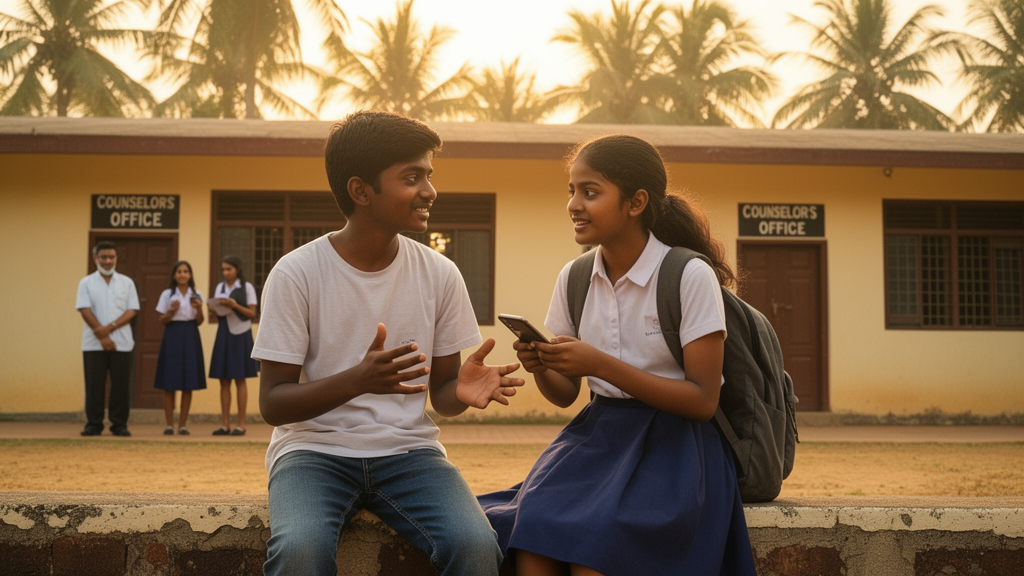
Adolescents in Sri Lanka do not rely on a single pathway when they face emotional or personal difficulties, according to a cross-sectional survey of more than 1,000 school-going teenagers in Gampaha District. Instead, their help-seeking behaviour is shaped by a web of social, demographic and economic factors spanning family, school and community life, researchers report in BMC Public Health. Analyses included 1,006 completed surveys.
Participants answered fixed-response, study-specific questions about seven distinct help-seeking methods: informal support, family support, religious leaders, activities, traditional care, maintaining a positive attitude, and professional support. A central finding was that no single method stood out as preferred. The researchers concluded that Sri Lankan adolescents draw on multiple sources rather than one dominant channel, which complicates any public health strategy that assumes teenagers will seek help through a single, well-publicised route.
Using logistic regression models, the team identified factors linked to a higher likelihood of help-seeking. These included being female, having at least one sibling, experiencing higher levels of psychological distress symptoms, reporting more maternal and paternal care, having religious caregivers, and facing higher academic stress. In other words, adolescents who felt more distressed or more supported at home were more inclined to reach out in some form.
Several factors pointed in the opposite direction. Lower engagement in sporting activities, higher depressive symptoms, higher maternal education level, higher paternal overprotection, and living in rural or semi-urban areas were each associated with a lower likelihood of help-seeking. The pattern of associations indicates that influences operate across what the researchers describe as the immediate and surrounding environments of Sri Lankan adolescents.
Family relationships, sibling presence, religious caregiving, parental education and parenting styles, sporting participation, and the urban or rural character of the home area all appeared in the statistical models as correlates of help-seeking. Emotional and personal problems, as defined in the study, cover difficulties managing emotions, relationships and other challenges that affect daily life. Understanding what drives or suppresses help-seeking in this population is presented as key to informing public health strategies and policies.
Because the survey was cross-sectional, it captures associations at a single point in time and cannot establish causal relationships between the measured factors and help-seeking behaviour. The findings also reflect adolescents in one district and seven secondary schools, so generalisation to other regions of Sri Lanka or other low- and middle-income countries requires caution. Nevertheless, the study's conclusion is direct: since no sole help-seeking method was preferred, and since the influencing factors cut across social, demographic and economic domains, a multipronged approach is needed to promote help-seeking for personal and emotional problems among Sri Lankan adolescents.
Subject of Research: Help-seeking behaviours for emotional and personal problems among school-going adolescents in Gampaha District, Sri Lanka
Article Title: Factors influencing help-seeking behaviours for emotional and personal problems experienced by school-going adolescents in Gampaha District, Sri Lanka
Article References: Mudunna, C., Chandradasa, M., Tran, T., Antoniades, J., Sumanasiri, S., & Fisher, J. (2026). Factors influencing help-seeking behaviours for emotional and personal problems experienced by school-going adolescents in Gampaha District, Sri Lanka. BMC Public Health. https://doi.org/10.1186/s12889-026-29145-8
Image Credits: AI Generated
DOI: 10.1186/s12889-026-29145-8
Keywords: adolescent mental health, help-seeking behaviour, Sri Lanka, cross-sectional survey, psychological distress, family support, Gampaha District, public health, low- and middle-income countries, school health, depressive symptoms, BMC Public Health
News Source: Ophelia Keating. (October 27, 2026). Sri Lankan Teenagers Use Many Routes, Not One, to Seek Help for Emotional Problems. Scienmag.