


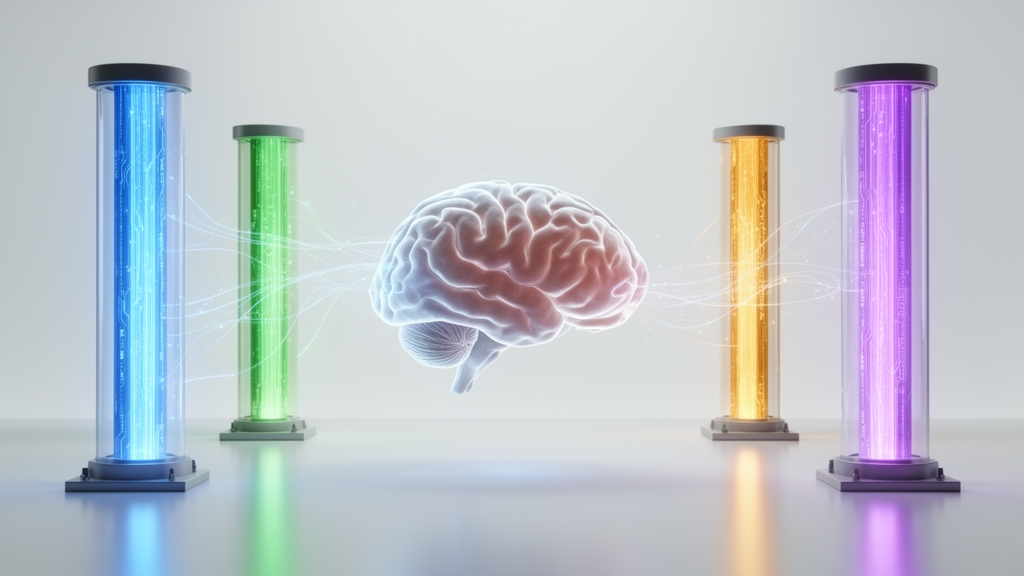
A comprehensive characterization framework for acute traumatic brain injury (TBI) has demonstrated strong diagnostic and prognostic performance in two large prospective cohort studies, according to an analysis published in PLOS Medicine. The CBI-M Framework, which organizes patient information into four pillars—Clinical, Biomarker, Imaging, and Modifier—was evaluated using data from the European CENTER-TBI study (4,509 patients) and the US-based TRACK-TBI study (2,552 patients), both prospective observational studies of patients with acute TBI.
The researchers assessed how the framework and its individual pillars related to key clinical endpoints: diagnosis, defined as traumatic intracranial injury on computed tomography; care pathways, including hospital admission, intensive care admission, intracranial pressure monitoring, and major cranial surgery; and outcomes at six months post-injury, covering mortality, the Glasgow Outcome Scale-Extended (GOSE), and health-related quality of life. For diagnostic and care pathway endpoints, full CBI-M models achieved excellent discrimination, with area under the curve (AUC) values ranging from 0.83 to 0.95 in CENTER-TBI and from 0.88 to 0.98 in TRACK-TBI. The models also explained a high proportion of variability, with Nagelkerke’s pseudo-R2 values ranging from 0.41 to 0.72 in CENTER-TBI and from 0.55 to 0.80 in TRACK-TBI.
The contributions of individual pillars varied depending on the endpoint examined. The Biomarker pillar contributed most to identifying CT-defined intracranial abnormalities, while the Imaging pillar contributed most to identifying major cranial surgery. For mortality and unfavorable outcome, defined as GOSE of 4 or below, the framework showed similarly strong performance. In CENTER-TBI, the AUC was 0.89 (95% CI 0.88–0.90) for mortality and 0.92 (95% CI 0.91–0.94) for unfavorable outcome, with pseudo-R2 values of 0.53 (95% CI 0.50–0.57) and 0.55 (95% CI 0.51–0.59), respectively. In TRACK-TBI, the AUC was 0.91 (95% CI 0.89–0.93) for mortality and 0.95 (95% CI 0.93–0.97) for unfavorable outcome, with pseudo-R2 values of 0.57 (95% CI 0.52–0.62) and 0.57 (95% CI 0.50–0.64), respectively. In contrast, performance for health-related quality of life was modest.
When compared against the established IMPACT-Lab and CRASH-CT prediction models in their respective target populations, pseudo-R2 values suggested that the full CBI-M model was more strongly associated with six-month mortality and unfavorable outcomes. The authors note that TBI is clinically and biologically heterogeneous, and that detailed characterization of patients is considered essential to inform appropriate clinical management. The framework was recently proposed to provide such comprehensive characterization, but the extent to which it captures clinically relevant heterogeneity in relation to diagnosis, care pathways, and longer-term outcome had remained unclear prior to this evaluation.
The study’s authors also identified several methodological limitations. The analysis was restricted to data from high-income settings, limiting generalizability to other regions. Three elements of the Modifier pillar were absent from the datasets accessed, and some analyses carried a risk of possible reverse causality. The researchers conclude that CBI-M provides a robust multimodal characterization of acute TBI that aligns closely with clinical decision-making and outcomes, and that further prospective validation and optimization are justified and needed before the framework can be implemented in clinical practice and research.
Subject of Research: Evaluation of the CBI-M framework for characterizing acute traumatic brain injury in prospective cohort studies
Article Title: The CBI-M framework for characterization of traumatic brain injury: Evaluation of performance using data from the CENTER-TBI and TRACK-TBI prospective cohort studies
Article References: Pisică, D., Mikolić, A., Yue, J. K., McCrea, M. A., Dams-O’Connor, K., De Keyser, V., Jain, S., Markowitz, A. J., Menon, D. K., Newcombe, V., Steyerberg, E. W., Sun, X., Lingsma, H. F., Manley, G. T., Maas, A. I. R., & on behalf of the CENTER-TBI and TRACK-TBI Investigators (2026). The CBI-M framework for characterization of traumatic brain injury: Evaluation of performance using data from the CENTER-TBI and TRACK-TBI prospective cohort studies. PLOS Medicine, 23(10), e1004945. https://doi.org/10.1371/journal.pmed.1004945
Image Credits: AI Generated
DOI: 10.1371/journal.pmed.1004945
Keywords: traumatic brain injury, CBI-M framework, CENTER-TBI, TRACK-TBI, biomarkers, neuroimaging, prognosis, Glasgow Outcome Scale-Extended, mortality, clinical decision-making, prospective cohort studies, PLOS Medicine
News Source: Cassandra Pierce. (October 27, 2026). New Four-Pillar Framework Shows Strong Performance in Characterizing Traumatic Brain Injury. Scienmag.



