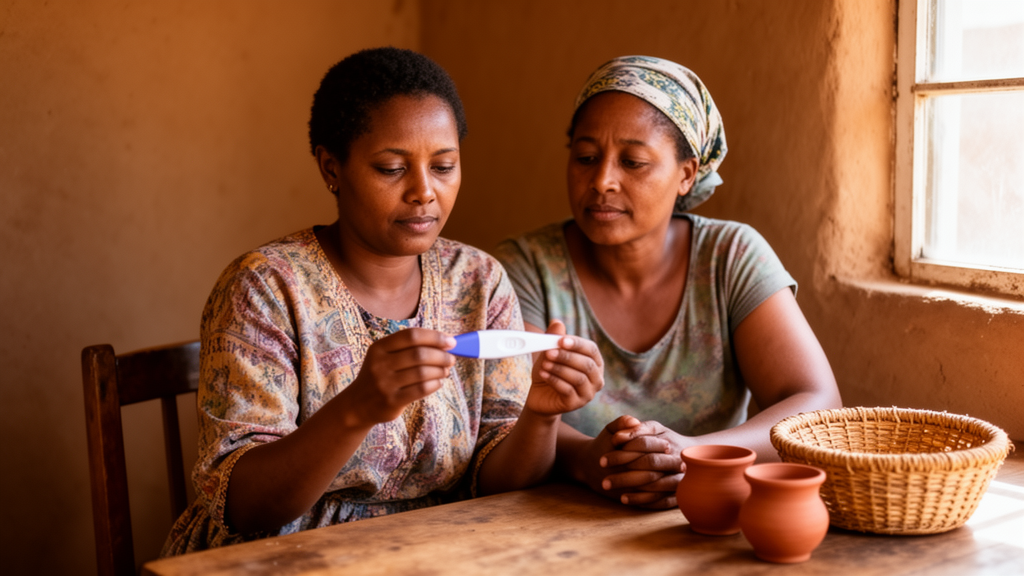
Only about three in ten pregnant women attending antenatal care in Debre Birhan city, Ethiopia, reported having used a home-based pregnancy test, according to a cross-sectional study published in BMC Pregnancy and Childbirth. The finding, drawn from 658 women recruited across ten public health facilities between May 20 and June 20, 2025, points to a substantial gap between the potential of early self-testing and its actual uptake in this urban Ethiopian setting.
Home-based pregnancy tests allow women to detect pregnancy early, which in turn can promote timely initiation of antenatal care and contribute to better health outcomes for mothers and infants. Yet the researchers behind the new study note that evidence on how often these tests are actually used in Ethiopia has been scarce. To address that gap, they measured utilization and identified the factors associated with it among women already attending antenatal care at public facilities in Debre Birhan city.
The study was institutional-based and cross-sectional in design. A systematic random sampling method was used to recruit 664 pregnant women from the ten participating public health facilities, and 658 ultimately took part, yielding a response rate of 99.09 percent. Data were collected with a pre-tested, interviewer-administered questionnaire administered through Kobo Toolbox, and the analysis was carried out in SPSS version 25. Logistic regression was used to identify factors associated with home-based pregnancy test use, with variables showing a p-value below 0.05 treated as statistically significant.
The headline result was a utilization figure of 29.94 percent, with a 95 percent confidence interval of 26 to 33 percent. In other words, fewer than one in three of the antenatal care attendees surveyed had used a home-based pregnancy test, a level the authors characterize as low. Because the study was conducted among women already attending antenatal care, the figure describes utilization within this specific group rather than the general population of pregnant women in the city.
Several factors emerged as significantly associated with use of the tests. Educational status stood out: women with primary education had roughly three times the odds of use compared with the reference group (adjusted odds ratio 3.0; 95 percent CI 1.1–8.0), while those with college education or above had about four times the odds (AOR 4.0; 95 percent CI 1.38–12.00). The confidence intervals are wide, reflecting the precision limits of the sample, but the pattern suggests a consistent educational gradient.
Experience and knowledge also mattered. Women with a history of previous self-pregnancy test use had about five times the odds of current use (AOR 5.0; 95 percent CI 1.20–13.20), and those with good knowledge of home-based pregnancy testing had roughly two and a half times the odds (AOR 2.50; 95 percent CI 1.23–5.15). A short inter-pregnancy interval was associated with nearly three times the odds (AOR 2.70; 95 percent CI 1.08–6.80), and women who could reliably recall their last normal menstrual period had almost four times the odds of use (AOR 3.69; 95 percent CI 2.14–6.34).
These associations are consistent with a plausible behavioral picture. Familiarity with the tests through prior use and stronger knowledge may lower practical barriers to testing at home, while reliable recall of the last menstrual period could reflect greater pregnancy awareness and attentiveness to early signs that prompts testing sooner. A short interval between pregnancies may likewise heighten women’s alertness to the possibility of a new pregnancy. As with all cross-sectional data, however, the associations describe relationships measured at a single point in time and do not establish causal direction.
The authors conclude that home-based pregnancy test utilization among antenatal care attendees in Debre Birhan city’s public health facilities is low, and they recommend integrating education about home-based pregnancy tests into routine family planning services and preconception counseling. The aim, they write, is to improve use of the tests and thereby promote timely antenatal care. The study’s scope is limited to women attending public facilities in one Ethiopian city during a single survey period in 2025, so the findings speak most directly to that setting and population, and the article was published as open access on October 27, 2026.
Subject of Research: Utilization of home-based pregnancy tests and associated factors among pregnant women attending antenatal care in Debre Birhan city, Ethiopia
Article Title: Utilization of home-based pregnancy tests and associated factors among women attending antenatal care in Debre Birhan city public health facilities, Ethiopia, 2025
Article References: Moltot, T., Tamire, F., Lemma, T., Chekole, M. S., Silesh, M., Taye, B. T., Habteyes, A. T., & Kebede, T. N. (2026). Utilization of home-based pregnancy tests and associated factors among women attending antenatal care in Debre Birhan city public health facilities, Ethiopia, 2025. BMC Pregnancy and Childbirth. https://doi.org/10.1186/s12884-026-10167-4
Image Credits: AI Generated
DOI: 10.1186/s12884-026-10167-4
Keywords: home-based pregnancy test, Ethiopia, antenatal care, Debre Birhan, cross-sectional study, pregnancy detection, maternal health, logistic regression, health facilities, preconception counseling, family planning, public health
News Source: Harold Sullivan. (October 27, 2026). Fewer Than One in Three Women Use Home Pregnancy Tests in Ethiopian Study. Scienmag.