Researchers have identified a pattern of steroid hormones and fatty acids in blood drawn directly from a blocked brain artery that appears to distinguish stroke patients whose treatment fails to restore meaningful function. In a prospective study of 40 patients with acute ischemic stroke caused by anterior circulation large vessel occlusion, plasma collected from the proximal occluded artery during endovascular treatment revealed four metabolites whose combined pattern predicted futile recanalization with an area under the curve of 0.965 (95% CI: 0.918–1.000), with 80.0% sensitivity and 100.0% specificity at the optimal threshold.
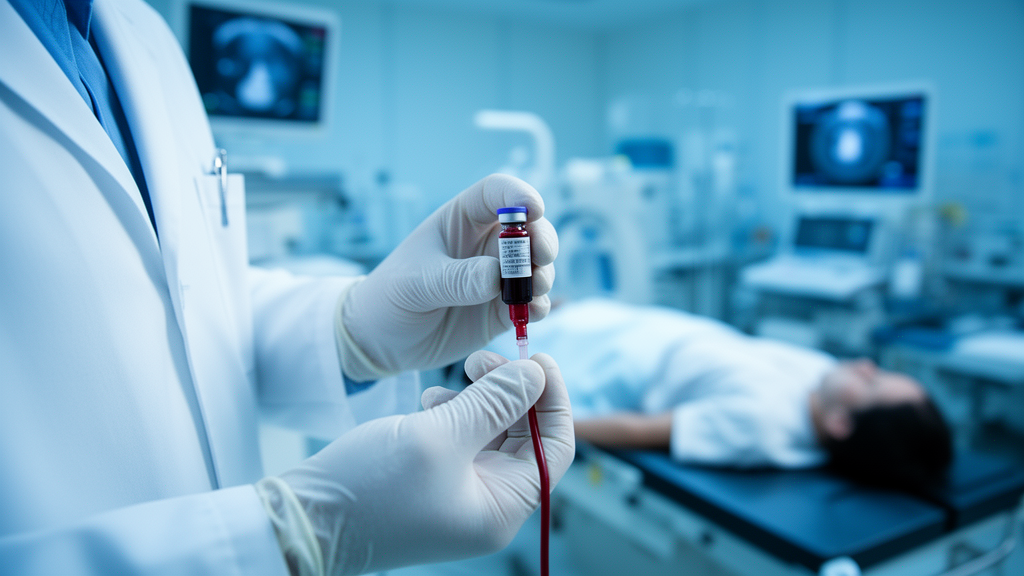
The study, published in BMC Neurology, focused on patients undergoing endovascular treatment, in which physicians mechanically remove the clot blocking a major brain artery. Some patients achieve successful reopening of the vessel yet still recover poorly, an outcome known as futile recanalization. To investigate what might underlie this discrepancy, the team collected blood from the occluded artery itself, before mechanical thrombectomy and before recanalization, rather than relying on peripheral blood samples. Patients were then divided into two groups of 20 based on their 90-day modified Rankin Scale score, a standard measure of functional outcome, separating those with futile recanalization from those without.
Using untargeted metabolomics based on liquid chromatography tandem mass spectrometry, the researchers screened the arterial plasma and identified 123 candidate differential metabolites between the two groups. From these, four key metabolites emerged: dehydroepiandrosterone, testosterone, progesterone, and stearidonic acid. In patients with futile recanalization, dehydroepiandrosterone and stearidonic acid were downregulated, while testosterone and progesterone were upregulated. All four metabolites were significantly associated with futile recanalization, with P values below 0.05.
Pathway enrichment analysis using the KEGG database pointed to steroid hormone biosynthesis, cortisol synthesis and secretion, and aldosterone synthesis and secretion as the involved pathways, which the authors link to immune regulation, oxidative stress, and inflammation. According to the study’s conclusion, this is the first systematic description of proximal occluded artery plasma metabolomics in futile recanalization, and it identifies steroid hormone metabolism disorder as a key feature of the condition, characterized by the downregulation of dehydroepiandrosterone and stearidonic acid alongside upregulation of testosterone and progesterone. The four metabolites are proposed as candidate biomarkers for identifying patients at risk of futile recanalization.
The findings come with important caveats. The sample size was small, with only 20 patients in each group, and the reported diagnostic performance figures carry wide uncertainty, as reflected by the confidence interval on the area under the curve extending to 1.000. The study was conducted in patients with anterior circulation large vessel occlusion who underwent endovascular treatment, so the results may not generalize to other stroke populations or treatment approaches. Because the metabolites were measured before recanalization, the analysis captures the arterial environment at the time of intervention, but the work does not establish whether these metabolic differences cause poor outcomes or merely accompany them. The authors describe the four-metabolite combination as a candidate biomarker panel, meaning further validation would be needed before any clinical use. The article was published as an open access paper on 27 October 2026, and the version shared at publication is subject to further editorial edits before the final version of record.
Subject of Research: Plasma metabolomic profiling of the proximal occluded artery to identify biomarkers of futile recanalization after endovascular treatment for large vessel occlusion stroke.
Article Title: Plasma metabolomic analysis of proximal occluded artery in acute large vessel occlusion stroke with futile recanalization
Article References: Zhang, W., Xing, W., Ren, L., Li, Y., Jiang, Z., He, J., & Ling, L. (2026). Plasma metabolomic analysis of proximal occluded artery in acute large vessel occlusion stroke with futile recanalization. BMC Neurology. https://doi.org/10.1186/s12883-026-05461-9
Image Credits: AI Generated
DOI: 10.1186/s12883-026-05461-9
Keywords: large vessel occlusion stroke, endovascular treatment, futile recanalization, metabolomics, steroid hormones, dehydroepiandrosterone, stearidonic acid, biomarkers, BMC Neurology, prospective study, Plasma, metabolomic
News Source: Cassandra Pierce. (October 27, 2026). Blood Signature From Blocked Artery Predicts Failed Stroke Recovery After Treatment. Scienmag.