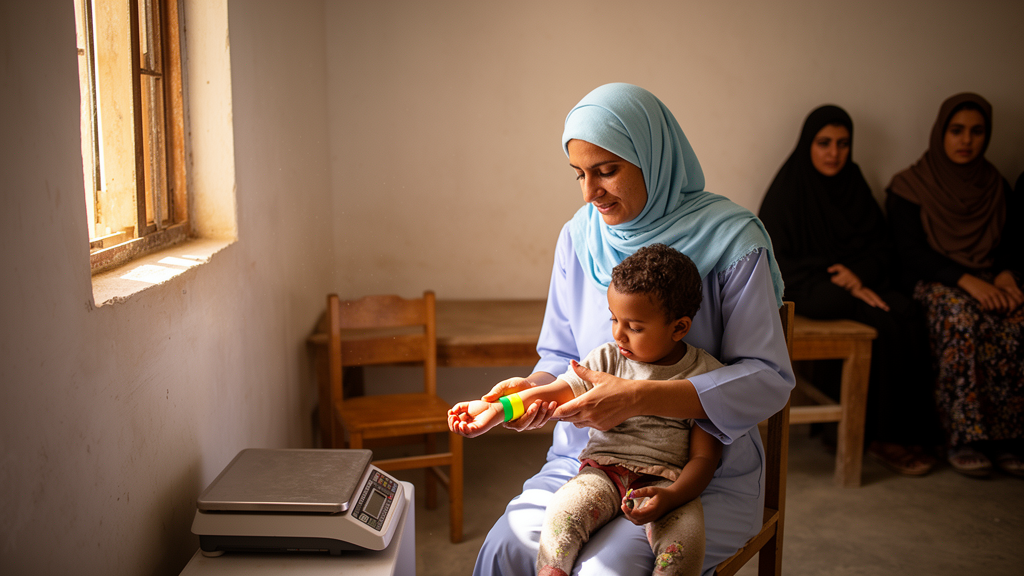
Therapeutic feeding centres in Yemen are, on average, meeting international standards for treating children with severe acute malnutrition, according to a retrospective records study published in BMC Public Health. Severe acute malnutrition remains one of the most serious public health threats in conflict-affected countries, and therapeutic feeding centres are the backbone of care for children whose condition is complicated by medical problems. The study assessed three key performance indicators: the proportion of admitted children who recovered, the proportion who died during treatment, and the proportion who defaulted, meaning they left the programme before completing care.
The aggregate picture, however, concealed striking variation. Aden, the capital and the most populous governorate included in the analysis, recorded the weakest results of all ten: a recovery rate of 92.27 percent, a mortality rate of 1.25 percent and a default rate of 6.48 percent. Each of these figures was notably worse than the multi-governorate average, suggesting that performance in one of Yemen's most important urban centres was pulling down the national picture.
To understand what might lie behind Aden's numbers, the researchers compared the city's two therapeutic feeding centres. One, based in a primary health care facility, achieved a recovery rate of 98.25 percent, a mortality rate of 0.22 percent and a default rate of 1.53 percent. The other, hospital-based, reported a recovery rate of just 86.07 percent, a mortality rate of 2.70 percent and a default rate of 11.23 percent — meaning roughly one in nine children admitted there left before finishing treatment.
The primary health care-based centre also showed a more even distribution of admissions throughout the year, while the hospital facility's caseload was less evenly spread. The researchers are careful to caution against over-interpretation. The comparison within Aden involved only two facilities, and the observational, retrospective design means the observed gaps could reflect unmeasured contextual and organisational factors rather than the care model itself.
Records-based studies of this kind can describe what happened, but they cannot establish that one delivery model caused better outcomes than another. If the differences between the two Aden facilities were confirmed at scale, the implications would be significant for national nutrition policy: the placement and organisation of therapeutic feeding services, not just the availability of therapeutic foods, could shape whether children survive and complete treatment. The study's authors call for larger multicentre studies to determine whether specific service delivery models are genuinely associated with improved treatment outcomes.
For now, the message from Yemen's records is a double one. But the Aden data show how unevenly that success is distributed, and how much may depend on where and how a feeding centre operates.
Subject of Research: Treatment outcomes of severe acute malnutrition management in therapeutic feeding centres in Yemen
Article Title: Outcomes of severe acute malnutrition management in therapeutic feeding centres: a retrospective records study in Yemen (2025)
Article References: Baazab, M. S., Dahman, L. B., & Giusti, M. (2026). Outcomes of severe acute malnutrition management in therapeutic feeding centres: a retrospective records study in Yemen (2025). BMC Public Health. https://doi.org/10.1186/s12889-026-30056-x
Image Credits: AI Generated
DOI: 10.1186/s12889-026-30056-x
Keywords: severe acute malnutrition, therapeutic feeding centres, Yemen, humanitarian crisis, child health, Sphere standards, recovery rate, mortality rate, default rate, primary health care, BMC Public Health, retrospective study
News Source: Ophelia Keating. (October 27, 2026). Yemen Malnutrition Clinics Show Strong Recovery Rates, But One City Lags Behind. Scienmag.